
As 2025 draws to a close, we reflect on the many classical music albums we’ve reviewed over the year. Each week, our team at The Classic Review delves into a wide range of recordings, and now it’s time to highlight the ones that left a lasting impression. Before we dive into an exciting lineup of fresh content for 2026, here are the albums that our staff members cherished most in 2025.
Apple Music Playlist
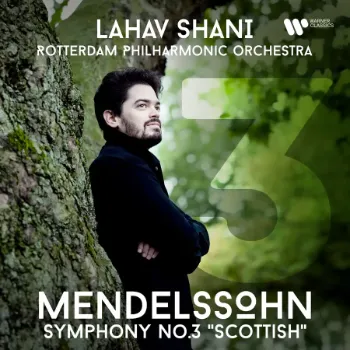
Mendelssohn – Symphony No. 3 (“Scottish”) – Rotterdam Philharmonic Orchestra, Lahav Shani
“(…) The beautiful playing of the Rotterdam orchestra and Shani’s thought-provoking interpretation convince on their own terms. Especially for listeners weary of historically informed performances of Romantic symphonies, this performance should prove enjoyable and emotionally satisfying.”
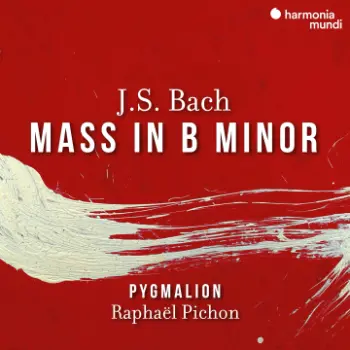
Bach – Mass in B Minor – Pygmalion, Raphaël Pichon
“Anyone who contends that period instruments cannot sound as beautiful as their modern counterparts needs to hear this performance. The balance and finesse of the playing is a constant delight (…) Surely this interpretive position may be an accurate description of Bach’s faith at the time he sat down to write this final mass.”
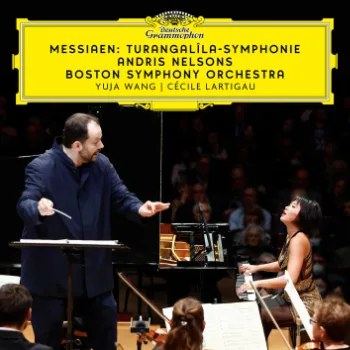
Messiaen – Turangalîla-Symphonie – Yuja Wang, Cécile Lartigau, Boston Symphony Orchestra, Andris Nelsons
“In the exuberant Finale, both Wang and the orchestra sustain impressive energy, seamlessly blending virtuosity with structural coherence. The emotional range explored throughout the previous movements culminates here convincingly, underscoring the ensemble’s technical precision and unified vision.”
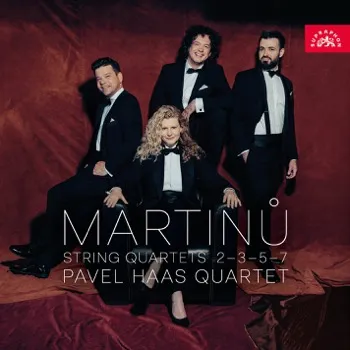
Martinů – String Quartets No. 2, 3, 5 & 7 – Pavel Haas Quartet
“Overall, Pavel Haas offers a strong case for the Martinů String Quartets. The high intensity, sometimes over-the-top on their Schubert album, feels warranted by the nature of Martinů’s writing. Supraphone’s own Panocha cycle remains valuable historically, though the earlier sonics do not flatter the inner detail that the present recording captures so readily. For listeners who have yet to be convinced by these works, this is highly recommended. Hopefully, the group will record Nos. 1, 4 and 6 to complete the cycle.”
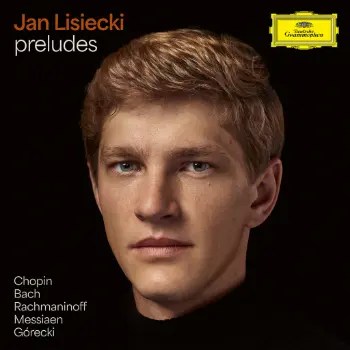
“Preludes” – Jan Lisiecki, Piano
“This new album raises Lisiecki’s programming and artistry to new heights. Each work on the album offers a distinctive perspective within this exploration of the prelude genre, and the stellar execution makes for a truly exciting experience.”
“Lieder” – Fatma Said, Soprano
“Said produces a wide range of colors and exhibits special sensitivity to phrasing, articulation and dynamics, always intended to highlight the emotions of the music. This is readily apparent in the opening set of Schubert songs: “Leise flehen meine Lieder” makes the text’s longing tangible, followed by an especially engaging “Der Hirt auf dem Felsen,” featuring brilliant playing by clarinetist Sabine Meyer. The playful banter Said establishes with the Männergesangsverein in “Ständchen (Notturno)” left me smiling at the end of its performance.”

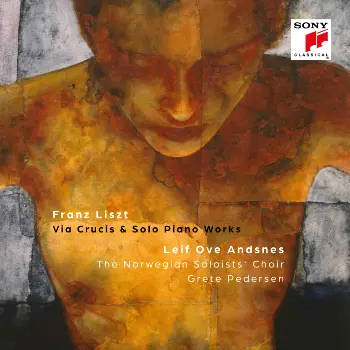
Liszt – Via Crucis & Solo Works – Leif Ove Andsnes
“Via Crucis, originally scored for choir and organ but here presented in a version with piano, is among Liszt’s most introspective late works. Marked by Gregorian chant influences, austere textures, and expressive restraint, the performance eloquently captures its contemplative intensity. Despite their apparent simplicity, the melodies maintain powerful emotional resonance, underscored by Liszt’s adventurous harmonic language and stark tonal contrasts.”
Brahms – Piano Quartets No. 2 & 3 – Zimerman, Nowak, Budnik, Okamoto
“The comfort and joy that the instrumentalists share with each other are evident throughout, whether they’re playing as a full ensemble, a delicate string pairing, or having a one-on-one conversation with the piano. This is an urgently recommended listen.”
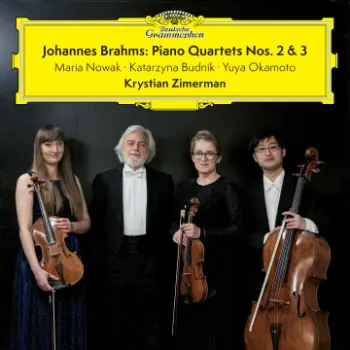
Anna Clyne – Abstractions – Baltimore Symphony Orchestra, Marin Alsop
“Anna Clyne remains an accessible voice among contemporary composers: her materials are largely tonal, her rhetoric direct, and her ear for color assured. This album plays to those strengths while showing how she organizes short, highly focused ideas into persuasive spans (…) Alsop and the Baltimore Symphony Orchestra offer committed advocacy in excellent sound.”
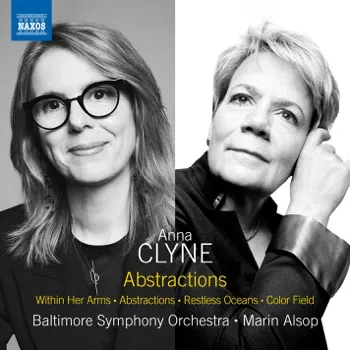
Review: “Somnia” – Denis Kozhukhin, Piano
“(…) Kozhukhin’s exquisite tone is immediately evident—round and rich, yet supple enough to vividly capture the promise of a new day. His attentive sensitivity to unexpected color changes is anything but casual. Several moments illustrate his ability to shape subtle dynamic gradients, effectively highlighting the music’s intriguing nuances.”
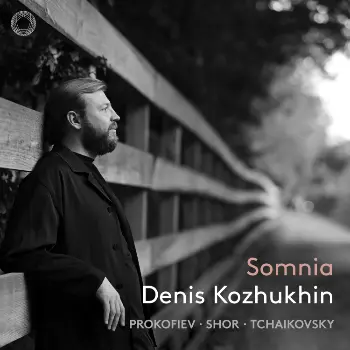
Rachmaninov – Orchestral Works – WDR Sinfonieorchester Köln, Măcelaru
“The reading of the third symphony is a complete success. Clocking in at just under 18 minutes, Măcelaru’s first movement is the slowest I know, yet it never feels slow. Instead, there is a great deal of freshly mined detail, often played with spine-tingling softness.”

The Classic Review Newsletter
Get weekly updates about new classical music content.
By signing up, you acknowledge and agree to our Privacy Policy & Terms of Service .