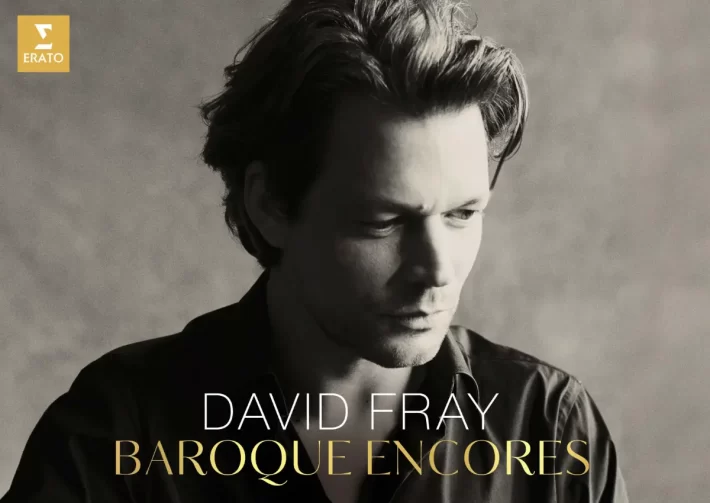
David Fray’s newest project is very much a representation of his affinity for Baroque music, from his 2021 Goldberg Variations (review) back to his 2008 recording of Bach’s Keyboard Concertos (review). As he explains in the booklet interview, the repertoire inspiration for Baroque Encores is two-fold: first, his show L’Enfant oublié (a staged collaboration with his wife, Chiara Muti, about the short life of Louis-Joseph, son of Louis XVI and Marie-Antoinette), and second, his fascination with dance, which he developed at the height of the pandemic.
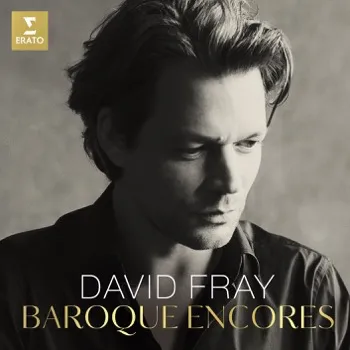
Transcribed versions of works for organ, clavecin, and harpsichord naturally raise the question of whether a performer can successfully evoke the qualities of these instruments on their modern cousin. Fray’s performance of Bach’s Sonata No. 4 in E minor (track 1) shows a performer who has thought carefully about how best to convey the depth of the organ’s bass register or the flute-like profile of the upper voices—all while capturing the mellow temperament of the piano.
Speaking of woodwinds, his take on the Siciliano from the E-flat major Flute Sonata (track 12) opens up a fine dialogue. Fray’s deft fingerwork and voicing infuse transparency and fluidity into the flute’s melodic line, while the keyboard accompaniment patterns take on an almost raindrop-like texture.
In the larger ensemble works, such as the well-loved Air from Bach’s Orchestral Suite No. 3 (track 14), he clearly delineates the movement of each line, from the dignified melody to the descending ostinato. As quiet and refined as the work is, it is satisfying to hear how all of the singular moving parts work together. I also found the subtlety of the piano dynamics the perfect vehicle for a moment of peaceful reflection.
As for the other keyboard works, Fray presents three of Domenico Scarlatti’s sonatas that again suit his lucid and supple style. Of the quieter ones, the B minor sonata (track 3) stands out for its musicality: its warm, vocal quality is engaging, yet Fray keeps the accompanying details and inner voices clearly in focus, so the music never loses its sense of direction.
Video: ©️ Warner Classics
The D minor sonata (track 4) offers both a chance for distinct characterization and a glimpse of virtuosity. Crisp staccatos and metronomic—but never mechanical—precision are a refreshing change from the beautiful yet largely introspective fare; they evoke the sonata’s sprightly spirit so effectively that I wished Fray had included a few more peppy works along the way.
While Handel’s Minuet (track 9) does not deliver the same level of character shift, it is a fine example of how Fray is able to derive the gentle sway of dance even in the midst of a stately work. The triplet rhythm is clear and consistent throughout but never sounds wooden, in large part because of the attention paid to the contrapuntal inner voices.
Among some of the lesser-known works are selections from Pancrace Royer’s Premier livre de pièces de clavecin. The melancholy of L’aimable (track 10) is tinged with enigma, but the more captivating work for me was Le Vertigo (track 11).
There is a drama and complexity here that is not heard elsewhere on the album: the pianist approaches the recurring glissandos with gusto, and the tremolos, however appropriately controlled, still convey furious intensity. The latter half of the work is where the momentum picks up into something genuinely exciting. In the final moments, the repetition of the stormy chords paints a picture of a relentless chase.
The only weak link for me was Rameau’s Le rappel des oiseaux (track 2), where I felt Fray’s gorgeous sostenuto got in the way. The clarity of the trills feels watered down and not optimally representative of the birds’ chirps. By contrast, Víkingur Ólafsson’s playing is drier and brisker in approach, but offers both realism and excitement.
Although I normally approach compilation albums with some degree of reserve, Fray’s is one of the best in recent memory. The inclusion of familiar selections is sure to attract the listener, but the musician’s thoughtful and highly artistic approach takes them well beyond the allure of popularity. While the curation as a whole errs on the quieter side, I was never left feeling absent-minded or lost. This can also be attributed to the excellent engineering and to the instrument itself (is it a Yamaha grand like the one Fray plays in the release’s promotional videos? The booklet doesn’t say). The wide range of colors and gorgeous tones the pianist produces make this a highly engaging listen.

The Classic Review Newsletter
Get weekly updates about new classical music content.
By signing up, you acknowledge and agree to our Privacy Policy & Terms of Service .
Album Details |
|
|---|---|
| Album name | Baroque Encores |
| Label | Warner Classics |
| Catalogue No. | 2173275579 |
| Artists | David Fray, piano |