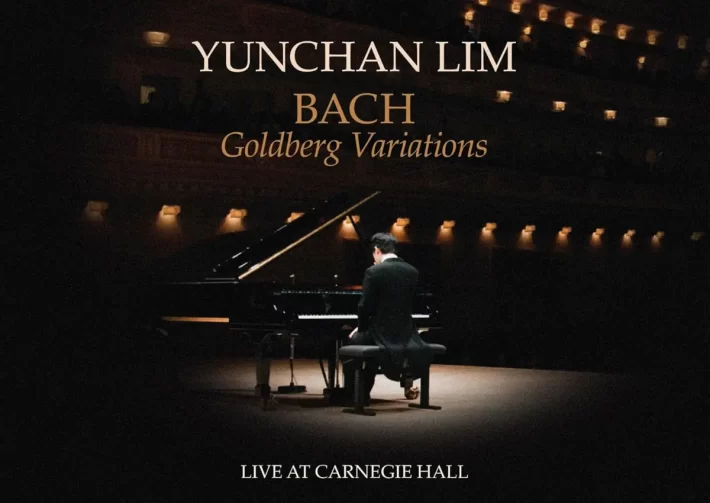
Live recordings of Bach’s Goldberg Variations tend to reveal a pianist’s priorities quickly. In the studio, the work can be polished into an abstract object; in a hall, it has to breathe, project, and hold an audience through long spans of repetition and variation. Yunchan Lim’s Carnegie Hall performance is very much the latter: a reading shaped for a large space, confidently voiced, and unafraid of letting the instrument speak with full presence.
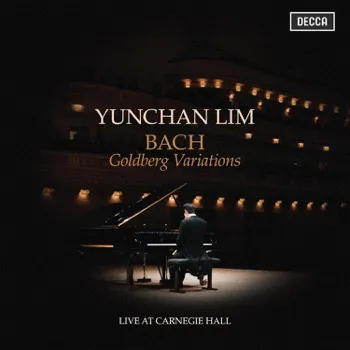
You hear that concert perspective immediately in the Aria and its first variations. Even the softest playing has a clear center, as if Lim is placing the sound into the room rather than into the microphone. That approach has obvious advantages in the many lyrical variations, where the melody can be carried with a vocal ease without losing the underlying pulse. It also suits Lim’s general stance toward Bach here: expressive, alert to character, but not draped in Romantic rhetoric. The line is shaped, the bass has weight, and the phrasing feels intentional, yet the overall profile stays within a stylistic frame that makes sense for this music.
The trade-off comes in the faster variations, where Carnegie Hall’s acoustic can soften edges and slightly blur the most intricate passagework. It is not that Lim’s articulation is unclear—his fingerwork is secure—but the resonance sometimes turns quick figurations into a wash of sound, especially when he leans into projection. Still, the engineering is impressively realistic in capturing the fine Steinway D piano.
One of the pleasures of the performance is Lim’s imagination with repeats. Ornaments are not merely decorative; they are used to calling attention, shifting the ear toward different voices and registers. In Variation 7, for instance, the change in emphasis and playing the repeat on a higher register give the dance character a new profile. More broadly, Lim’s voicing shows what kind of pianist he is: he doesn’t just increase volume to bring out a line—he changes its tone quality, sharpening or mellowing a note so that the phrase gains meaning rather than mere prominence.
Not every intervention convinces. The repeat of Variation 20 takes on a slightly “jazzy” inflection that, depending on your tolerance for stylized rhythm, may feel like a step too far. One can imagine Lim hearing the movement’s Courante dance character and trying to suggest a delayed dotted rhythm, in a way that nods to Baroque practice, but the result draws attention to the idea itself. Similarly, some added bass octaves feel excessive, momentarily tilt the balance away from Bach’s lean brilliance toward something more demonstrative.
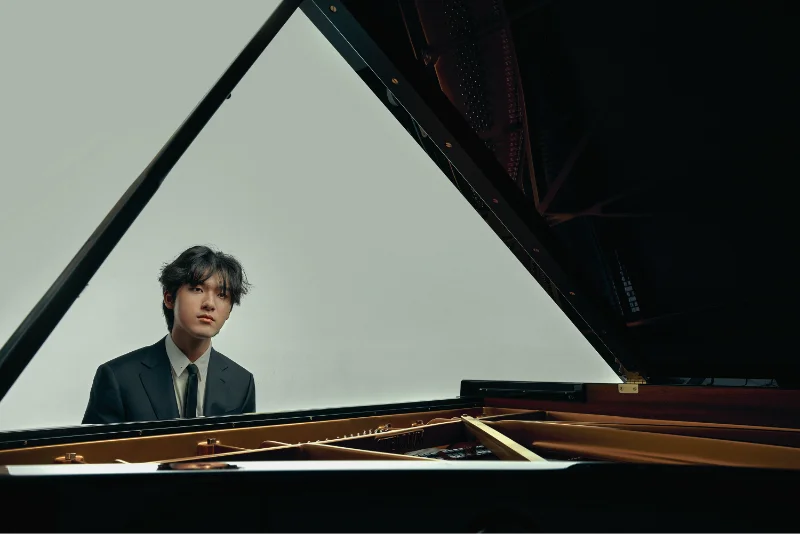
Yunchan Lim ©️ James Holecrop
The emotional center arrives (as it should) in Variation 25 (the so-called “Black Pearl”). Lim takes it relatively slowly, yet he does not suspend the whole architecture to make a point. The flow remains intact, and the sense of time—so important in this work—is preserved. It is a moving, unsentimental highlight: inward without becoming precious.
In a catalogue overflowing with Goldbergs, this is a lovely addition. It manages to balance the monumental nature of the work with a sense of spontaneity that perhaps only a live performance can provide. Lim’s Carnegie Hall account earns its place through personality, pianistic command, and an unforced sense of narrative.
Recommended Comparisons
Perahia | Schiff | Würtz | Gould | Tharaud

The Classic Review Newsletter
Get weekly updates about new classical music content.
By signing up, you acknowledge and agree to our Privacy Policy & Terms of Service .
Album Details |
|
|---|---|
| Album name | Bach – Goldberg Variations |
| Label | Decca |
| Catalogue No. | 4871517 |
| Artists | Yunchan Lim, Piano |