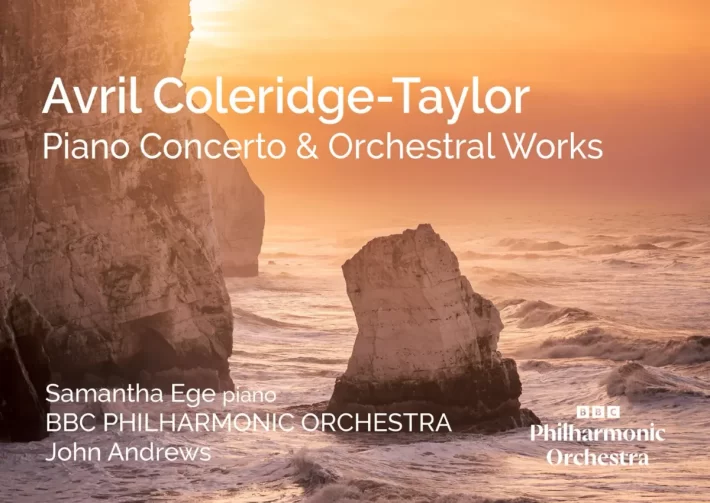
This is the first album dedicated entirely to Avril Coleridge-Taylor’s music (1903-1998). Daughter of Samuel Coleridge-Taylor, her compositions were well received, and she was lauded as both a soprano and conductor (she was the first woman to conduct H.M. Royal Marines). But repeat performances of her compositions rarely happened, and none of her orchestral music was published during her lifetime.
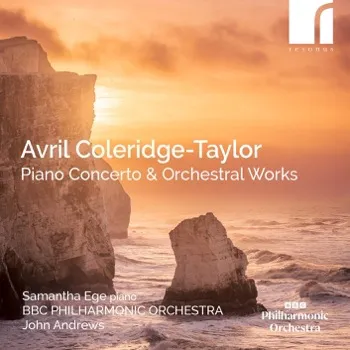
The earliest work here was written in 1930; the latest (a revision) was completed in 1980. The eight works included here reveal Coleridge-Taylor’s compositional fingerprint, discussed in Dr. Leah Broad’s excellent program notes: sectional structures, dramatic juxtapositions of mood and atmosphere, and ‘accenting’ percussion. Listeners familiar with her father’s music will also recognize his influence. Nevertheless, Avril has her own, distinct voice.
The Piano Concerto in F Minor opens with an almost militant fanfare, answered by a virtuosic pronouncement from the soloist. But the music soon settles into a gentler, more lyrical mood. Its lush harmonies and long-arched melodies speak a late-Romantic language, demanding, yet never showy. Pianist Samantha Ege has the full measure of this music and is particularly impressive in more ruminative moments (5’16”).
The slow movement features lovely solo work from the woodwinds. Its noble theme (beginning around 1’40”) is perhaps meant to indicate Coleridge-Taylor’s admiration for Elgar (she dedicates this movement to him). John Andrews and the BBC Philharmonic Orchestra, who are generally sensitive accompanists, could have made more of this moment.
The final Allegro deciso bears the dedication ‘In remembrance of my Father.’ The opening stentorian pronouncement from brass is answered by cascading woodwinds and strings, the articulation of which is precise but overly careful. Coleridge-Taylor soon shifts to a more introspective mood, which brings her gift for soaring melodies to the forefront. The emotional climax of the work (7’35”) has an affecting rhapsodic freedom, leading to a technically challenging that Ege easily dispatches. The Coda is fascinating: dramatic chords suggest the piece is at its end, but a trumpet chooses to continue with a ruminating bluesy solo, until timpani usher the full orchestra in to bring the work to a rousing conclusion.
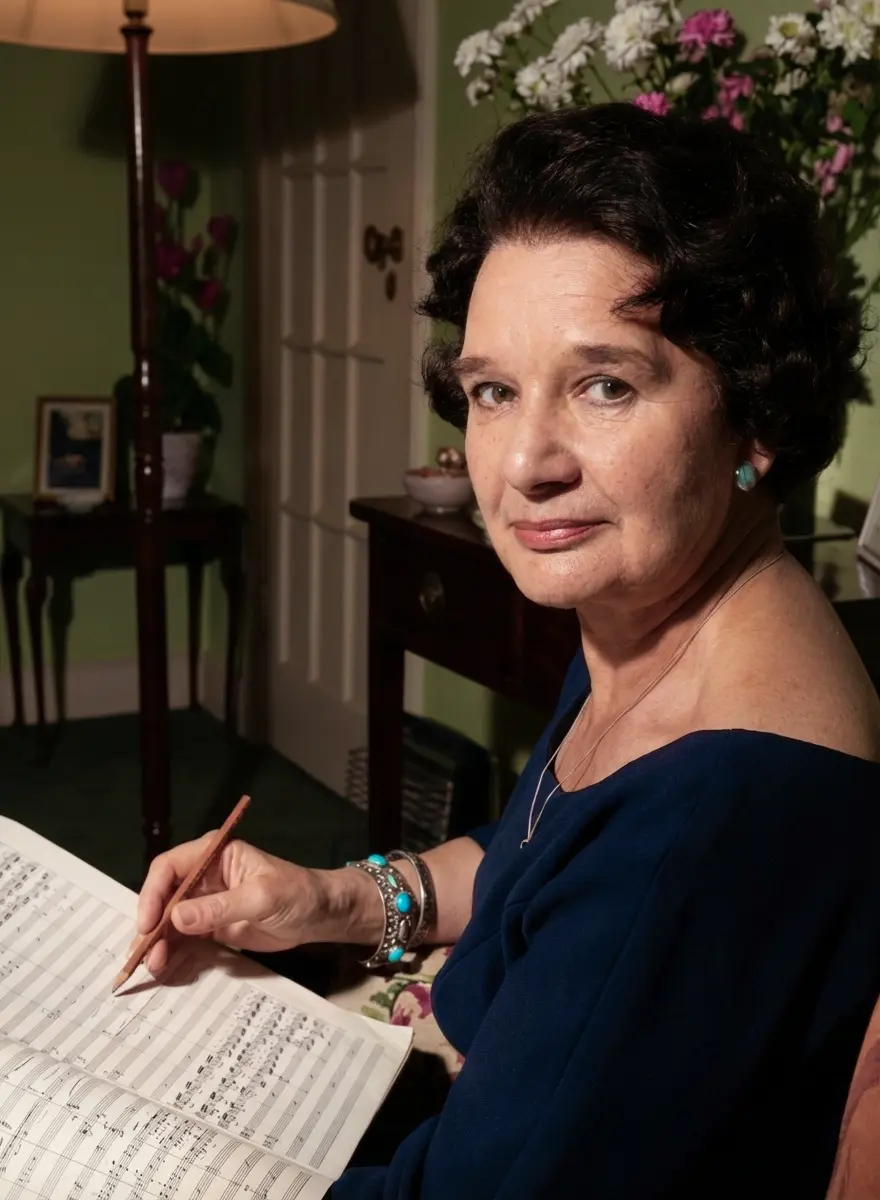
Avril Coleridge-Taylor (colorize: ©️ The Classic Review)
Coleridge-Taylor began Comet Prelude (track 4) during the first ever commercial flight from Britain to South Africa. It conveys the various moods and experiences she felt during the flight: passing over the English countryside, dawn breaking over the desert, and the celebratory mood of the crowd that assembled to greet the plane upon its arrival. Unfortunately, Andrew’s cautious approach weakens the music’s vividly cinematic qualities.
Sussex Landscape (tracks 5-7), written in 1940, inhabits a much darker sound world. Written just after the outbreak of World War II, the music captures both the beauty of Sussex’s landscape and the fear that war will destroy its beauty. In this work, Andrews masterfully manages the contrasting ideas of beauty and anxiety. The work has been recorded by the Chineke! Orchestra (Decca), a performance that is significantly slower (the first movement taking 7’26” versus 5’53” here). The BBC Philharmonic’s playing is more luxuriant and refined.
To April (track 8) was written in 1930-31, after a nervous breakdown. The composer described it as “an expression of the kind of new life I wished to lead.” Both this and From the Hills, a short tone poem about the composer’s love of nature, received sensitive performances, inward looking readings.

Samantha Ege, John Andrews (©️ Peter Mould, Jason Dodd)
Valse Caprice (track 10) is an example of light music (a genre in which the composer’s father excelled). The music is well played, but again there is an air of caution that loses the music’s buoyancy and joy de vivre.
The program ends with two memorial pieces: Memoriam: To the R.A.F. (1945) and In Memoriam: Largo for Orchestra (1967). The later work, originally intended to honor Avril Coleridge-Taylor’s father, borrows a melody from one of Samuel Coleridge-Taylor’s songs. After her brother’s death, she revised the work and added him to the dedication. The recording is clear and truthful, though it lacks the refulgent ambiance heard in Chandos’ recordings of this orchestra.
While none of these works are undiscovered masterpieces, there is much here that is intriguing. The music reveals a thoughtful, original voice, which has never given the opportunity to be heard – I, for one, was grateful for the chance to hear this repertoire.

The Classic Review Newsletter
Get weekly updates about new classical music content.
By signing up, you acknowledge and agree to our Privacy Policy & Terms of Service .
Album Details |
|
|---|---|
| Album name | Avril Coleridge-Taylor – Piano Concerto & Orchestral Works |
| Label | Resonus Classics |
| Catalogue No. | RES10374 |
| Artists | Samantha Ege (piano) BBC Philharmonic John Andrews (conductor) |