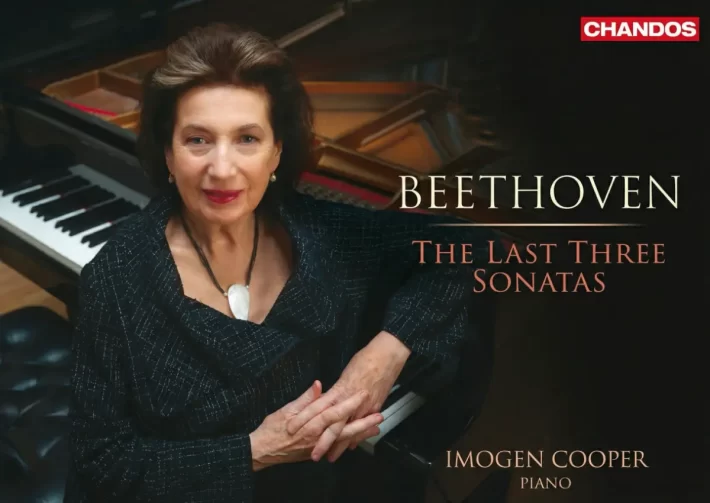
The announcement of Imogen Cooper’s retirement from the concert stage lends a certain poignancy to this release. Beethoven’s final three piano sonatas are often regarded as the ultimate test of a pianist’s maturity, demanding a level of lived experience to even begin uncovering their spiritual depths. In many ways, this album feels like a natural companion to her 2019 recording of the Diabelli Variations (reviewed here), showing a performer fully immersed in the complexities of late Beethoven.
Cooper’s technical mastery is most evident in her exceptional control of voicing. In the deceptively simple accompaniment of Sonata No. 31, Op. 110, every note is weighted with intent, contributing to a perfectly balanced sound image. Similarly, the way she navigates the transition from the serene trills at the end of the variations in Sonata No. 30, Op. 109 back into the main subject is masterfully handled (track 3, 11’41”). For those who enjoy following along with a score, this recording is a delight. Cooper is meticulous with Beethoven’s instructions, making clear distinctions between forte and fortissimo, while her handling of ritardandi and the return to tempo feels entirely organic.
While some might prefer a more visceral, high-voltage approach to movements like the Prestissimo of Op. 109 (track 2), Cooper’s interpretations prioritize a cohesive, long-term overview. The slow movement of Op. 110 (track 6), arguably one of Beethoven’s most profound creations, is played here with a level of sensitivity that could hardly be bettered. Interestingly, the label has opted to group this movement and the concluding fugue into a single track. The fugue itself is a model of clarity, delivered with a transparency that never feels clinical or overly academic.
In Sonata No. 32, Op. 111, Cooper takes a broad view of the opening Maestoso (track 7). Her slightly slower tempo allows for a thunderous, terrifying depth in the bass—a true fortissimo that feels like staring into an abyss. The subsequent Arietta is perfectly paced, though the rhythmically driven third variation lacks the “jazzy” edge found in András Schiff’s accounts on ECM. Furthermore, the return of the Aria theme feels somewhat slower than its initial appearance, causing the conclusion to lose some of its exhilarated momentum.
Alfred Brendel famously insisted that Op. 111 should be followed only by silence, refusing encores to preserve the sonata’s transcendent atmosphere. Concluding the album with Bartók’s Dirge, Sz. 45, while played beautifully, feels unnecessary.
Recorded with great warmth and detail at Potton Hall, this is a significant addition to the Beethoven discography. It is only a shame that such a thoughtful cycle from Cooper did not arrive sooner.
Recommended Comparisons
Paul Lewis | Alfred Brendel (1990s) | András Schiff | Mitsuko Uchida
Album Details |
|
|---|---|
| Album name | Beethoven: The Last Three Sonatas |
| Label | Chandos |
| Catalogue No. | CHAN20362 |
| Artists | Imogen Cooper, piano |