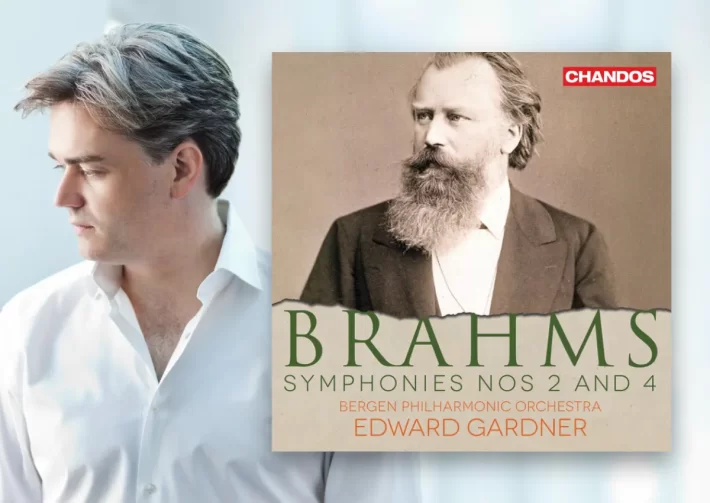
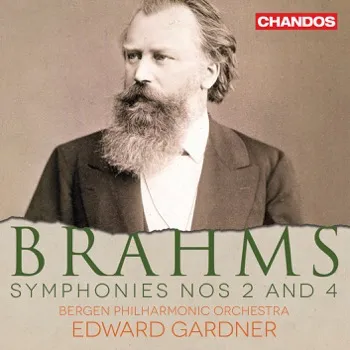
Gardner’s Brahms cycle began in 2019 with a recording of the first and third symphonies (reviewed here). Now, almost six years later, Chandos finally completes it with this generously filled (81-minutes) album with symphonies 2 and 4 in Super-Audio sound.
During his tenure as Principal Conductor (2015-2024) Gardner encouraged a lush, burnished playing from his Bergen players, a sound that serves Brahms’s music particularly well. The strings are lustrous yet nimble; winds and timpani are powerful but never overbearing. The ensemble is well blended with rounded attacks without ever adopting the thickened sonorities heard on Petrenko’s recent Berlin recording of the Brahms first symphony.
Gardner’s care for balance ensures homogenous textures that nevertheless allows for inner voice clarity. His tempi in the second symphony tend towards faster than normal: even with the exposition repeat, the opening movement lasts 18’18”, versus Gardiner’s recent Concertgebouw/DG reading of 19’16”, or Hrůša’s leaden Bamberg/Tudor recording lasting almost 21 minutes.
These qualities contribute to a compelling account of the second symphony. Despite Brahms’s November 1877 note to his publisher describing the work as ‘so melancholic that you will not be able to bear it. I have never written anything so sad and dark-toned…’ most conductors, Gardner included, interpret it as the sunniest, most pastoral of the four symphonies. While I believe the composer’s comment is a hint that there are darker elements in the score, the overall excellence of the playing and recording made me quite willing to accept Gardner’s view.
In the opening movement, I admire how clearly the structure and thematic transformation are laid out. Gardner’s lithe approach may, at times, not allow for the melodic bloom heard in readings by Walter (New York and Columbia, both Sony Classical) and Giulini (Chicago/Warner Classics). And at 14’27” there is more anxiety and tension than Gardner allows. Yet the sheer beauty of the slow movement is undeniable: sweetly sung, with impeccable voicing and balancing.
The Allegretto grazioso is light and utterly beguiling. The finale is a bit slower than I expected (9’26”) and, despite its clear articulation and energy, it hangs fire. If this were a collector’s first recording of the work, the brilliant playing and stunning sound would certainly satisfy. But turn to Karajan’s Philharmonia reading or Jochum’s performance with the London Philharmonic (both on Warner Classics) and one finds greater drive and more compelling characterization.
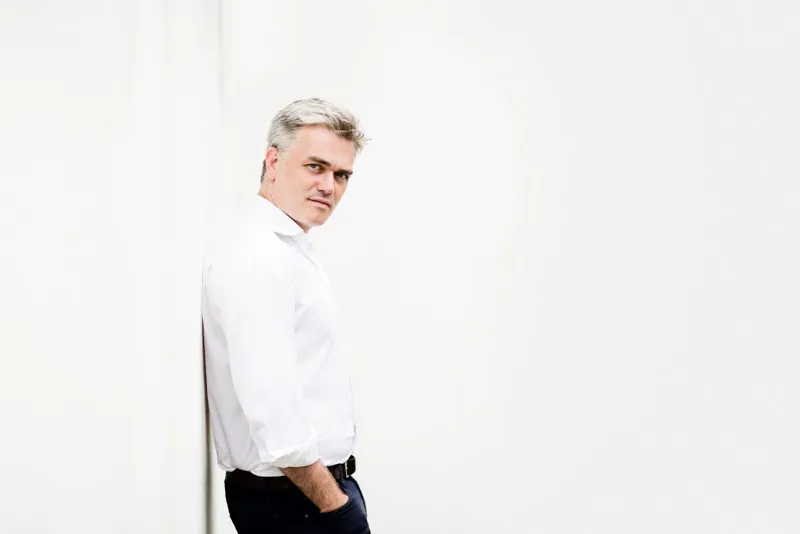
Edward Gardner (images: © B Ealovega)
The fourth symphony examines entirely different emotional territory – this is dark music, rarely allowing any light to shine in as the work moves inexorably towards it destructive, tragic end. The qualities of sound that made the second symphony performance successful will not be the same for the fourth. And yet, Gardner tries.
The structure and thematic development of the first movement are again clearly laid out, but the agitated conflict one hears in Kleiber’s Vienna recording (DG) or Honeck’s more recent Pittsburgh performance (Reference, reviewed) are barely hinted at here. The slow movement is better, the supple phrasing and gorgeous playing revealing a bittersweet melancholic mood. But the Allegro giocoso, the only movement of Scherzo character in any of the symphonies, is too polite. It is energetic and giddy (and therefore suits Gardner’s more objective interpretation) but turn again to Kleiber or Honeck and one realizes that there is a maniacal wildness to this music, that, once heard, is not easily forgotten.
Last July I wrote a review of Nagano’s Hamburg recording of the fourth (BIS) and my comments about that performance hold true for this new reading. The opening brass chorale should foreshadow the dark journey upon which we are about to embark, but Gardner offers something far sweeter, less threatening. The playing of the Bergen orchestra is unimpeachable, the flute solo truly heartbreaking. But the brass, especially in the closing minute, should dominate the texture, raging as the music reaches its tragic conclusion.
Readers who dislike the Kleiber and Honeck readings will certainly like this performance of the fourth, and I would enjoy hearing the second again, especially for the overall excellence of the playing.
Recommended Comparisons
Jochum | Karajan | Honeck | Chailly

The Classic Review Newsletter
Get weekly updates about new classical music content.
By signing up, you acknowledge and agree to our Privacy Policy & Terms of Service .
Album Details |
|
|---|---|
| Album name | Brahms – Symphonies 2 & 4 |
| Label | Chandos |
| Catalogue No. | SA-CD 5248 |
| Artists | Bergen Philharmonic Orchestra, Edward Gardner (Conductor) |