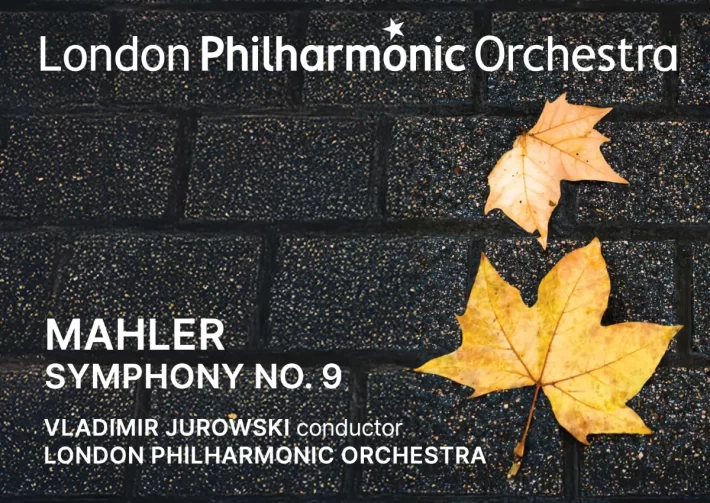
Jurowski has put forth few Mahler works to record, including 3 other symphonies and Das Lied von der Erde. InitialIy, I found his 2011 recording of Mahler’s ‘Resurrection’ Symphony (LPO) brusque and superficial, misconstruing excitement for emotion. Symphony No. 1, released in 2023, did little to change my opinion, but the 2019 London Philharmonic Orchestra performance of the fourth symphony (review) was far more convincing, as was Jurowski’s 2020 performance of “Das Lied von der Erde” (this time with the Berlin RSO on Pentatone, reviewed here). So, I was intrigued to hear this new LPO recording of Mahler’s final completed symphony, premiered a year after the composer’s death in Vienna, June 1912, by Mahler’s friend and colleague Bruno Walter.
The timings of the outer movements suggest Jurowski consulted recordings by Walter (the historic live 1938 recording with the Vienna Philharmonic/Pristine Classical) and Klemperer (Philharmonia Orchestra/Warner Classics). Jurowski’s first movement takes 25’35” – only Walter (in 1938) and Abbado (Berlin/DG) are faster. His 22’41” final movement is significantly faster than my standard recommendations: Abbado (25’56”); Bernstein (26’12” Berlin/DG); Chailly 28’24” (Concertgebouw/Decca); and Karajan (26’48” Berlin/DG). I feared this meant a return to the brusque approach that made Jurowski’s ‘Resurrection’ so disappointing, but in this performance, I find the tempos, with rare exceptions, fully convincing.
The first movement’s opening feels matter of fact but quickly finds its footing, as the reading becomes ever more captivating and intense. LPO’s recording is clear, warm, and truthful, though two-dimensional, especially when compared to BIS’s stunning engineering for Vänskä’s Minnesota Orchestra. Backwardly placed brass rarely cut through the texture as they do in DG’s Abbado and Karajan Berlin recordings. Timpani also lacks the physical impact of those recordings. Nevertheless, the orchestra’s playing (with divided violins promoting contrapuntal clarity) and Jurowski’s pacing is gripping.
The second movement, taking just under 17 minutes, is surprisingly slow. The structure is three different ‘country’ dances, each with its own tempo. The first dance has a definite lumbering quality, the second an oafish humor, though I would have liked a more significant difference in tempos. The third dance brings particularly elegant playing from the LPO’s woodwinds. Jurowski’s phrases with significant rubato (a similar pliability is heard on his LPO recording of Rachmaninoff’s “Symphonic Dances”).
The “Rondo: Burleske,” brings the orchestra’s considerable virtuosity to the fore, though I wish the Royal Albert Hall provided a more complimentary acoustic. The Rondo’s manic mood swings are well gauged, though the Trio, with its magical trumpet solo does not reach the level of ethereal tenderness Vänskä conjures in Minnesota. In the Coda, Jurowski holds the reigns a little too tightly, preventing the final bars from matching the wild frenzy of Abbado’s Berlin and Lucerne (Accentus DVD) performances.
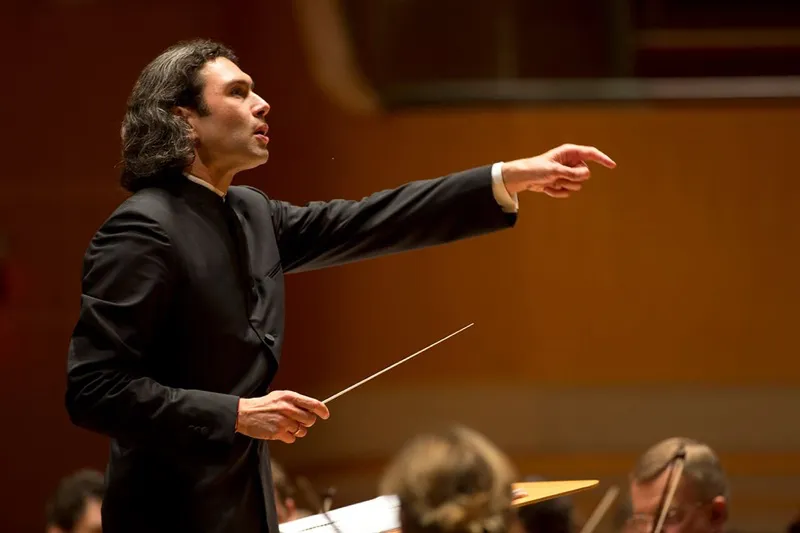
Vladimir Jurowski (image: © Drew Kelley)
Over the last several years, I have reviewed recordings of this symphony by Ádám Fischer (Düsseldorfer Symphoniker/Avi), Simon Rattle (Bavarian RSO/BR Klassik), Osmo Vänskä (Minnesota Orchestra, BIS), and Philipp von Steinaecker (Mahler Academy Orchestra/Alpha). In each review I have noted, to various degrees, an objective approach at odds with the music’s overt emotion. For the few bars I was worried Jurowski’s quick tempo signaled a similar objectivity, but in fact this reading has an undeniable emotional potency, even if it does not equal what Abbado, Karajan, and Rattle (Warner Classics) lay bare in Berlin.
After repeated listening, this performance strikes me as less about a farewell to life than acceptance of life and loss. (The substantial sketches for the tenth symphony convince me Mahler intended to keep on living, and I would point out that Jurowski has recently recorded Rudolf Barshai’s completion of those sketches for a future LPO release, so perhaps he feels similarly). What I sense here is Mahler releasing the agony of his daughter’s death and the diagnosis of his heart condition. Surely grieving these things was an emotional and physical burden; perhaps, in the Coda, Mahler has reached acceptance that lightens the weight of that grief.
While I cannot explain what led me to feel this, I can say that this recording offered me a penetrating, deeply touching emotional journey that stayed with me long after I was done listening.
Recommended Comparisons
Walter | Klemperer | Abbado | Bernstein | Chailly | Karajan | Vänskä | Rattle

The Classic Review Newsletter
Get weekly updates about new classical music content.
By signing up, you acknowledge and agree to our Privacy Policy & Terms of Service .
Album Details |
|
|---|---|
| Album name | Mahler – Symphony No. 9 |
| Label | LPO |
| Catalogue No. | LPO-0139 |
| Artists | Lonson Philharmonic Orchestra Vladimir Jurowski (conductor) |