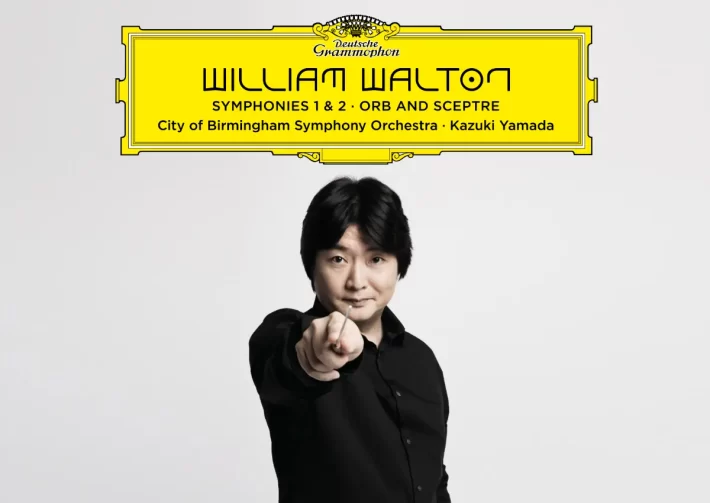
Kazuki Yamada and the City of Birmingham Symphony Orchestra make their DG debut together in a program devoted to Walton‘s two symphonies and Orb and Sceptre. It is a fitting choice for a first album on the label, offering a broad view of the composer, from ceremonial pageantry to the more searching and contrasted worlds of the symphonies.
The program begins with Walton’s Orb and Sceptre, dispatched with a surprising lightness. My first exposure to Walton’s coronation marches (the other is Crown Imperial) was Previn’s recording with the Royal Philharmonic (Telarc), weighty, joyful, energetic readings with richly burnished playing, beautifully caught by Telarc’s engineers. DG’s engineering does not match Telarc’s efforts, nor does Yamada find enough nobility in the slower trio sections. And I hear no organ in the final statement of the Trio, even though the orchestra’s hall has an excellent, large organ; its presence is sorely missed.
The choice to record Walton’s First Symphony places this album in direct competition with a recording of the same work made by the orchestra under Simon Rattle in the early 1990s. It is one of Rattle’s finest Birmingham recordings. And there are already several other excellent recordings in the catalogue: Walton’s blistering reading (Philharmonia Orchestra/Warner Classics); Previn’s first recording (London SO/RCA); Litton (Bournemouth SO/Decca); Slatkin and Thomson (London PO/Warner Classics & Chandos); and, more recently, Gardner (BBC SO/Chandos) and Brabbins (BBC Scottish SO/Hyperion).
Yamada’s first movement, at 15’00”, is slower than any of the above. While he generates plenty of energy, I miss the razor-sharp articulation Rattle gets in the earlier recording. And the closely miked sound lacks the transparency and depth found in all the above-mentioned releases. Throughout this performance, the timpani lack presence, an absolute must for this music, and the brass are at times too recessed. Rattle’s decades-old recording has a superior sonic picture, not to mention the Chandos Super Audio recordings for Gardner.
The scherzo, marked Presto, con malizia (fast, with malice), is instead jovial and playful. Readers might argue that malizia also translates as “mischievous,” but Walton’s recording demonstrates the first definition. (The performances by Previn and Slatkin are even more malicious.) Yamada’s third movement is incredibly beautiful, and I found it deeply touching, though I again do not believe this was the composer’s intent. Walton acknowledged that the first three movements express the turbulence of his tempestuous affair with Baroness Imma von Doernberg. Most readings find a forlorn, resigned sadness, but Yamada, by softening the harsh dissonances and embracing a more open-hearted lyricism, seems to suggest healing, or fond remembrance. While undeniably effective, it does not follow Walton’s intended emotional journey.
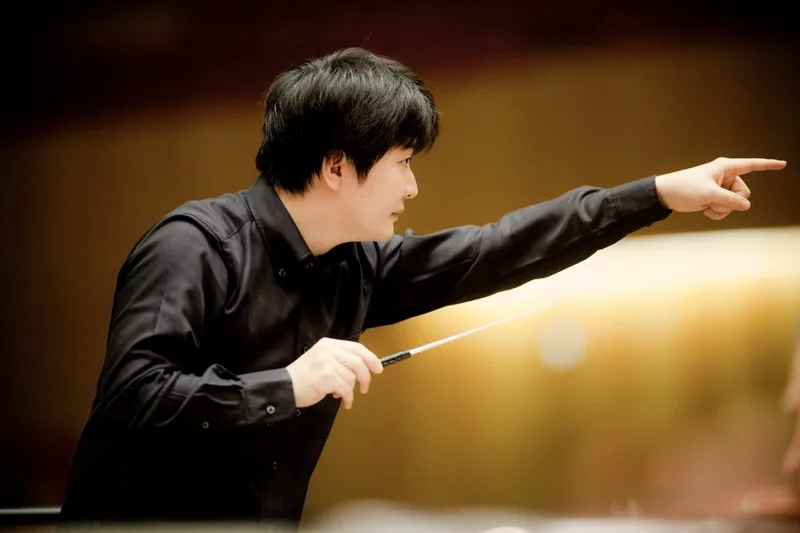
Kazuki Yamada (© Marco Borggreve)
The finale brings more excellent playing from the Birmingham band, but also the same issues that affected the first movement: at 13’11”, it is the longest performance of any mentioned above, more than a minute longer than Walton’s reading. Articulation is again not as sharp as it should be, especially in the fugue, and the final coda misses the hard-won urgency found in the Rattle, Slatkin, and Brabbins performances.
Walton’s Second Symphony, written 25 years after the First, is vastly different music. Walton was, in the words of Michael Kennedy, “technically more accomplished, emotionally more stable, less extravagant, more… experienced.” The orchestration is more refined and exotic, including vibraphone, piano, and celeste. The sensuousness and lyricism of the writing suit Yamada’s interpretive approach, and DG’s engineering, recorded a year before the First Symphony, is also more impressive. Each movement is convincingly paced; the second movement’s climax is particularly powerful, and the CBSO woodwinds are exceptionally beautiful in the same movement. The final passacaglia is a series of variations, each with its own colour and vibrancy, building to a resounding conclusion.
A skilled reading of the First, then, with an exceptional reading of the Second. For those enticed by having both symphonies on a single album, I recommend the Brabbins/Hyperion recording, which offers outstanding performances of both symphonies (and a joyous rendition of Siesta) captured in stunning Hyperion sound.
Album Details |
|
|---|---|
| Album name | Walton: Symphonies Nos. 1 u0026 2; Orb and Sceptre |
| Label | Deutsche Grammophon |
| Catalogue No. | 4868227 |
| Artists | City of Birmingham Symphony Orchestra, Kazuki Yamada, conductor |