Stravinsky wrote The Rite of Spring between 1911 and 1913, conceiving the scenario — a young girl chosen to dance herself to death in a pagan spring ritual — with painter Nicholas Roerich. Subtitled “Pictures of Pagan Russia,” the score broke new ground in its treatment of rhythm, with constantly shifting metres and percussive orchestral textures that shocked audiences at the 1913 Paris premiere under Pierre Monteux. Its thirteen sections, divided into two parts, trace a path from the awakening of the earth to the sacrificial dance, deploying a massive orchestra to create sounds that had no real precedent in Western music.
Here are The Classic Review editorial team’s recommendations for the best recordings of Stravinsky’s The Rite of Spring.
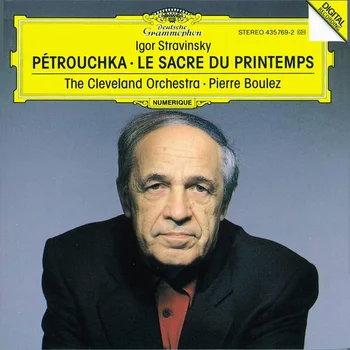
Cleveland Orchestra, Pierre Boulez
Boulez’s third recording of the score, made with the Cleveland Orchestra in 1991, treats the work as a feat of structural engineering. The woodwind playing in the Introduction is extraordinarily precise, and inner voices emerge with a clarity rarely heard elsewhere. His approach favours translucent textures and incisive rhythmic articulation over visceral abandon, making Stravinsky’s complex counterpoint legible in a way few other readings manage. The Cleveland brass are immaculate, and the DG engineering captures every strand of orchestration with clinical focus.
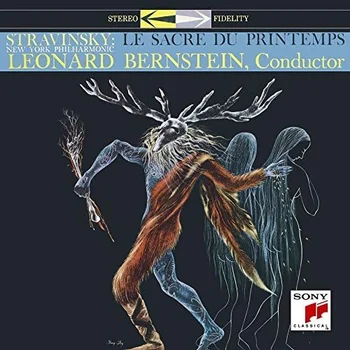
New York Philharmonic, Leonard Bernstein
Captured in a single 1958 session at the Hotel St. George in Brooklyn, this recording documents a young Bernstein during his first season sharing the podium of the New York Philharmonic. The timpani attacks in the ‘Augurs of Spring’ are ferocious, and the orchestra plays with an edge-of-the-seat commitment that lends the Sacrificial Dance a genuinely terrifying momentum. The early-stereo sonics have a raw, vivid timbral presence that suits the score’s aggression.
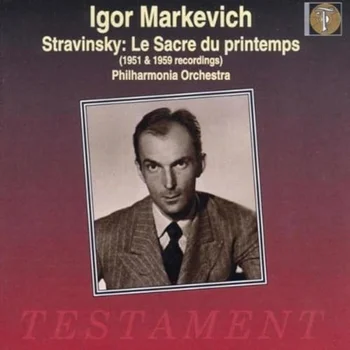
Philharmonia Orchestra, Igor Markevitch
Markevitch had an unusually deep relationship with this score, having studied composition with Nadia Boulanger and immersed himself in the work’s powerful legacy in 1920s Paris. His 1959 stereo recording with the Philharmonia combines tight rhythmic discipline with a volatile, combustible energy. The closing pages of Part I build with an intensity that feels genuinely dangerous, and the brass throughout have a biting, acrid quality. Tempos are brisk but never rushed, and the Philharmonia’s ensemble work in the Sacrificial Dance is strikingly precise for its era.
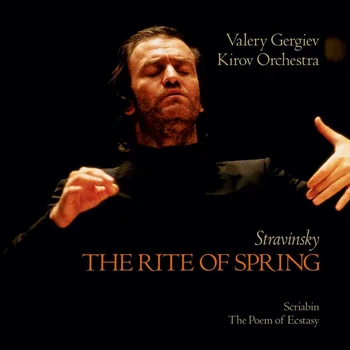
Kirov Orchestra, Valery Gergiev
Gergiev’s account with the Kirov Orchestra is built on a foundation of unusually dark orchestral textures. The opening bassoon solo sits in a hushed, expectant stillness, and the brass throughout carry a heavier, more burnished tone than in most recordings. Rather than pressing relentlessly forward, Gergiev allows dramatic contrasts to unfold with flexible pacing, lending the quieter passages a brooding sensuality. The Philips engineering captures the orchestra’s dense, weighty sonority with realistic depth, and the ‘Spring Rounds’ section has genuine physical impact.
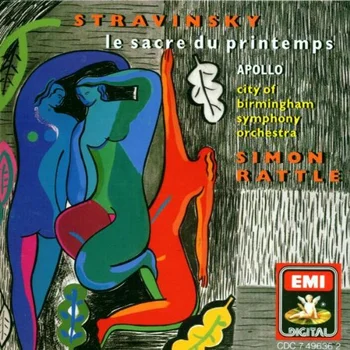
City of Birmingham Symphony Orchestra, Simon Rattle
Rattle’s 1987 recording with the City of Birmingham Symphony Orchestra takes a patient, detail-oriented approach. He does not rush the Introduction, allowing rhythmic tensions to accumulate gradually, and middle-register woodwind lines come through with unusual clarity. The ‘Jeu du rapt’ crackles with earthy energy, while the dissonant brass chorales in Part II are carefully balanced rather than simply unleashed. The EMI sound is warm and naturally spaced, giving the performance an atmospheric quality that emphasises the score’s landscape-like evocations of ancient ritual.
Top image ©️ The Classic Review, AI generated