

The world of classical music is known for its tradition, but in a shocking announcement, the International Conservatory of Notes (ICN) declared a radical change. In an effort to attract a younger audience and modernize the musical experience, all traditional musical notation will be replaced with emojis!
Imagine a score filled with smiley faces, musical notes replaced by fire emojis for crescendos and snowflakes for decrescendos. Dynamics could be represented by a series of hearts (pianissimo) to a chorus of angry faces (fortissimo).
“This is a bold move, but we believe it’s necessary,” said Professor Cleff Sharp, ICN’s Director. “We’ve seen declining interest in classical music among younger generations. Emojis are a universal language, and we believe this will make music more accessible and engaging.”
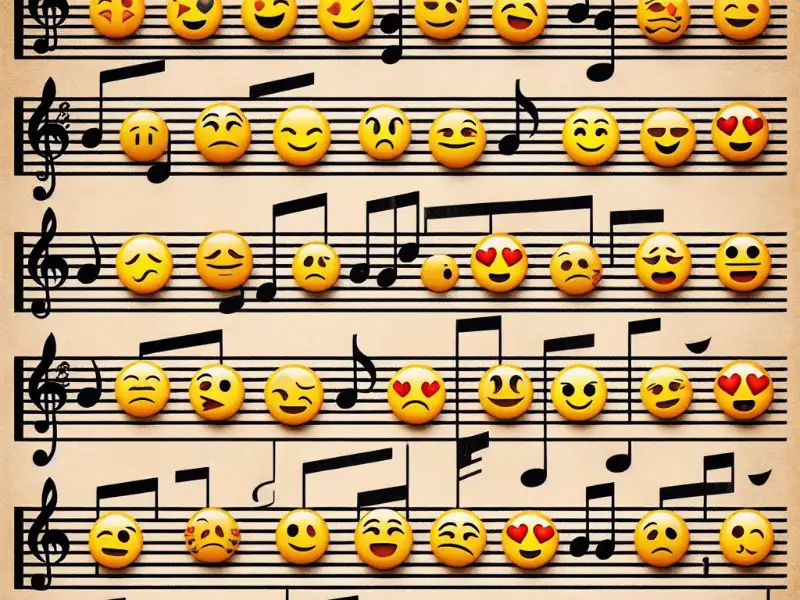
The announcement has been met with mixed reactions. Purists are outraged, calling it a “dumbing down” of a sophisticated art form. “How can you capture the nuance of a Mozart sonata with a string of emojis?” lamented Ms. Beatrice Treble, a renowned music teacher.
However, some musicians are cautiously optimistic. “It could be a fun way to introduce kids to classical music,” said Reginald Drumdiddle, a percussionist. “Maybe it will spark their curiosity and lead them to explore the traditional notation later.”
“Emojis are a universal language, and we believe this will make music more accessible and engaging.”
Professor Cleff Sharp
The ICN plans to release a series of emoji-fied scores for popular classical pieces. They’ve even created a phone app that translates traditional scores into emojis in real-time. Whether this is a genius marketing ploy or a musical apocalypse remains to be seen. But one thing’s for sure, the world of classical music is about to get a whole lot more expressive… or perhaps just a little more .
What do you think about adding emojis to musical scores? A genius marketing ploy or musical sacrilege? We’d love to hear your thoughts! Join the conversation on our social media channels and let us know:

Get an Apple Music subscription:
Latest Classical Music Posts
- Top Five – Stravinsky – The Rite of Spring – The Best Recordings

- Review: Schumann – Violin Concerto – Midori
- Review: Mahler – Symphony No. 7 – Tonhalle-Orchester Zürich, Paavo Järvi
- Top Five – Elgar – Enigma Variations – The Best Recordings
- Review: Forgotten Melodies – Alexander Malofeev, Piano

- Review: Bach – Johannes Passion – Pygmalion, Pichon

Read more classical music reviews or visit The Classic Review Amazon store
Follow Us and Comment:
[social_icons_group id=”964″]
[wd_hustle id=”HustlePostEmbed” type=”embedded”]