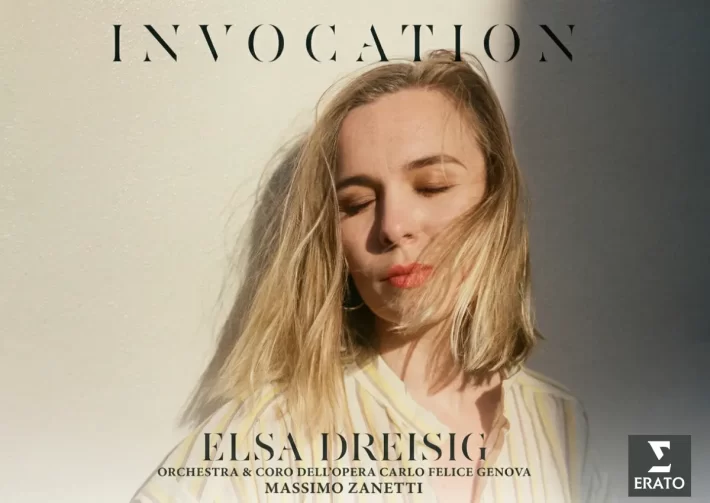
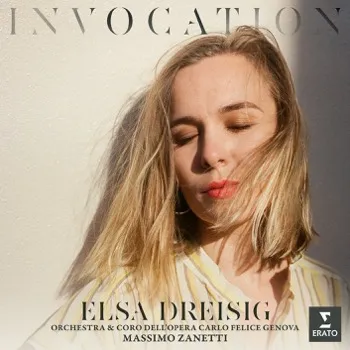
Elsa Dreisig‘s Invocation is a soprano recital built around a shared mood of supplication, longing, and address, drawing on Dvořák, Janáček, Puccini, Bellini, Amy Beach, Uccelli, Wagner, and Grieg. The unifying idea holds reasonably well, and Dreisig’s particular qualities as a singer: clarity, intimacy, and precise vocal control, give the programme a consistent character across its considerable range.
Dvořák’s Song to the Moon from Rusalka (track 1) is well-trodden repertoire, with distinguished accounts from Renée Fleming, Leontyne Price, and Frederica von Stade, among others. Dreisig offers a pleasing reading, tender and fluid, with the kind of clarity and vocal control that serve her well at close range. Her portrayal of the water nymph conveys yearning with some well-placed moments of quiet sadness. Jenůfa’s Prayer from Janáček’s Jenůfa (track 2) is a more intense invocation, aided by the Carlo Felice Genova players. Dreisig sings with composure, and this same restraint gives the more urgent passages a sense of earned intensity.
O mio babbino caro (track 3) needs little preface given its ubiquity, which also makes it a difficult aria to pull off. This performance does not replace any primary recommendations; Callas’ 1954 EMI recording with Serafin remains a point of reference, and some of the rubatos here feel slightly contrived rather than organically shaped. The aria’s luscious spirit is present, but only partially realised.
The orchestral introduction and Casta diva from Norma (tracks 5–6) make for more satisfying ground. The introduction is effectively a miniature instrumental aria, with the flute conveying a pastel-hued lyricism before the oboe enters and the two instruments find a settled equilibrium. The suppleness of the ensemble gives way to Dreisig, who brings quiet intensity to the Casta diva, her lines reflecting the text’s supplication to Heaven with something closer to restraint than grandeur.
The disc also includes works by female composers that fit Dreisig’s voice well. Extase from Amy Beach’s 3 Songs, Op. 11 (track 10) suits her tonal profile: the writing is harmonically whimsical and romantic in character. The selection from Carolina Uccelli’s Anna di Resburgo is stylistically interesting: the Recitativo (track 11) pairs soprano and solo harp with an unexpected Renaissance quality, and in the paired aria (track 12), Dreisig despatches the virtuosic figuration with neat finesse.
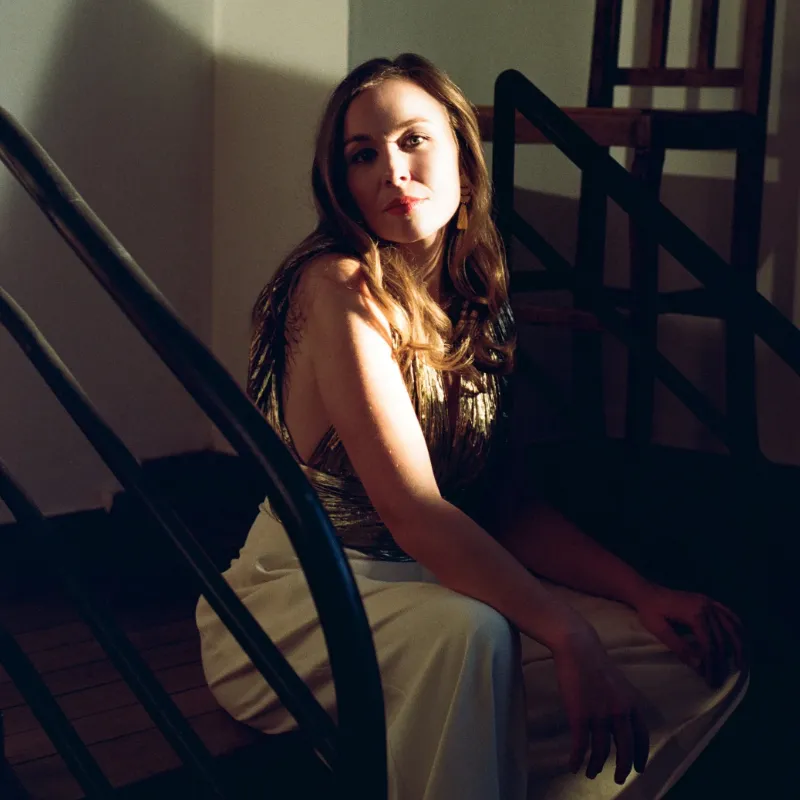
Elsa Dreisig (© Thomas Révay)
The inclusion of Allmächt’ge Jungfrau! from Wagner’s Tannhäuser (track 14) is perhaps the most revealing choice on the programme. Dreisig’s breath control is secure, and she sustains the long phrases without effort. In the studio, the intimacy of her voice, that characteristic clarity and poise, works to her advantage, and the performance holds together on its own terms. Whether such an approach would carry in a full opera house, where Wagner’s music demands not just control but projection and dramatic weight, remains an open question.
Of the remaining selections, Solveig’s Song from Grieg’s Peer Gynt (track 8) registers well. Dreisig captures the narrative quality of the text with natural ease, the contrast between solitude and quiet hope kept in good balance.
The booklet is neatly streamlined, offering just the foreword and essential text translations. The sound engineering maintains a sensible balance between voice and ensemble, remaining attentive to the subtleties of both.
Invocation is a likeable and thoughtfully assembled album. Dreisig is an appealing singer whose voice is intimate and clear, and she is most persuasive when the music calls for transparency and restraint. For recordings that stay within those bounds, this is a pleasing and well-crafted release.
Album Details |
|
|---|---|
| Album name | Invocation |
| Label | Erato |
| Catalogue No. | 2685409371 |
| Artists | Elsa Dreisig, soprano; Orchestra e Coro dell’Opera Carlo Felice Genova; Massimo Zanetti, conductor |