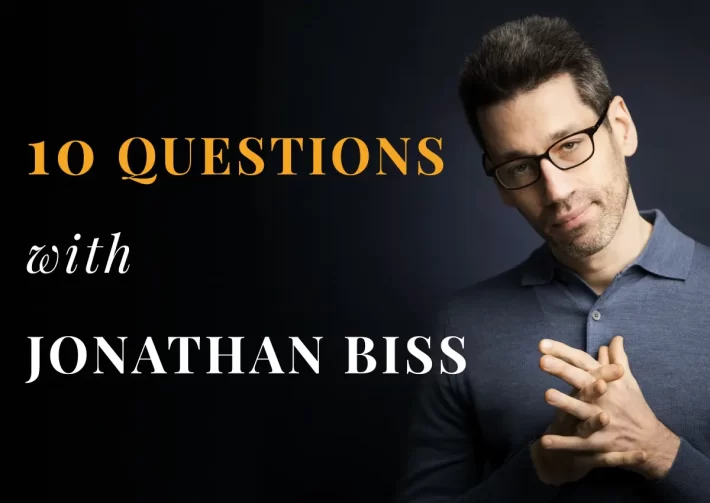
Pianist Jonathan Biss answers The Classic Review’s 10 questions.
Where will he most likely find inspiration? How many hours does he practice each day? And what is the classical music albums he couldn’t live without?
What new repertoire are you currently working on?
Next season I’ll be playing Kaija Saariaho’s Arabesques et Adages, and I’ve just started learning it. I’m very excited, because I’ve loved her music for years, but this is the first time I’m playing it.
What’s a piece of music you don’t currently play but wish you could?
The body of great music that includes the piano is endless – a treasure trove. So this could be a long list! For now, I’ll say Bartok’s first piano concerto, and any of the hundreds of Schubert songs I’ve yet to play. (And I’ve played many.)
Are there any classical composers whose music you don’t quite connect with?
I have a complicated relationship with Shostakovich. I hear the power in his music, but there’s something in it that makes me uneasy, and not in the way that’s intended, I don’t think. (I have friends who will not forgive me for this!)
What was the latest contemporary music piece that impressed you?
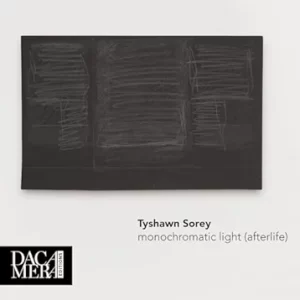
I just listened to the recording of Tyshawn Sorey’s Monochromatic Light. Moving and riveting.
How much time do you dedicate to practicing each day? What are your best tips for developing effective practice habits?
These days, I’m much more focused on quality of practice than quantity. I’d say that on average, I do about two and a half hours a day. The composer Sally Beamish told me about something called the Pomodoro Technique – it’s named after a tomato-shaped clock. The idea is that 25 minutes is the optimal amount of time to truly focus on any task. So, when I’m at home and can make my own schedule, I practice that way. I turn off all my devices, set an alarm, and take a break after 25 minutes. I’ll do that maybe six times a day. I find it very effective – it’s much easier to focus fully if you know in advance that you’re not asking yourself to do it indefinitely.
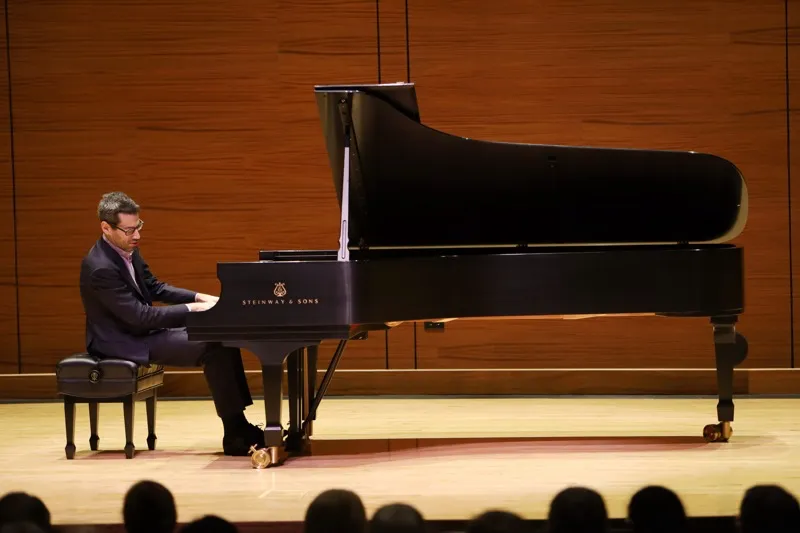
Jonathan Biss (©️ The McKnight Center for the Performing Arts, Robin Herrod)
How do you find inspiration when performing?
Great music is endlessly inspiring…and constantly changing. If you keep your ears open, it presents new questions and challenges all the time. That brings inspiration! And in a performance, knowing that what you are doing will only exist in that one moment, in that room – and that someone might be hearing the music for the first time – is an additional layer of inspiration.
Do you experience performance anxiety? If so, how do you manage it?
Yes. Anxiety is a part of a performer’s life, and as I’ve written about extensively, there was a time in my life where it threatened to swallow me whole. This is a vast topic, but if I had to boil it down, I would say that the problem is not anxiety itself, but the feeling that you have to hide and suppress it. As with most things, if you can accept anxiety, you will not be ruled by it. This is very hard to do, but it is so freeing.
“In a performance, knowing that what you are doing will only exist in that one moment, in that room – and that someone might be hearing the music for the first time – is an additional layer of inspiration.”
If music wasn’t your passion, what other career path might you have chosen?
This is very much a hypothetical question, because music has been my overriding passion for as long as I can remember; if I wasn’t passionate about music, I would be an entirely different person. That said, I do love language, and writing in my second language of English (music is my first) would have been my sliding doors career, in one way or another.
What advice do you have for young musicians starting their careers?
Begin with love. If your work is motivated by your love of music, it will be productive and meaningful. And the same goes for your career choices: If your principal aim is to share the music you care most deeply about, you will end up doing something fulfilling, come what may. If it isn’t, well, then music is probably not the right path for you.
What classical music album you couldn’t live without?
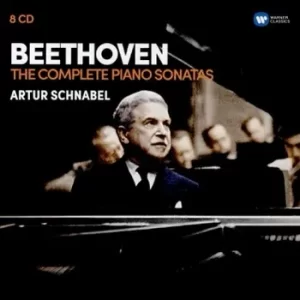
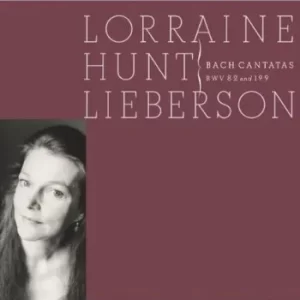
Ultimately, I’m more of a live music person than an album person. But Schnabel’s Beethoven Sonatas and Lorraine Hunt Lieberson’s Bach Cantatas mean a great deal to me.
* * *
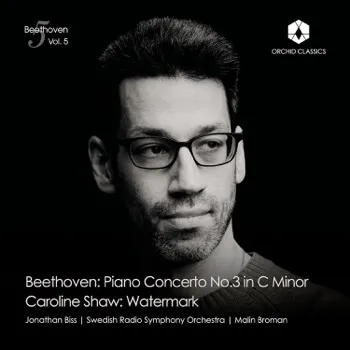
Pianist Jonathan Biss’s new album, Beethoven/5, Vol. 5, has just been released on Orchid Classics, concluding his Beethoven/5 commissioning project with this final installment, bringing to a close one of the most ambitious and innovative Beethoven release series of the 21st century. You can find the album on all platforms here.
On the heels of the release, New York audiences can hear him live in recital at Merkin Hall on May 12, in a signature program that mixes traditional recital fare with lesser-known and contemporary works, an approach that has become central to his artistic identity. More information here.
Visit Jonathan Biss’s website, and his feeds on Facebook, Instagram, and YouTube.