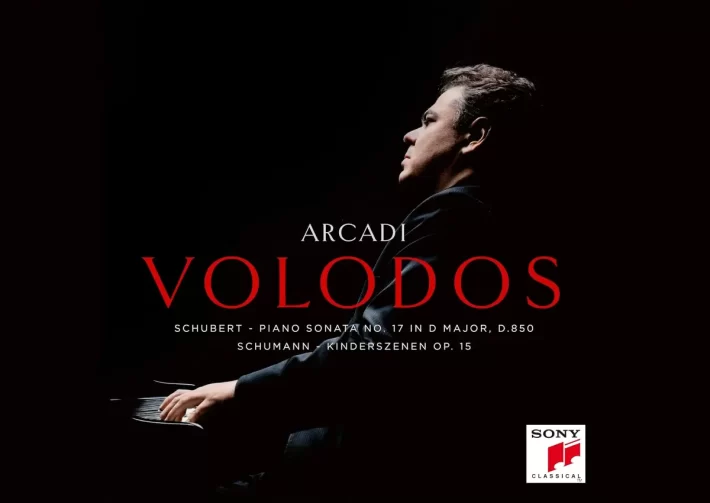
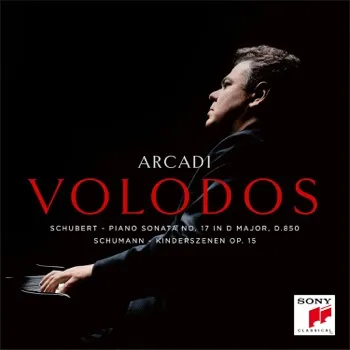
Arcadi Volodos pairs Schubert‘s Piano Sonata in D major, D. 850 (“Gasteiner”) with Schumann’s Kinderszenen, Op. 15 in a live recital recorded at the Fondation Louis Vuitton. The two works present contrasting Romantic ideals: a large-scale four-movement sonata of public ambition and an intimate cycle of character pieces.
Given the energetic profile of the Gasteiner, I had hoped for an exciting performance. The opening Allegro vivace falls flat: the drive and verve the movement demands are not there. The repeated-note motif is an obvious opportunity to project insistent forward momentum, but Volodos does not lean into it the way Brendel does in his more electric reading. The textural writing naturally suggests an orchestral sonority, yet the chords never reach their full potential of resonance.
The Con moto (track 2) picks up some of the slack with its affectionate charm. Volodos shows an appreciable range of dynamic color that is highly responsive to Schubert’s harmonic language. The Scherzo may suit those looking for a graceful, playful take, but I prefer the nearly unhinged Lupu reading on Decca, which exudes a snappier, zestier character.
The Rondo finale could move more briskly, though its recurring refrain has immaculate staccatos and dotted rhythms that call to mind a lighthearted march of toy soldiers. The intervening episodes, by contrast, need a wider range of personality; the lyrical passages register well, but the more intense ones again sound too reserved.
Kinderszenen belies its surface innocence with a tricky musicality. Schumann‘s uncontrived writing and the absence of the thick, complex textures heard in works like the Symphonic Etudes, Op. 13, or the Fantasie, Op. 17, make it especially challenging to recreate a genuine, childlike ethos. What I liked very much about Volodos’ interpretation is its melodious quality: the voicing of Von fremden Ländern und Menschen (track 5) is flawless, the top line lithe and lovely.
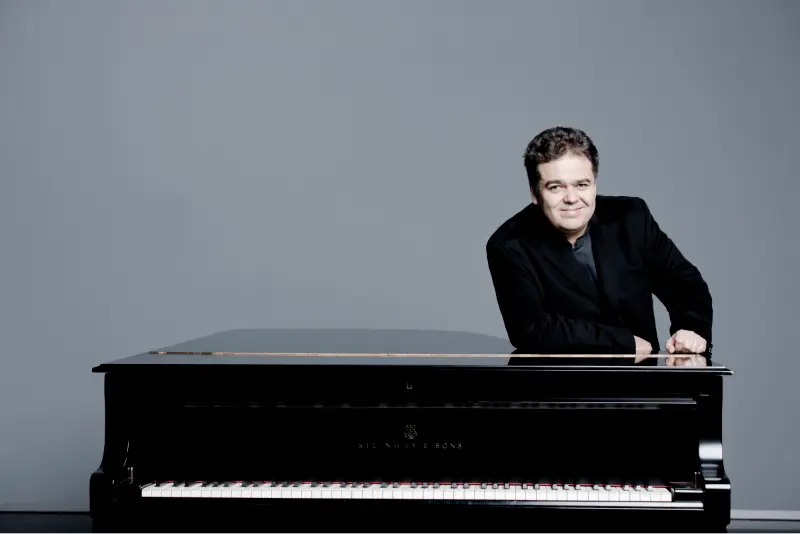
Arcadi Volodos. Photo © Marco Borggreve.
Bittendes Kind (track 8) has a little too much stop-and-go rubato but still captures both dreaminess and a strong sense of yearning. The dialogue between voices in Glückes genug (track 9) is well-defined, and Volodos’ use of the bass register gives the piece a grand, almost symphonic feel.
His account of arguably the most famous piece in the cycle, Träumerei (track 11), is filled with care and tenderness, though it does not achieve the simultaneous simplicity and profundity that Horowitz reached in his 1986 Moscow performance. The closing Der Dichter spricht (track 17) is one of the strongest moments here: Volodos sustains a contemplative, calming atmosphere that lets every note register.
Yet like the Schubert, and for all its beauty, this performance does not really stand out. The childlike essence at the core of the cycle is supplanted by an overly refined, cautious approach. The elegance of Kuriose Geschichte (track 6) does not quite work; the piece needs a more adventurous touch. Maria João Pires gets it just right in her account, with forward, crisp staccatos. Hasche-Mann (track 7) similarly lacks the rambunctiousness that makes it come alive, a quality Argerich puts front and center.
The engineering is excellent, capturing the nuances of both the performer and the instrument. The piano deserves particular praise: well-tempered and regulated, it has a mellow profile that suits both works. There is, however, an audible noise of something dropping in the closing Der Dichter spricht that Sony should have removed. The liner notes, an interview with Volodos, are a welcome addition, sharing his perspective on the program and his experience of the recital.
There are enjoyable aspects to this live concert, and the conscientious effort behind it is clear throughout. These readings do not, however, displace any primary recommendations in either work.
Album Details |
|
|---|---|
| Album name | Schubert: Piano Sonata No. 17 in D Major, D. 850; Schumann: Kinderszenen, Op. 15 |
| Label | Sony Classical |
| Catalogue No. | 19658879292 |
| Artists | Arcadi Volodos (piano) |