Over the last few years, we have reviewed several impressive performances of the Sibelius Violin Concerto: James Ehnes (review); Janine Jansen (review); Johan Dalene (review); and Christian Tetzlaff (review). I would add two slightly older personal favorites: Vilde Frang (WDR SO Köln/Søndergård/Warner Classics/2010) and Lisa Batiashvili’s first recording with the Finnish Radio Symphony Orchestra (Oramo/Sony Classics/2007). Collectors are clearly spoilt for choice with roughly one hundred readily available recordings, and any new release seeking to stand out needs to offer something special.
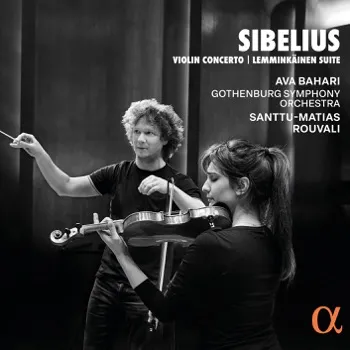
Ava Bahari’s technique is unquestionably brilliant. Every technical difficulty is fully mastered: perfect intonation, awkward shifts flawlessly managed, the opening movement’s difficult cadenza thrillingly dispatched. Throughout the concerto she draws a wonderful variety of colors from her 1694 Stradivarius “Ovcharov.” Phrasing is unfailingly musical, and she ensures a singing tone, even at the quietest dynamics. At 32’17”, her tempos fall right in the middle of the recordings listed above. Rouvali and the orchestra are sensitive accompanists, and there is (of course) a natural Nordic coloring to their playing that makes the undeniably gorgeous accompaniment Karajan’s Berliners offer Christian Ferras feel plush and overindulgent.
Yet after repeated listening, I came away impressed but rarely moved. I ended my review of the Ehnes album by stating that “some may prefer Jansen’s more heart-on-sleeve approach in the concerto,” which was a passive way of saying I am one of those listeners. Both Ehnes and Bahari adopt a moderate interpretive stance, a more objective approach, that I find less satisfying when compared to Jansen, Tetzlaff and Frang, because they take greater interpretative risks.
For instance, compare the initial entrance of Bahari, Jansen, and Frang in the first movement. Bahari enters softly, but Jansen is softer still, while Frang’s wispy tone conveys a telling fragility that signals a reading of extremes. Bahari’s first-movement cadenza is technically brilliant, but Frang’s digs deeper, with stronger accents and accelerandos that suggest she might lose control. In the final movement, I wanted more cut and thrust from Bahari’s articulation: less elegant sophistication and more earthy rambunctiousness, which I very much sense in the Tetzlaff and Frang readings. This is ultimately a matter of personal preference, so readers who find my preferences overwrought and willful may find Bahari far more satisfying.
The other recordings mentioned above typically include another concerto, but this album features Rouvali’s reading of the Lemminkäinen Suite. Completed in 1896, its four movements are tone poems depicting stories from the Kalevala. My earliest exposure to this music was Eugene Ormandy’s second recording with the Philadelphia Orchestra (Warner Classics), which features that gorgeous Philadelphia string sound; in fact, the voluptuous, vivid coloring now seems like the primary focus of the interpretation. I admire Petri Sakari’s reading (Iceland Symphony Orchestra/Naxos): the Icelanders cannot match the splendiferous richness of the Philadelphians, but the energy and dramatic intensity of their playing is ample compensation. Hannu Lintu’s performance (Finnish Radio Symphony Orchestra/Ondine) has stunning clarity, revealing a wealth of orchestral detail, but my current recommendation would be Osmo Vänskä’s last recording, coupled with The Wood Nymph (Lahti Symphony Orchestra/BIS) for its combined excellence of sound and interpretation.
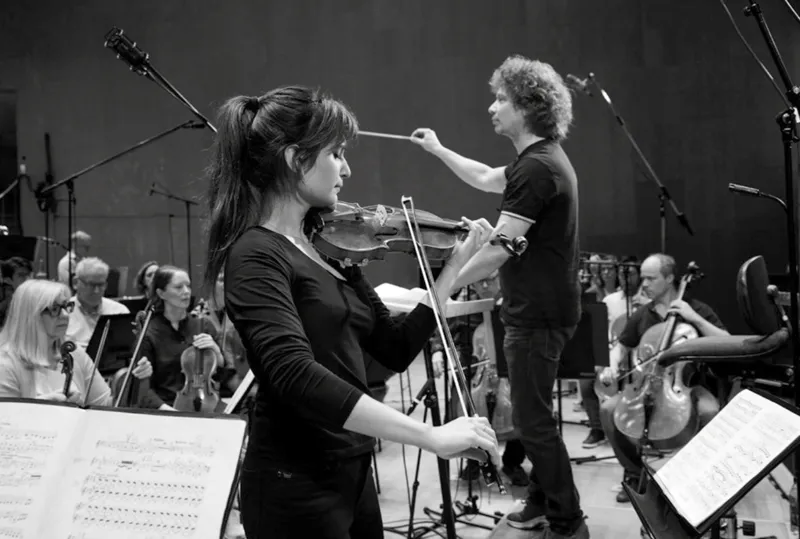
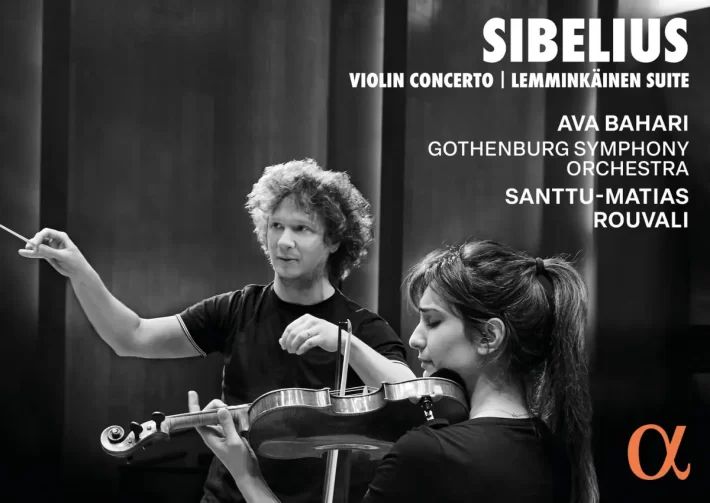
Ava Bahari with Santtu-Matias Rouvali and the Gothenburg Symphony Orchestra.
Rouvali’s first movement (Lemminkäinen and the Maidens of the Island) has satisfying momentum and compelling theatrical flair, building to a powerful final climax. The second movement (The Swan of Tuonela, often played on its own) is taken at an ideal tempo, with a potent forlorn atmosphere in stark contrast to what came before. The English horn solo is gorgeous — a shame that the player is not listed in the booklet.
I find Ormandy’s tempo for the third movement (Lemminkäinen in Tuonela) too quick, though the way those strings dig in as Lemminkäinen is killed is hard to beat. I wanted more weight and heavier articulation from Rouvali at this moment, and I am not sure he captures the mother’s grief (and supernatural ability to bring her son back to life) as successfully as Vänskä. I also missed the heft from the lower instruments one can take for granted in the Philadelphia recording. The final movement (Lemminkäinen’s Return) is suitably heroic, though Ormandy is unexpectedly the fastest of the above-mentioned performances, which adds a raucous celebratory element lacking here.
The CD booklet includes typically excellent notes by Andrew Mellor, as well as a full orchestral roster and biographies for both conductor and soloist. At 81 minutes, the program is certainly generous.
Recommended Comparisons
Sibelius: Violin Concerto
Vilde Frang | Christian Tetzlaff | Jascha Heifetz | Leonidas Kavakos
Album Details |
|
|---|---|
| Album name | Sibelius: Violin Concerto – Lemminkäinen Suite |
| Label | Alpha Classics |
| Catalogue No. | ALPHA1215 |
| Artists | Ava Bahari (violin), Gothenburg Symphony Orchestra, Santtu-Matias Rouvali (conductor) |