Grieg composed his Piano Concerto in A minor, Op. 16, during the summer of 1868 in the Danish village of Søllerød, at the age of twenty-five. It was the only concerto he ever completed, and he revised the scoring repeatedly throughout his life, with the last revisions dispatched to his publisher barely six weeks before his death in September 1907.
The opening — a crescendoing timpani roll followed by the soloist’s descending cascade of chords on the piano — has become one of the most recognisable gestures in the Romantic concerto repertoire, while the finale draws on the rhythms of the Norwegian halling and springar folk dances and closes in a broad A major peroration.
Here are The Classic Review editorial team’s recommendations for the best recordings of Grieg’s Piano Concerto.
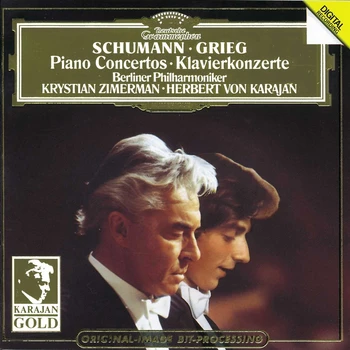
Krystian Zimerman, Berlin Philharmonic, Herbert von Karajan
Recorded in September 1981 at the Philharmonie in Berlin, Zimerman’s account with the Berlin Philharmonic under Karajan captures the partnership’s combination of poised pianism and opulent orchestral scale. Zimerman, then twenty-four, plays with a crystalline precision and unforced lyricism that keeps the concerto’s Romantic gestures from tipping into sentimentality. Karajan’s orchestra supplies a weighty, burnished frame, particularly in the Adagio, where the string choirs rise and settle around the piano without overwhelming it. DG’s engineering preserves both the bloom of the hall and the clean articulation of the passagework, and the finale builds to its coda with composed grandeur.
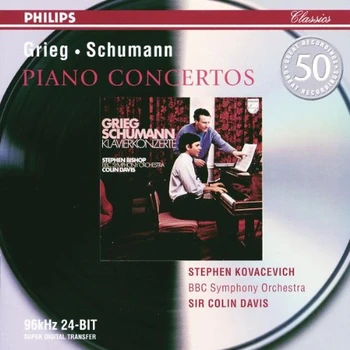
Stephen Kovacevich, BBC Symphony Orchestra, Sir Colin Davis
Taped at Walthamstow Assembly Hall in January 1971 with the BBC Symphony Orchestra under Colin Davis, Kovacevich’s Grieg became the Philips benchmark against which subsequent recordings have long been measured. His approach is unostentatious and carefully weighted, with the first-movement cadenza shaped as poetic reflection rather than athletic display. The Adagio moves in quiet, singing paragraphs, and Davis draws from the orchestra a transparent balance that lets the inner string lines emerge. The halling rhythms of the finale have lift and shape without being pressed. The pianist was originally credited under his earlier name, Stephen Bishop.
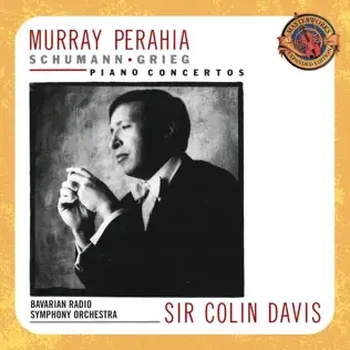
Murray Perahia, Bavarian Radio Symphony Orchestra, Sir Colin Davis
Recorded live across four January 1988 sessions at the Philharmonie im Gasteig in Munich, Perahia’s Grieg with Colin Davis and the Bavarian Radio Symphony brings an unusually Chopinesque sensibility to a concerto more often pressed for bravura. The virtuosity is considerable but always kept in service of the phrase, with the first-movement cadenza unfolding as a succession of quiet inner monologues rather than display. The Adagio is shaped with unhurried melancholy, the piano tone softened by the hall’s bloom, and Davis draws from the Munich strings a refined, translucent accompaniment. The finale retains a classical proportion, with the Andante maestoso coda broadening without forcing its climax.
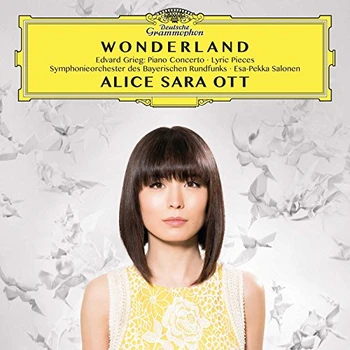
Alice Sara Ott, Bavarian Radio Symphony Orchestra, Esa-Pekka Salonen
Captured live at the Herkulessaal in Munich in January 2015 and released the following year as the centrepiece of her all-Grieg album Wonderland, Ott’s reading with the Bavarian Radio Symphony under Esa-Pekka Salonen takes an unusually spacious view of the score. Tempos run notably broader than in most rival accounts, allowing each phrase to settle into its own pace, and the Adagio unfolds with a hushed, unhurried lyricism. Salonen’s accompaniment is alert to every shift of colour, the BRSO woodwinds emerging with chamber-music transparency. Paired on disc with a sequence of Lyric Pieces and Peer Gynt excerpts, the Concerto is framed as the heart of a broader meditation on Grieg’s Nordic imagination.
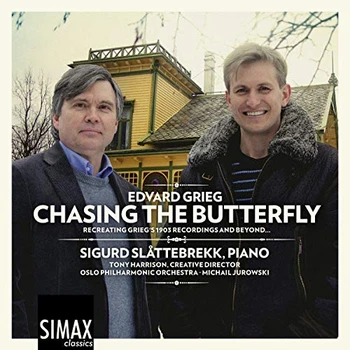
Sigurd Slåttebrekk, Oslo Philharmonic Orchestra, Michail Jurowski
Recorded in 2005 with the Oslo Philharmonic under Michail Jurowski and reissued in 2010 alongside Slåttebrekk’s ‘Chasing the Butterfly’ project, this Simax account brings an unusually idiomatic Norwegian voice to the concerto. Slåttebrekk’s long study of Grieg’s own 1903 gramophone recordings informs the reading’s rhetorical flexibility — rubato, rolled chords, and folk-inflected inner voicings that feel drawn from a living tradition rather than applied to one. The Oslo strings have a dark, bracing colour, and the halling rhythms of the finale are shaped with the pulse of a living dance rather than an orchestral showpiece.
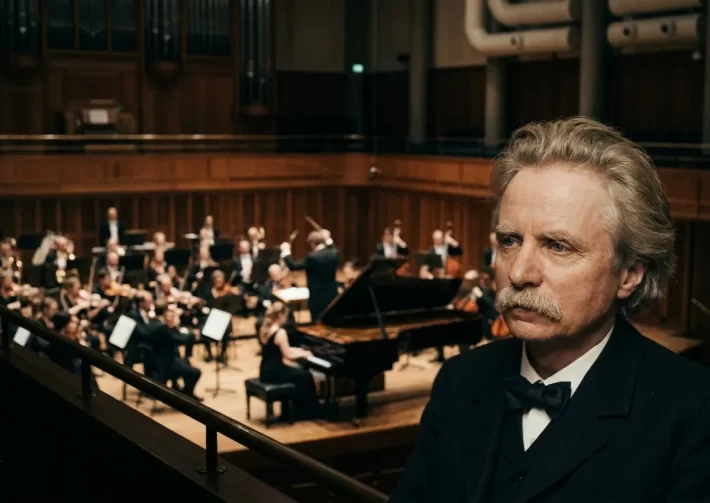
Top image ©️ The Classic Review, AI generated