Gustav Mahler completed the first movement of his Second Symphony in 1888 as a stand-alone tone poem, Totenfeier (“Funeral Rites”). The second and third movements followed in 1893, but he could not find a way to write the finale. The answer came in 1894 at the funeral of the conductor Hans von Bülow, where he heard a choral setting of Friedrich Klopstock’s hymn on the Resurrection. Mahler set two of its verses, added lines of his own, and conducted the complete symphony for the first time in Berlin in December 1895.
The symphony opens with that tone poem, now a solemn Allegro maestoso, followed by a gentle Andante in the manner of a country dance. Next come a scherzo built on Mahler’s song about St. Anthony preaching to the fishes and Urlicht (“Primal Light”), a short song for alto. The finale moves from the Last Judgment to a choral hymn of resurrection, adding a soprano, offstage brass and an organ to an orchestra with ten horns and ten trumpets.
Here are The Classic Review editorial team’s recommendations for the 10 best recordings of Mahler’s Symphony No. 2 (“Resurrection”).
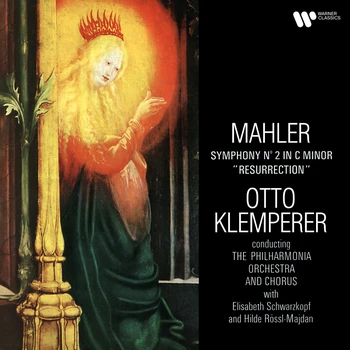
Philharmonia Orchestra, Otto Klemperer
Otto Klemperer left several concert recordings of the symphony, but this is the one he made in the studio with the Philharmonia Orchestra in 1961 and 1962. Klemperer knew the composer. At twenty he led the offstage band in a Berlin performance of this symphony with Mahler in the audience, and Mahler later recommended him for a conducting post in Prague. In this recording he never softens the music’s darkness, and he builds the whole work on a monumental scale. The scherzo is especially telling: few conductors make it sound so sour and mocking. In the finale, the long slow march moves with great gravity. This reading has been a reference for more than sixty years.
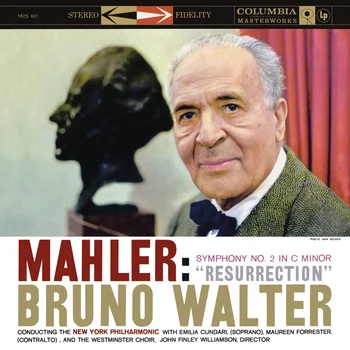
New York Philharmonic, Bruno Walter
Where Klemperer is severe, Bruno Walter is warm. Walter was even closer to the composer. He served as Mahler’s assistant at the Vienna Court Opera, and after Mahler’s death he conducted the first performances of Das Lied von der Erde and the Ninth Symphony. His recording with the New York Philharmonic, made over two seasons in 1957 and 1958, keeps a steady pace from the first bars, neither pushing ahead nor holding back. The Andante flows gently but holds its shape. Maureen Forrester sings Urlicht with simple devotion, and Walter accompanies her with great restraint. That easygoing manner costs something in the scherzo, which lacks bite. For the symphony’s lyrical side, this is the recording to choose.
Vienna Philharmonic, Zubin Mehta
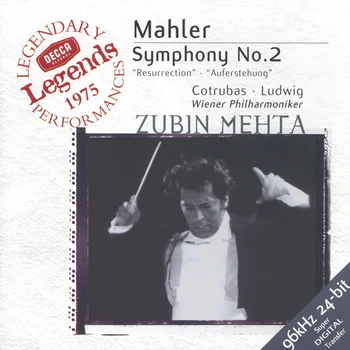
Zubin Mehta takes the first movement at a true Allegro in his 1975 studio recording with the Vienna Philharmonic, and the whole performance follows that lead. The orchestra plays with tremendous energy, and its brass have an unusual brilliance. The Vienna State Opera Chorus sings with conviction, its basses especially strong. There is one real flaw. In the finale, the singers enter with no break after the orchestra falls silent, ignoring the pause Mahler writes there. The recorded sound also strains at a climax or two, though the playing itself stays clean. Still, this is a direct, unfussy reading that keeps its emotional force.
New York Philharmonic, Leonard Bernstein
The third of Leonard Bernstein’s three recordings of the symphony comes from concerts with the New York Philharmonic in 1987, and it is the broadest and most personal reading here. Bernstein pushes every expressive gesture as far as it will go, at times verging on mannerism. The slow tempos occasionally lose momentum, and the dry sound of the concert hall leaves the percussion oddly balanced now and then. The closing pages of the finale are immense. Listeners who want the symphony at its most emotionally heated will find it here, certainly one of Bernstein’s greatest Mahler achievements.
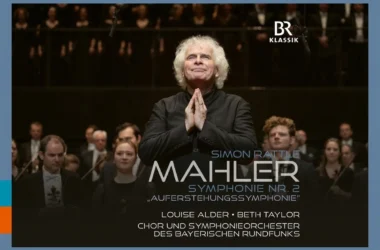
City of Birmingham Symphony Orchestra, Simon Rattle
Of Simon Rattle’s three recordings of the symphony, the first, made with the City of Birmingham Symphony Orchestra in 1986, still holds its own against his later remakes in Berlin and Munich. It was recorded in the studio, without an audience, yet it has the drama and momentum of a concert performance. Janet Baker brings a deep, inward tenderness to Urlicht, and in the finale the chorus first enters almost in a whisper. With so many fine versions now available, it is no longer the obvious first choice, but few are more rewarding.
London Philharmonic Orchestra, Klaus Tennstedt
Taken from a 1989 concert and not released until 2010, this performance surpasses Klaus Tennstedt’s earlier studio recording of the symphony. It is intense and daring. Some tempos in the first movement are overstretched, and a few lyrical themes slow down a great deal. Yet the same movement also bursts out with fierce energy. The finale shows why he takes such risks, building to closing pages, crowned by the organ, that are huge and triumphant.
London Philharmonic Orchestra, Vladimir Jurowski
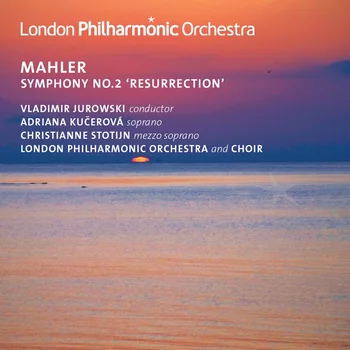
Twenty years later, Vladimir Jurowski recorded the symphony live with the same London Philharmonic Orchestra and took the opposite path, lean and quick where Tennstedt is broad and intense. The 2009 performance is full of new ideas. In the scherzo, Jurowski inserts tiny pauses just before its two loud outbursts, an unsettling but witty effect. The speed has a cost, though. The first movement can sound hurried, and a few choices seem willful. Yet the closing choral music is warm and intimate, and anyone who knows the symphony well will find much in it they have not heard before.
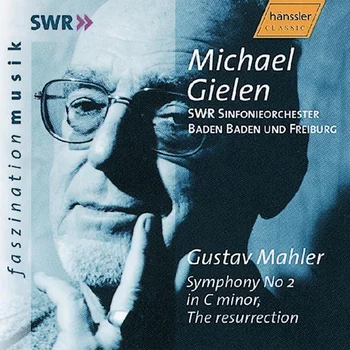
SWR Symphony Orchestra Baden-Baden and Freiburg, Michael Gielen
Every line of the score can be heard in Michael Gielen’s 1996 recording with the SWR Symphony Orchestra Baden-Baden and Freiburg. With the first and second violins placed on opposite sides of the orchestra, the exchanges between them are easy to follow. Gielen avoids any romantic excess, which can leave the performance sounding reserved. The choir sings its early entries with striking directness, and in the quiet unaccompanied passages every phrase is shaped with care, the voices evenly matched. The disc also includes Schoenberg’s Kol Nidre and Kurtág’s Stele.
Lucerne Festival Orchestra, Claudio Abbado
This 2003 concert with the Lucerne Festival Orchestra is the last and best of Claudio Abbado’s three recordings of the symphony, and more intense than the two before it. The orchestra was made up of hand-picked players, and its quietest playing is remarkably controlled. The finale has real power. The recorded sound places the strings too close and the horns far away, and the soprano, Eteri Gvazava, has one uneasy moment. Neither flaw spoils a performance of rare refinement.
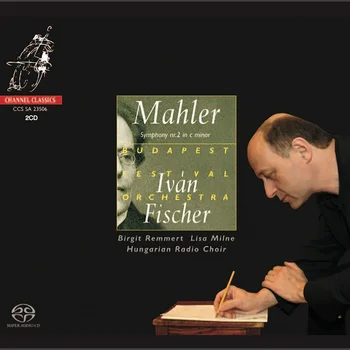
Budapest Festival Orchestra, Iván Fischer
In this 2005 recording, the first movement is calmer than in most others. The opening has weight, but Iván Fischer holds the movement back, so the performance takes time to ignite. Along the way it can lack a little spontaneity. In spirit, the reading is closer to Walter’s lyricism than to Klemperer’s severity. It is probably the best-engineered recording on this list, catching the quietest moments as clearly as the loudest. That clarity pays off at the end of the finale, where Fischer releases the full force of the Budapest Festival Orchestra in an enormous climax.
Top image ©️ The Classic Review, AI generated