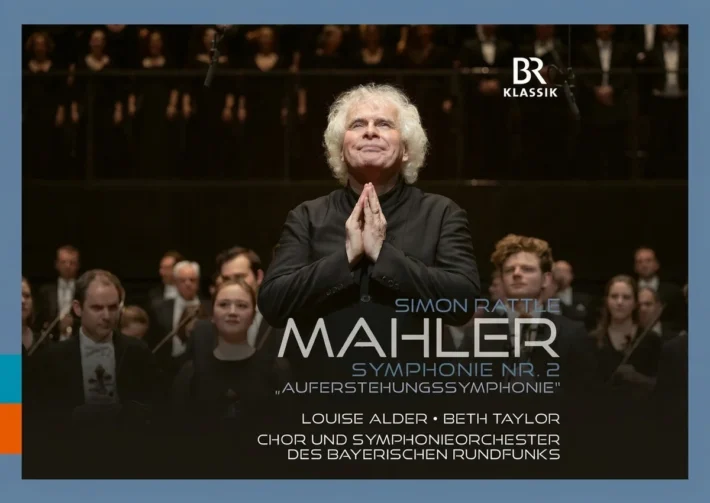
This is Simon Rattle’s third official recording of Mahler’s Symphony No. 2. He recorded it before with the City of Birmingham Symphony Orchestra (EMI, 1987) and the Berlin Philharmonic (EMI, 2011). Hearing this symphony live at age 12 is what led him to start conducting, and he believes it is “one of the most moving of all orchestral works.” In this new reading his love and mastery of the symphony are never in doubt.
In a market saturated with brilliant recordings, one wonders if a third version is needed, and readers who already own one or both earlier albums will surely want to know whether this latest version offers an interpretive difference or improvement that warrants the investment. Yet listening to the three recordings, one is struck by how little Rattle’s interpretation has changed, which means comparisons come down to orchestral playing and engineered sound.
This is Rattle’s quickest traversal of the first movement (22’08” versus 24’20” in Berlin). Ensemble is impressively tight, but the CBSO offers the most incisive playing. Right from the initial entry, the Bavarian strings lack sharpness; even accents have a roundness of attack. The Bavarians have greater technical élan than the CBSO, with the strings finding more light and shade than their Berlin counterparts.
But the Birmingham reading has an energy unmatched in the later recordings. Perhaps it is the result of a ‘regional’ orchestra intent on proving it can compete with more renowned ensembles in this repertoire. Whatever the reason, the CBSO has a drive and ferocity in the first movement that is all but absent in Berlin and appears only sporadically in this latest recording.
Rattle’s treatment of the dissonant brass chords that end the development section is now more mannered. For me, the sudden tempo change and heavy emphasis (track 1, 14’26”) do not convey terror. Turn to performances led by the first generation of Mahler conductors (Fried, Klemperer, Walter, Stokowski), most of whom knew Mahler personally: most take this passage in tempo or allow just a slight rallentando. Compare Rattle’s handling with Stokowski’s famous live Royal Albert Hall performance (available on various labels) or Jurowski’s more recent live reading (LPO Live) to hear how keeping this passage in tempo is far more shocking.
The second movement is far more successful, with Rattle’s care over balance and shape matched by the orchestra’s energy and finesse. (Listen to the lovely playing of the strings at track 2, 2’50”.)
But the sudden fortissimo at 4’11” confirmed my concern about the engineering that began with the first movement. The orchestral sound has a slightly veiled quality, its amplitude seemingly contained and two-dimensional, a disappointment from what is typically a first-rate engineering team.
The third movement’s humor is gently delivered, whereas Bernstein (New York Philharmonic/DG) and Jurowski locate a more acerbic wit. The great eruption (track 3, 8’25”) has weight and power, but lacks the sense of horror conjured by Stokowski, Tennstedt (LPO Live) or Rattle’s Berlin reading.
Urlicht is outstanding. Mezzo-soprano Beth Taylor’s singing seems tailor-made for Mahler’s music, and her yearning passion draws great sensitivity from orchestra and conductor. This is more than a match for Rattle’s earlier versions (Janet Baker with the CBSO and Magdalena Kožená in Berlin).
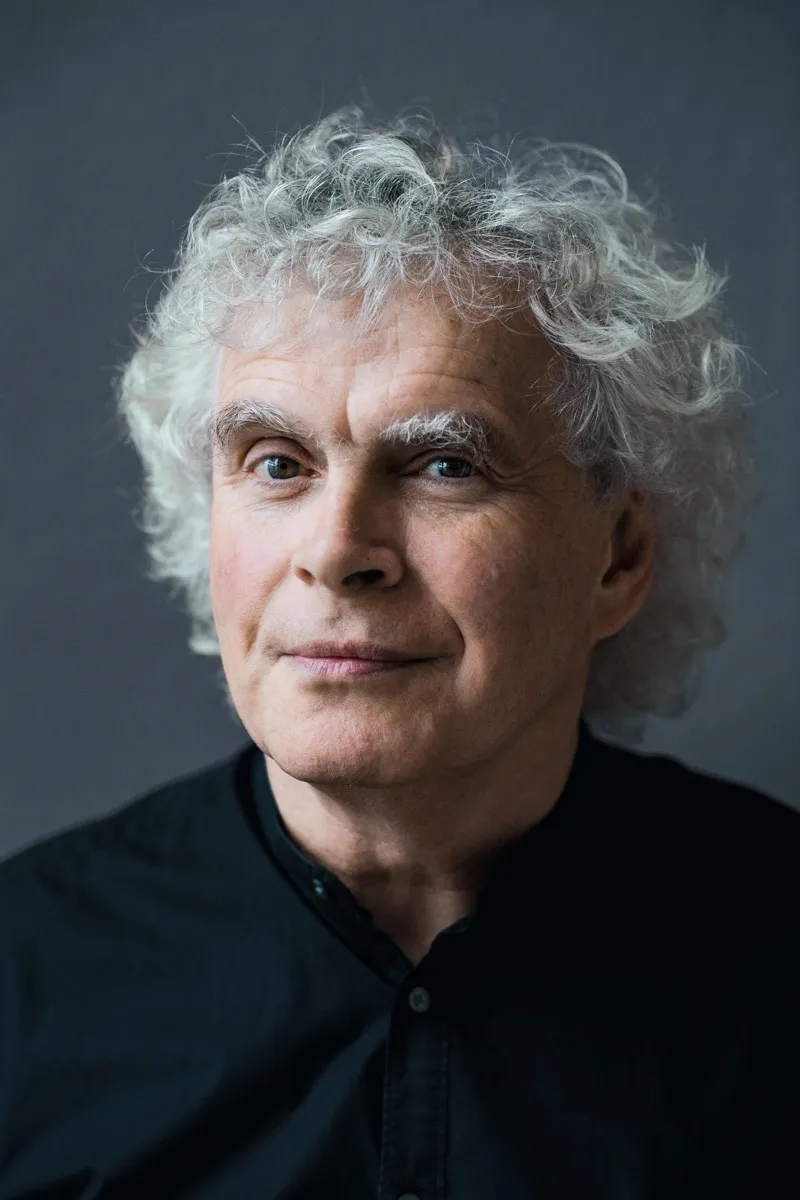
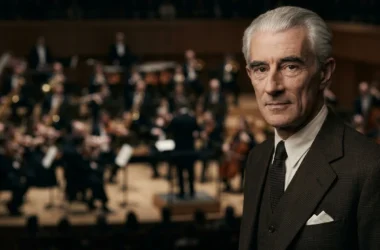
Sir Simon Rattle. Photo © Oliver Helbig.
Rattle charts his way through the final movement’s dramatic scenes with complete assurance. Yet all too often he prioritizes beauty of sound over emotional expression. The opening polyphonic complexity is clearly laid out, but surely the purpose of that complexity is to evoke fear about the Second Coming. The powerful brass chorale at 6’30” feels overly controlled, and the percussion-laden crescendos that follow are plenty loud but lack the ferocity of Jurowski and Bernstein.
The choir’s first entrance is superb: hushed and perfectly tuned. But tension between verses slackens, whereas in Birmingham Rattle is more successful at building tension right through the organ-capped climax. And the final chorale is simply too slow (kudos to the choir for sustaining their sound at this tempo); surely the idea of eternal life would elicit more excitement and drive than Rattle allows here.
If asked to choose the best of Rattle’s three readings, I would point readers to his first CBSO recording. And I would not place any of Rattle’s readings ahead of those discussed above. The more I listen to Jurowski’s performance, the more convinced I am of its greatness.
Album Details |
|
|---|---|
| Album name | Mahler: Symphony No. 2 “Resurrection” |
| Label | BR Klassik |
| Catalogue No. | 900240 |
| Artists | Louise Alder (soprano), Beth Taylor (mezzo-soprano), Chor und Symphonieorchester des Bayerischen Rundfunks, Sir Simon Rattle (conductor) |