Saint-Saëns completed his Symphony No. 3 in 1886, commissioned by the Philharmonic Society of London, and conducted the premiere himself at the age of fifty. It was the last symphony he would write, and it came at the height of his career. He is said to have remarked that he would never achieve anything like it again. When Franz Liszt died later that year, Saint-Saëns dedicated the score to his memory.
The “Organ” nickname is a little misleading. The composer wrote not a concerto but a symphony “with organ,” where the instrument works inside the orchestra rather than in front of it. The scoring also calls for a piano, played at times by two players. The four traditional movements are folded into two continuous parts, unified by a single theme that keeps returning in new forms, a technique absorbed from Liszt. The music travels from restless C minor to a blazing C major finale, whose massive organ entrance has tested engineers as much as conductors. Recordings have answered that challenge in different ways, from concert-hall organs captured in place to a cathedral instrument recorded separately and mixed in.
Here are The Classic Review editorial team’s recommendations for the best recordings of Saint-Saëns’s Symphony No. 3 (“Organ”).
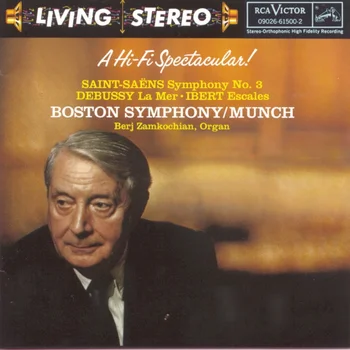
Boston Symphony Orchestra, Charles Munch
More than sixty years after it was made, Charles Munch’s 1959 recording in Boston remains the one to beat. The thrill comes from playing of scorching intensity that unfolds like a live concert.
Munch sets a fast tempo for the first movement’s main theme, and the rhythmic drive never lets up. The strings sing the *Poco adagio* with unforced lyricism, a reminder that this performance is not all fire. In the finale, Berj Zamkochian’s organ makes a thunderous entrance, its bass seeming to shake the floor. The aging tape strains audibly under that huge chord, yet the drama sweeps this flaw aside. Add Munch’s Debussy *La Mer* and Ibert *Escales* as couplings, and the disc’s legendary status is easy to understand.
Chicago Symphony Orchestra, Daniel Barenboim
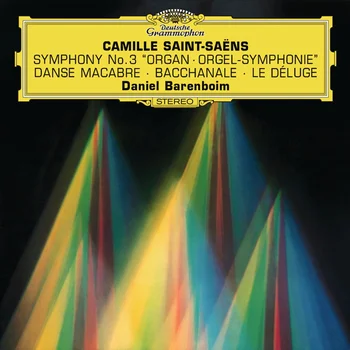
The organ heard on Daniel Barenboim’s 1976 Chicago recording was played an ocean away from the orchestra. Gaston Litaize recorded his part on the organ of Chartres Cathedral, and the two performances were joined afterward in the studio.
That procedure could easily have sounded artificial, but the combined result has an epic, almost otherworldly presence. It crowns a performance of irresistible panache, with the Chicago brass playing at full strength and a finale of colossal impact. Barenboim’s invigorating first-movement tempo leaves the strings a little untidy in places, a small price for the sweep he achieves. It matches Munch for voltage while sounding far more modern. For the symphony’s raw physical thrill, this is the version to reach for.
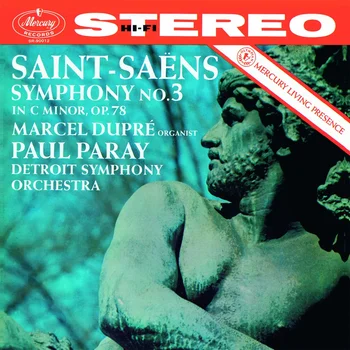
Detroit Symphony Orchestra, Paul Paray
Paul Paray’s 1957 Detroit account moves with exceptional lightness. Its appeal is not weight or blaze, but transparency and grace.
Paray trained this orchestra himself, and it shows in the supple phrasing and the way every strand stays audible. Tempos are bracingly fast, yet nothing feels rushed. The playing stays composed even at full speed. The organ part is in the hands of Marcel Dupré, one of the great virtuosos of the twentieth century. Made with just three microphones, the recording remains astonishingly fresh for its age, clearer than Munch’s. For listeners who want to hear the elegance inside this symphony, Paray is the essential alternative.
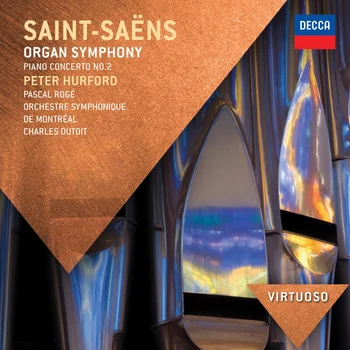
Montreal Symphony Orchestra, Charles Dutoit
Few discs did more to show off the young CD format than Charles Dutoit’s 1982 Montreal recording. Its lasting virtues, though, are musical: elastic, beautifully controlled phrasing and orchestral playing of rare polish.
Peter Hurford’s organ is cleanly focused and never distorts, even in the loudest pages. Every detail sits in natural proportion. The coupling is the Second Piano Concerto, with Pascal Rogé as soloist. Those who crave the sheer force of Munch or Barenboim may find Dutoit reserved. Anyone meeting the symphony for the first time could not ask for a better guide.
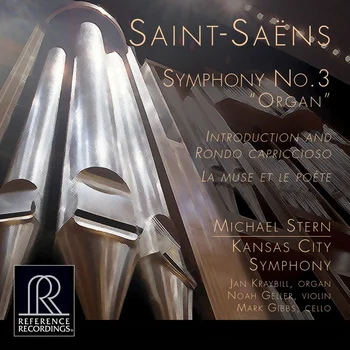
Kansas City Symphony, Michael Stern
Glorious sound is the first thing anyone notices about Michael Stern’s 2013 recording with the Kansas City Symphony. It is not, however, the main reason to recommend the album.
The performance underneath has genuine vitality, with crisp rhythms and the rich, full-bodied sonority this music thrives on. Jan Kraybill presides over a big Casavant concert organ, and the recording gives it impressive depth and space. The couplings are generous: the *Introduction and Rondo capriccioso* with violinist Noah Geller, and the lesser-known *La Muse et le Poète*. A performance this alive earns its place beside the classics.
Top image ©️ The Classic Review, AI generated