Bruckner began his Symphony No. 7 in September 1881, soon after finishing the Sixth, and completed the finale in the late summer of 1883. He was fifty-nine, and his symphonies were still meeting resistance in Vienna. This is the work that changed his fortunes, and it did so not at home but in Germany. Arthur Nikisch conducted the premiere in Leipzig in December 1884. The success was genuine, though not unanimous. Hermann Levi’s Munich performance ten weeks later settled the matter.
The score asks for pairs of woodwinds, four horns, trumpets and trombones, a contrabass tuba, timpani and strings. The weight comes from the depth of the brass rather than sheer numbers. Four Wagner tubas supply the work’s unique color, utilized here for the first time in a symphony and featured only in the Adagio and the finale.
The first movement opens with one of the longest melodies in the repertoire, an arch given to the horn and cellos over a hushed string tremolo. The finale closes by bringing that same theme back in its original solemn form. The Adagio was begun in the expectation of Wagner’s death and finished after the news came, and Bruckner described its closing pages as music of mourning for the master.
The Adagio’s great climax carries a cymbal clash, a triangle and a timpani roll that were not in his first draft. They came from his conductor-disciples and were entered later on a slip pasted into the score in his own hand. Robert Haas struck them out in his 1944 edition, and Leopold Nowak restored them ten years later. Conductors have taken sides ever since, which is why the peak of the slow movement lands differently from one recording to the next.
Here are The Classic Review editorial team’s recommendations for the best recordings of Bruckner’s Symphony No. 7.
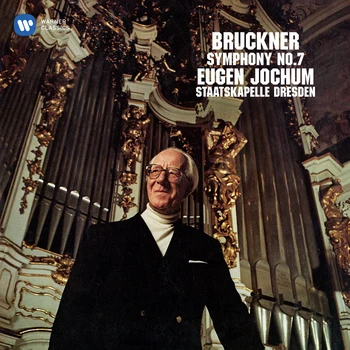
Staatskapelle Dresden, Eugen Jochum
Jochum’s Dresden Seventh is rightfully remembered for its extraordinary Adagio. The central movement glows from within, its long crescendo unfolding on brass tones that are simultaneously burnished and unmistakably human. What elevates this reading beyond a mere exercise in atmospheric beauty is the relentless architectural tension Jochum sustains across the entire canvas. The glorious Adagio never feels isolated, instead arriving as an inevitable emotional destination. He achieves this by subtly flexing the tempo to delineate each structural shift, an interpretive choice that has fascinated listeners for decades. This remains a definitive benchmark against which other interpretations are constantly judged.
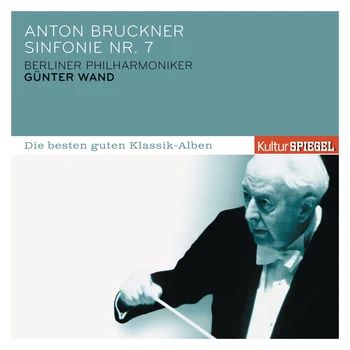
Berlin Philharmonic, Günter Wand
Wand brought decades of hard-won Bruckner experience to his guest appearances in Berlin. That deep familiarity shines through in the sheer breadth of his phrasing. He allows every musical span to breathe fully without ever letting the underlying pulse sag. The orchestra retains an astonishing transparency even during the heaviest sections, ensuring quiet woodwind figures in the Scherzo hold their distinct place rather than vanishing. Opting for the edition that leaves the Adagio’s climax entirely to strings and brass, he builds the peak so convincingly that listeners miss no extra percussion. Only in the final bars does the texture slightly tilt as the trumpets surge forward.
Vienna Philharmonic, Herbert von Karajan
Karajan recorded the Seventh three times in the studio. This Vienna account, taped in 1989, stands apart as a personal farewell. Where his earlier Berlin versions felt monumental and grand, this interpretation glows with a fragile grace. The Adagio expands into a sublime elegy that retains its pristine architectural form throughout. Bathed in the warm sheen of the Vienna strings, the sound offers remarkable clarity and depth. Some listeners find the finale slightly less cohesive than the preceding movements. Yet few recordings manage to hold raw symphonic power and delicate vulnerability in such exquisite equilibrium.
Berlin Radio Symphony Orchestra, Riccardo Chailly
Chailly favors broad tempos, yet he never allows the phrasing to go slack. A deep, steady momentum carries the first movement forward, giving even its most sprawling sections a clear sense of destination. This structural clarity is precisely what makes the recording so admired, alongside audio engineering that remains stunningly realistic. The dividing factor is the emotional temperature. Some find this studio account slightly reserved compared to the thrilling spontaneity Chailly often brings to the concert hall. Regardless of where you stand on that restraint, his grasp of the symphony’s architecture is never in question.
Royal Concertgebouw Orchestra, Bernard Haitink
Haitink’s second Amsterdam recording stands as a quiet masterpiece of the catalog. The Concertgebouw delivers an even, luminous warmth from the opening bar to the final chord. Haitink navigates Bruckner’s great sonic blocks so seamlessly that the symphony flows without ever feeling segmented. The Adagio alone justifies adding this album to any collection. Its towering climax, cymbals included, is balanced with rare taste and proportion. If you prize sheer lyrical beauty over thunderous theatricality, begin your journey here.
Vienna Philharmonic, Nikolaus Harnoncourt
Striking velocity defines Harnoncourt’s interpretive approach from the very first notes. He moves noticeably faster than most peers while shining a revealing spotlight on the orchestra’s inner voices. Consequently, the opening theme carries an unsettling edge rather than standard serene devotion. Clean audio engineering preserves a natural perspective, ensuring the strings never overwhelm subordinate details. The cymbal crash at the peak of the Adagio is omitted, but listeners receive wonderfully dark Wagner tubas and a fierce, driving Scherzo. The nimble finale sparkles, powered by triumphant brass playing.
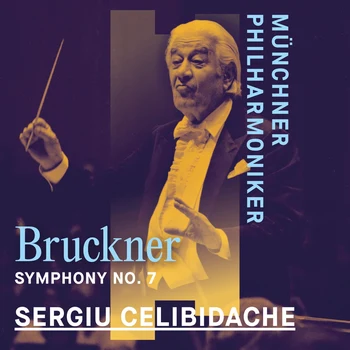
Munich Philharmonic, Sergiu Celibidache
Celibidache’s idiosyncratic style regularly polarizes critical opinion, but this live 1984 concert makes a compelling case for his unique artistic vision. Spanning roughly seventy-four minutes, the performance moves at a famously expansive pace yet miraculously maintains forward momentum. The conductor unfailingly understands the ultimate trajectory of every phrase, shaping lines with complete authority. Munich’s elite instrumentalists respond with flawless execution and immaculate orchestral balance. While this smooth sculpting may occasionally push legato phrasing further than purists prefer, the archival sound is remarkably clear. Even admirers of the slower remake he made a decade later often return to this leaner, earlier one.
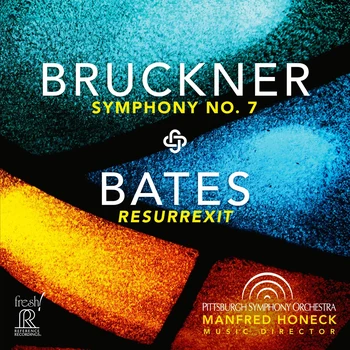
Pittsburgh Symphony Orchestra, Manfred Honeck
Few modern releases match this performance for sheer sonic spectacle. Taped in 2022, the recording boasts an enormous dynamic range, keeping complex counterpoint wonderfully clear even during cataclysmic peaks. Honeck builds his climaxes with immense patience and care. In the Adagio, he highlights a recurring phrase echoing the Te Deum, investing each return with distinct character. A rustic, swinging lilt in the Scherzo successfully summons the country dance hidden beneath the score. Minor caveats include an opening movement that feels sluggish at first and a heavily stretched final chord that crosses into engineering excess. Still, it is a formidable state-of-the-art showcase.
Read the original review of this album here
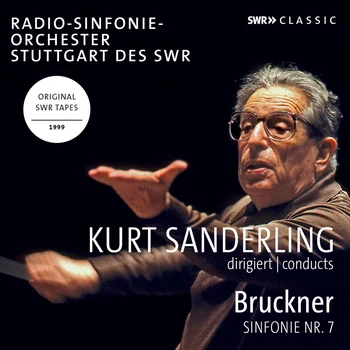
SWR Stuttgart Radio Symphony Orchestra, Kurt Sanderling
Although lesser-known than major catalog staples, this Stuttgart release is among the most rewarding. Sanderling strikes the ideal tempo right away and holds it steady throughout. The grave, unhurried Adagio allows the Wagner tubas to deliver a lament of heartbreaking emotional weight. The brilliantly handled finale sets this performance apart from rivals. Sanderling draws sharp contrasts between quick and slow episodes, capturing the movement’s perpetual shift between humor and solemnity. Orchestral balances are so finely judged that no single section swamps another, keeping the vital horn counterlines fully audible. The stunning coda transitions effortlessly from desolation to consolation.
Royal Scottish National Orchestra, Georg Tintner
Without proper momentum, Bruckner’s Seventh can easily disintegrate into two ponderous slow movements bracketed by faster ones. Tintner masterfully evades this trap by identifying the exact, natural tempo for every musical thought. The opening movement generates substantial power, ensuring the Adagio feels like a logical consequence rather than an abrupt shift in focus. Employing the score edition that strips away added percussion from the slow movement’s climax offers a clear window into an old musicological debate. Both outer movements land their final codas with unerring precision. This thoughtful reading remains exceptionally difficult to fault, offering endless rewards.
Top image ©️ The Classic Review, AI generated