When Rachmaninoff began work on the Piano Concerto No. 2 in C minor, Op. 18 in 1900, he had not written anything of substance for nearly three years. The catastrophic premiere of his First Symphony in 1897 had left him in a deep depressive collapse, convinced he might never compose again. A long course of therapy with the neurologist Nikolai Dahl, built around daily sessions of hypnotic suggestion and quiet encouragement, gradually restored his confidence, and the concerto was dedicated to Dahl in gratitude. It was not the work of a confident young master, but of a composer rebuilding himself, and that personal stake is audible in nearly every bar. Rachmaninoff himself gave the premiere of the complete work in Moscow in 1901, with Alexander Siloti conducting, and the success was immediate. It rescued his career and reshaped what a piano concerto in the grand Romantic manner could sound like for the next half-century.
The three movements move from the famous bell-tolling C-minor chords of the Moderato, through the long-breathed Adagio sostenuto with its endlessly arching flute-and-clarinet melody, to the Allegro scherzando finale and its C-major peroration. Few concertos depend so completely on the soloist’s command of pacing, and the discography has stratified accordingly. Some readings treat the work as monumental late-Romantic argument, weighted and unhurried. Others strip the rubato back and let the tempo markings stand. The composer’s own 1929 recording with Stokowski sits outside that spectrum entirely, fleet and conversational rather than monumental, and is included here as a sixth historical reference. The question is not which reading is most idiomatic, but which kind of Romanticism a listener wants.
Here are The Classic Review editorial team’s recommendations for the best recordings of Rachmaninoff’s Piano Concerto No. 2.
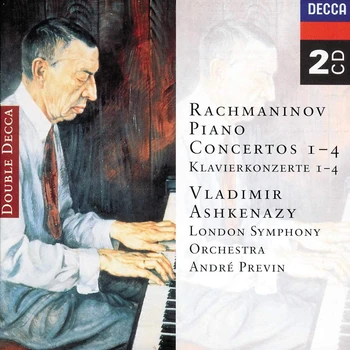
Vladimir Ashkenazy, London Symphony Orchestra, André Previn
Vladimir Ashkenazy’s 1970 recording with André Previn is the warm-Romantic account that has shaped how the Piano Concerto No. 2 has been heard for half a century. Its strengths are not rhetorical scale or weight, but warmth, propulsion and a lyrical breadth that the work’s later, leaner advocates have largely set aside.
Ashkenazy’s piano tone is full-blooded without ever turning percussive, and the opening chord progression is voiced for cumulative pull rather than sculpted impact. Previn and the London Symphony Orchestra match him with the kind of unhurried orchestral phrasing that lets the second subject bloom on its own terms when the strings take it up. The Adagio sostenuto moves rather than meditates, with the clarinet entry shaped as a continuation of the piano’s line rather than a separate solo, and the finale builds with momentum rather than swagger. Available on the two-disc reissue that gathers all four of his Rachmaninoff concertos, this is the central document of the warm-Romantic tradition in the work’s modern discography — the reading most listeners will already know, and the one most of the others on this list still respond to.
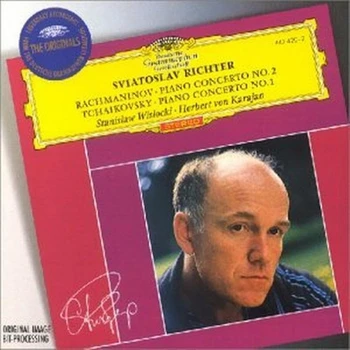
Sviatoslav Richter, Warsaw Philharmonic Orchestra, Stanisław Wisłocki
Sviatoslav Richter’s 1959 reading with Stanisław Wisłocki and the Warsaw Philharmonic is the monumental, pianist-led account of the work and the historical-stereo touchstone that every later “big” reading is still measured against. This is not the warm, propulsive lyricism of Ashkenazy, but a slower, granitic conception in which the piano dominates the texture and the orchestra functions as ballast rather than equal partner.
Richter takes the opening chord progression at a deliberate, weighted pace that gives each harmonic step its full register before the first theme arrives. His tone is dark and concentrated, and the orchestra is held back so that the piano’s voicings carry the structural argument. The Adagio sostenuto is where the reading’s emotional ballast settles most clearly, with the second theme allowed to unfold without pressure and the climaxes built rather than driven. The finale moves more broadly than any other reading on this list, each climactic phrase given its full weight before the music presses on. Coupled with the Tchaikovsky Piano Concerto No. 1 on most reissues, this remains the reference for listeners who want the work at its most monumental and pianist-centred.
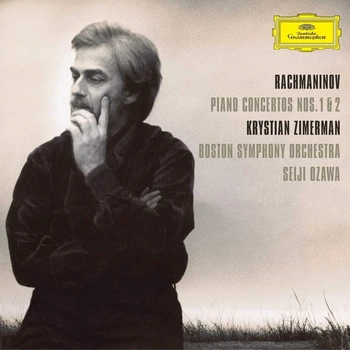
Krystian Zimerman, Boston Symphony Orchestra, Seiji Ozawa
In Krystian Zimerman’s hands, the Piano Concerto No. 2 sounds less like a lyrical outpouring and more like a sustained rhetorical argument. His 2000 recording with Seiji Ozawa and the Boston Symphony Orchestra is the modern grand-manner reference, more sculpted than Ashkenazy and less broad than Richter, and it is the disc most often cited for the famous opening chord progression alone.
Zimerman voices those opening chords with an attention to inner balance that no other reading on this list quite matches, weighting the bell-like upper notes against the dark left-hand bass so that the harmonic climb registers as architecture rather than gesture. His articulation across the first movement is crystalline, and Ozawa keeps the Boston strings clear of haze so that the second-subject melody arrives without sentimentality. The Adagio sostenuto is broad but not slack, and the finale is shaped for cumulative argument rather than virtuosic display, the closing pages set up several minutes in advance. Coupled with the Piano Concerto No. 1 on the original disc, this is the recording anyone after the grand-manner reading of the work starts with.
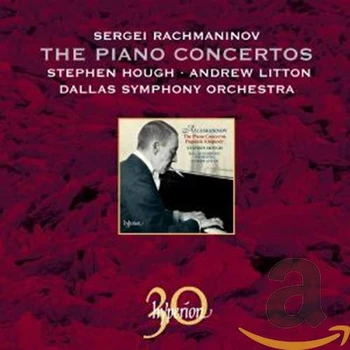
Stephen Hough, Dallas Symphony Orchestra, Andrew Litton
Stephen Hough’s 2004 live recording with Andrew Litton is the lean, classical-tradition account of the Piano Concerto No. 2, and the most pointed corrective on this list to the broad, expansive Romantic readings the work tends to attract. This is not a wholesale rethinking, but a faster, more score-attentive reading in which Rachmaninoff’s printed tempo markings are treated as instructions rather than suggestions.
Hough’s piano tone is bright and articulate where Richter’s is dark and Ashkenazy’s is full-blooded, and the opening chord progression moves more directly than in any other reading on this list. The first-movement second theme is shaped without the broadening that has become customary, and the Adagio sostenuto sits closer to a singing andante than to the suspended meditation that Richter and Zimerman draw from it. The finale’s tempos are propulsive and rhythmically exact, with the cross-rhythms in the opening pages tracked with unusual clarity. Released as part of a two-disc set with the three other concertos and the Paganini Rhapsody, this is the strongest choice for listeners who want a taut, classically disciplined reading rather than the broad Romantic accounts that dominate the discography.
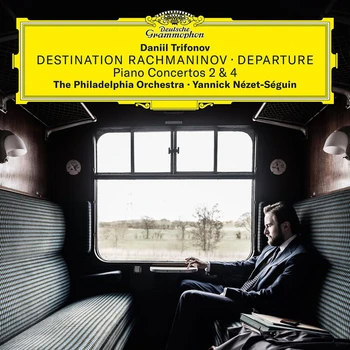
Daniil Trifonov, Philadelphia Orchestra, Yannick Nézet-Séguin
Daniil Trifonov’s 2018 recording with Yannick Nézet-Séguin and the Philadelphia Orchestra is the most-celebrated recent account of the Piano Concerto No. 2 and the strongest contemporary statement of the work in the warm-Romantic tradition. It does not try to undo that tradition, but extends it with a wider dynamic span and a more flexible tempo profile than the older studio readings.
Trifonov’s piano tone moves freely between near-whispered pianissimo and full-weighted fortissimo, and the opening chord progression is voiced for dramatic crescendo rather than architectural balance. Nézet-Séguin and the Philadelphia strings respond with phrasing that breathes with the soloist rather than holding a steady tempo against him, and the second-subject melody is shaped as a shared inflection. The Adagio sostenuto is rapt without becoming static, and the finale opens out into broad lyrical statement rather than steady acceleration. Coupled with the Piano Concerto No. 4 on Destination Rachmaninov: Departure, this is a worthwhile recent addition to the discography and the contemporary virtuoso reading of choice.
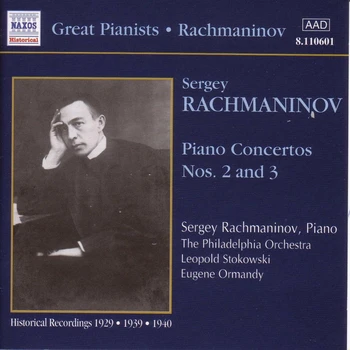
Bonus — Sergei Rachmaninoff, Philadelphia Orchestra, Leopold Stokowski
As a historical companion to the top five, no serious survey of the Piano Concerto No. 2 can pass over Rachmaninoff’s own 1929 recording with Leopold Stokowski and the Philadelphia Orchestra. This is not a competitor to the modern accounts on this list, but the documentary reference against which every interpretive question about the work eventually returns.
What surprises most on first hearing is how lean and fleet the composer’s own playing is. Rachmaninoff’s tempos run quicker than almost any modern reading, the rubato is held in tight reserve rather than allowed to spread, and the opening chord progression moves with a directness that the later Romantic tradition has largely set aside. The Adagio sostenuto is shaped as a flowing andante rather than a suspended meditation, and the finale is direct and rhythmically exact, with the C-major peroration arriving without inflation. Stokowski and the Philadelphia strings match him with the kind of forward-moving phrasing the composer evidently expected. The sound is of its period, but the playing is the closest the discography comes to the composer’s own answer to questions that the readings above each address in their own way.
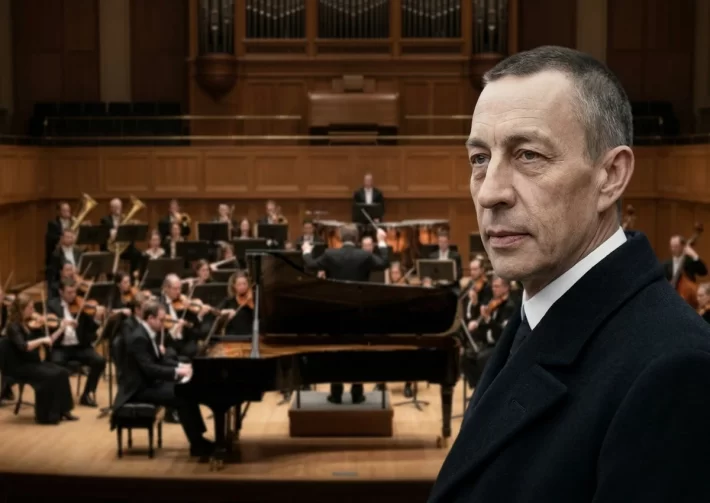
Top image ©️ The Classic Review, AI generated