
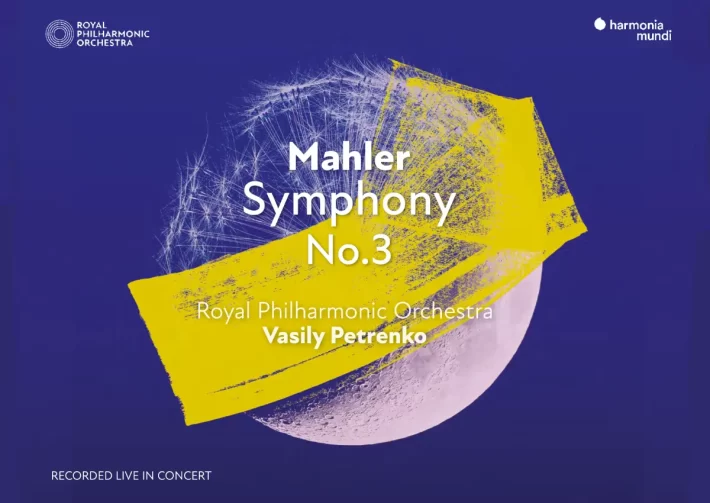
As an ardent admirer of Petrenko’s Liverpool Shostakovich cycle (Naxos), I was excited to hear his first Mahler recording for Harmonia Mundi — and it does not disappoint.
In recent years I have reviewed two other performances of this work: the Czech PO under Bychkov (Pentatone – review) and the Minnesota SO under Vänskä (BIS – review). Both feature gorgeous orchestral sound that disguises lackluster interpretations. Both labels provide a deep and wide soundstage, with the largest possible dynamic range in a complementary acoustic that adds a certain homogenous glow to the strings.
By comparison, Harmonia Mundi’s live recording, made in the Royal Albert Hall, London, on 27 April 2023, is closely miked, and occasionally sounds constricted: there is an occasional balance issue, and little bloom around the sound. But on repeated hearing the ear adjusts, giving us an opportunity to hear this orchestra playing at the top of its considerable game.
Petrenko shapes the first movement with a sure hand, never letting it feel like a series of disjointed episodes. Mahler described this music as “hardly anything but sounds of nature,” a description that surely requires the hyper-expressive performance heard here.
The opening implacable horn pronouncement leads to brooding, elemental urgings from the lower instruments; Matthew Gee’s wonderful trombone solo ensures the struggle for life is very much heard and felt. I admire the willingness of the woodwinds to make beauty of execution secondary to vivid characterization: just listen to those squawking piccolos and shrieking E-flat clarinets.
Many performances downplay the moments where Mahler asks for different tempos at the same time, but Petrenko and his players positively revel in it (sample the solo violin and horn around 18’20”); the ‘Rabble’ music (right around 21’50”) is truly disorderly. The frenetic Coda marks the end of one of the most exciting readings in recent years.
The first movement’s wildness is countered by a second movement of sweet gentleness, played by the Royal Philharmonic with beauty and nuance. The Scherzo (which quotes from Mahler’s early song Ablösung im Sommer / Relief in Summer) is also successful, though I wanted the offstage posthorn (gorgeously played by Toby Street) to be more distant. Is this the conductor’s choice or an engineering issue? Close miking also negates the sense of delicate shimmering in the string accompaniment. The final terror-filled build-up leads to a driven, frenzied climax.
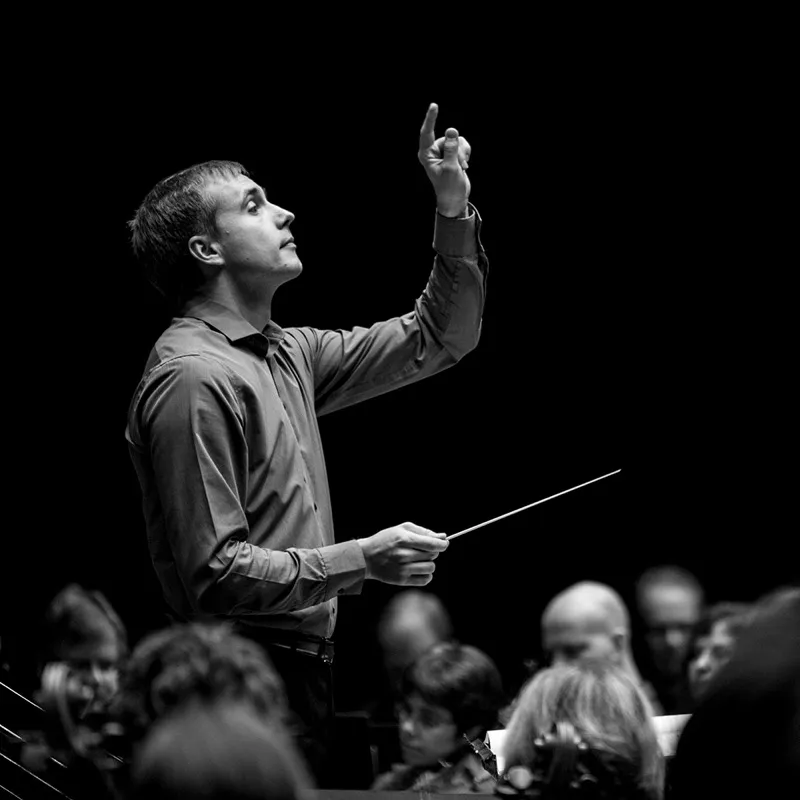
Vasily Petrenko. Photo © Bård Gundersen.
The two vocal movements are less impressive. Hanna Hipp’s wide vibrato quickly develops a pronounced beat, and she seems unwilling to sing softly. Her generalized somber interpretation is no match for the sensitive expressiveness of Janet Baker (LSO/Tilson Thomas/Sony Classical), Christa Ludwig (NYPO Bernstein/DG), and Birgit Remmert (CBSO/Rattle/Warner Classics).
The fifth movement is lustily dispatched (with fabulous orchestral bells), though the joyful excellence of the Tiffin Boys’ Choir is somewhat hampered by the prominent vibrato from the women of the Philharmonia Chorus. And surely with the mics so close, diction should be more emphatic.
The final movement’s tempo marking (Langsam, Slow) is rather generic, allowing for a wide variety of timings: Iván Fischer (BFO/Channel) takes 21’31” whereas Tilson Thomas’s second reading (SFSO) takes 26’31”, more than a minute and a half slower than Bernstein’s second New York Philharmonic reading (DG). I find Abbado’s Berlin performance (22’25”, also recorded live in the Royal Festival Hall in 1999) profoundly moving, but Petrenko, taking about a minute longer, runs a close second, with particularly lovely playing from the strings and principal woodwinds.
Towards the end of the Noch etwas bewegter (9’20”), a greater accelerando may have caught more of the pained intensity Abbado and Bernstein find. But Petrenko is careful to keep the brass as delicate coloring through most of the movement, so that when they finally are unleashed in the Coda the sound gains a new powerful radiance that is deeply moving. Bruno Walter described this movement as “a single sound of heartfelt and exalted feelings, in which the whole giant structure finds its culmination.” Certainly, that is true here.
Harmonia Mundi’s booklet includes a written introduction by the conductor, fine notes by Dr. Genevieve Robyn Arkle, texts, and translations, as well as the rosters of the orchestra and choirs. I do hope that Petrenko and Harmonia Mundi plan on more Mahler releases (there has been positive press for recent performances of the first and eighth symphonies) — warmly recommended.
Recommended Comparisons
Mahler: Symphony No. 3
Leonard Bernstein | Claudio Abbado | Michael Tilson Thomas | Jonathan Nott
Album Details |
|
|---|---|
| Album name | Mahler: Symphony No. 3 |
| Label | Harmonia Mundi |
| Catalogue No. | HMM 905421.22 |
| Artists | Hanna Hipp (mezzo-soprano), Royal Philharmonic Orchestra, Philharmonia Chorus, Tiffin Boys’ Choir, Vasily Petrenko (conductor) |


DIE MITTWOCH-PRESSE, 3. JUNI 2026 - Klassik begeistert
[…] Recordings Review: Mahler – Symphony No. 3 – Royal Philharmonic Orchestra, Vasily Petrenko classicreview.com.album […]