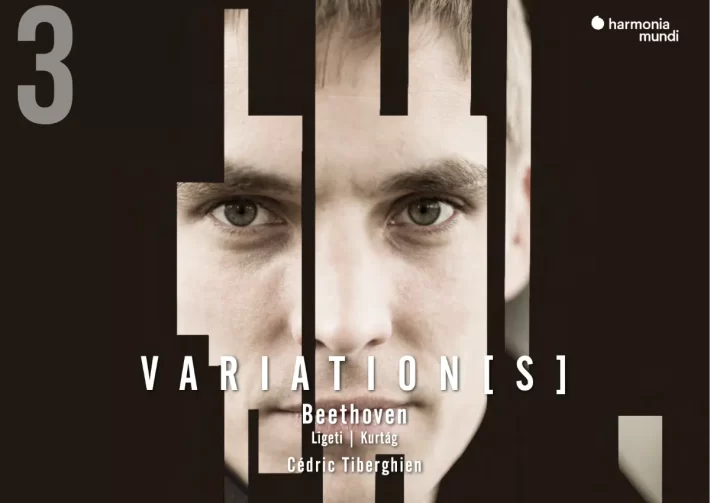
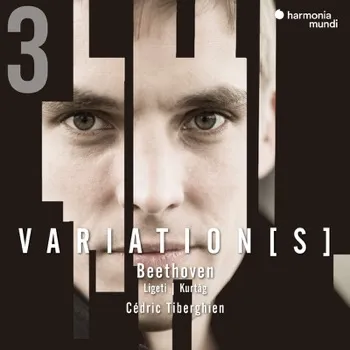
In the third volume of his ongoing series, Cédric Tiberghien dedicates over two hours exclusively to the piano variation. The album offers a thoughtfully curated program that sets Beethoven’s early classical structures directly against the rigorous, twentieth-century language of György Ligeti and György Kurtág.
György Ligeti’s Musica Ricercata highlights Tiberghien’s natural affinity for contemporary music built upon mathematical structure and craft. While the cycle is organized by strict pitch classes and axes of symmetry, it continuously explores a surprising variety of musical forms. The pianist navigates this deliberate, precise compositional language with ease. The fiercely concentrated opening movement, focusing entirely on the pitch of A before resolving on a solitary D, relies on his dry tone and crystalline attacks to emphasize its minimalism.
A delightful contrast arrives in the third movement, boasting a jazzy character rendered with meticulous clarity. When approaching the sparse textures and jarring dissonances of the Rubato Lamentoso, Tiberghien cultivates a wonderfully unsettled atmosphere. He allows the music to sound poignant and declaratory one moment, only to pull it back into a quiet, almost sinister shadow the next.
Tiberghien’s choice to alternate between Beethoven and contemporary pieces not only highlights their stylistic differences but also offers the listener a welcome respite, as some of the modern fare can be challenging. Among the several WoO sets presented, the Six Variations on a Swiss Song are sunny, elegant, and delightful. The precision of the pianist’s articulation reveals an insightful connection to the Ligeti, reminding us of the latter’s distinct percussive profile.
The Eight Variations on Une fièvre brûlante carry a disarming charm alongside moments of vivacity and virtuosity. The second variation gallops away with its arpeggios, while the third is reminiscent of someone skipping. Tiberghien introduces humor every time scales and two-note phrases bump into each other in a lightly awkward and off-kilter manner.
The Twelve Variations on a Russian Dance exude a coy lyricism that greets the ears in the Theme and resurfaces in moments like the eighth variation, which is especially beautiful for its sustained, dulcet tone.
Selections from György Kurtág‘s books of Játékok offer yet another avenue of moods and sound profiles. Almost all of these works are minimalistic and atmospheric, serving as intriguing palate cleansers between the perennially happy early Beethoven works. The sixth piece from the first book may be sandwiched between two sets of Beethoven variations, but it feels more like a fleeting postlude to the eerie conclusion of the Ligeti. Floating barely above a whisper, Tiberghien brings out the translucence of the overlapping notes. Achieving a similar gossamer profile, the twenty-fourth piece from the same book incorporates more complex harmonies and mixed resonances.
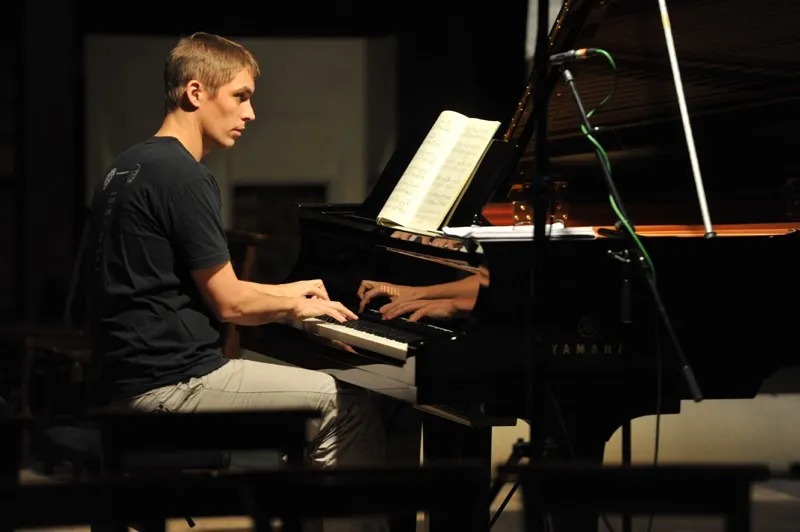
Cédric Tiberghien. Photo © Simon Perry
Reserving the Diabelli Variations as the album’s culminating work, Tiberghien illustrates just how skillfully Beethoven evolved the variation genre from light entertainment into a vehicle of profound complexity. His reading of the Theme not only highlights the comedy of Diabelli’s original tune but also brings a boisterous personality to the subito fortes that rudely interrupt the waltz.
Despite this promising start, the remaining variations call for more vitality across the board. While he maintains the integrity of a wonderful tone and nuanced musicianship, this is a work that comes to life through its boldness. One example is the march of the first variation, where the dotted rhythms lack the pomp and circumstance found in Mitsuko Uchida’s acclaimed reading. Similarly, the Poco Allegro of the second variation feels too timid, and a little later, in the sixth variation, the overall character comes off as somewhat dry and removed.
Towards the end of the work, the Fuga is well-controlled and reflects the precision heard elsewhere. The critical repeated-note motif, however, does not possess the dogged insistence that makes Alfred Brendel’s version so vibrant.
Tiberghien is at his best in the most introspective moments, of which there are plenty. While his traversal of the Diabelli set may not replace primary recommendations, his curation makes the album rewarding for everything else it offers.
Recommended Comparisons
Beethoven: Diabelli Variations
Mitsuko Uchida | Alfred Brendel | Stephen Kovacevich | Piotr Anderszewski