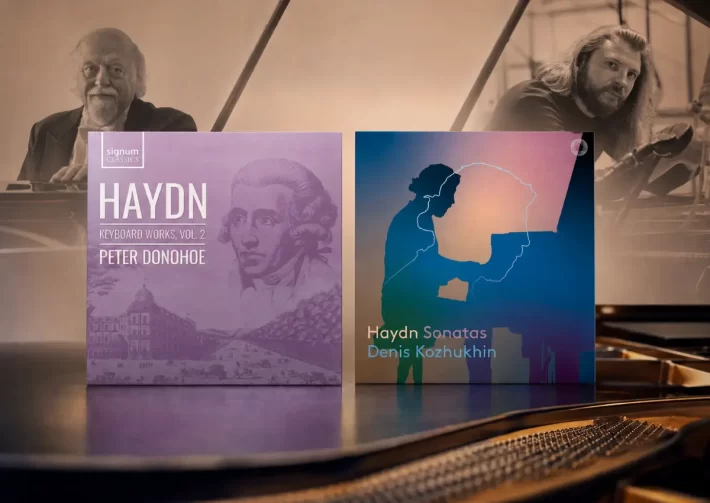
This double review pairs two recent Haydn recordings that invite direct comparison from pianists Peter Donohoe and Denis Kozhukhin. While both albums are the artists’ second devoted to the composer, the projects differ in context. Donohoe offers the latest installment of an ongoing cycle for Signum Classics that began in 2022. Kozhukhin returns to this repertoire for Pentatone a full decade after his initial standalone Haydn recording for Onyx in 2014.
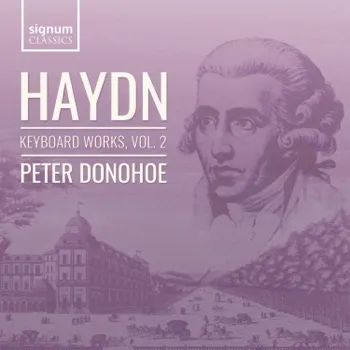
Like his previous installment, Donohoe’s program centers on piano sonatas alongside a few other selections: the Partita in G major, Hob. XVI:6 and the Capriccio, Hob. XVII:1. Both serve as elegant introductions to the sonatas, though they somewhat lack a distinct personality. In the Minuet of the Partita (track 2), for instance, the repeats leave room for variation in dynamics and articulation, yet Donohoe renders them largely the same way. He does establish clearer distinctions of mood across the movements. The Adagio (track 3) draws a genuine melancholy from a smooth legato and a sostenuto accompaniment, contrasting handsomely with the Allegro molto (track 4). This finale could use a touch more zest, though the bubbly clarity of Donohoe’s arpeggios and rapid passages is easy to enjoy.
Donohoe also plays an instrument rarely heard on such recordings. He uses a Steingraeber & Söhne piano, captured with a deliberately close and intimate sound. It serves him well in the sonatas, which fare considerably better in terms of vitality and engagement than the opening pieces. He draws on the piano’s middle-register depth in the Sonata in D major (tracks 6 to 8). Although certain moments still invite more verve, the result is a pleasingly orchestral profile that is both resonant and robust.
The Sonata in A major is where the piano’s lighter, period-style profile surfaces more prominently. Coupled with Donohoe’s agility through the ornaments and intricate fingerwork, a finely filigreed tone emerges. The Adagio may sound texturally simple, even slightly sparse, but Donohoe attends to each line so carefully that the whole recalls a small chamber ensemble, complete with a low, firm pizzicato under a woodwind melody.
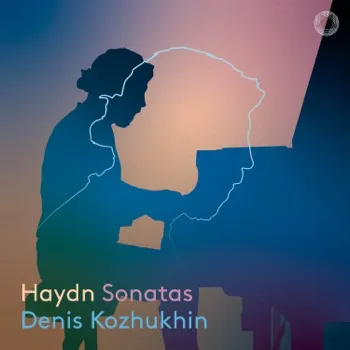
Denis Kozhukhin’s set of five sonatas is bound by a degree of idiomatic restraint. Almost immediately, however, one notices a heightened level of nuance and precision compared to Donohoe’s readings. Staccatos are sharper, turns and trills are tighter, and dynamic contrasts are better marked by sudden changes of character. The opening Sonata in D major gets the program off to an imaginative start. Its crisp ornamentation and clean phrasing recall lively chirps and birdsong.
Kozhukhin’s album is just as well curated, despite offering fewer tracks than Donohoe’s. Each sonata reflects a different personality that Haydn brought to the genre. The solemnity of the Sonata in C minor marks a stark departure from the sunnier works around it and shows Kozhukhin’s sensitivity to emotional shifts. The Moderato (track 6) moves through several abrupt changes of character within a short span, each rendered with sincerity. A moment of reflection around the 1’15” mark stands out in particular.
Despite its major key, the Sonata in F major, Hob. XVI:47bis is far more placid. Kozhukhin highlights that tranquility through long, arching phrases and the clean contrapuntal dialogue that runs through much of the Moderato (track 9). The ensuing Larghetto (track 10) carries an unexpected poignancy that deepens the sincerity of the entire reading.
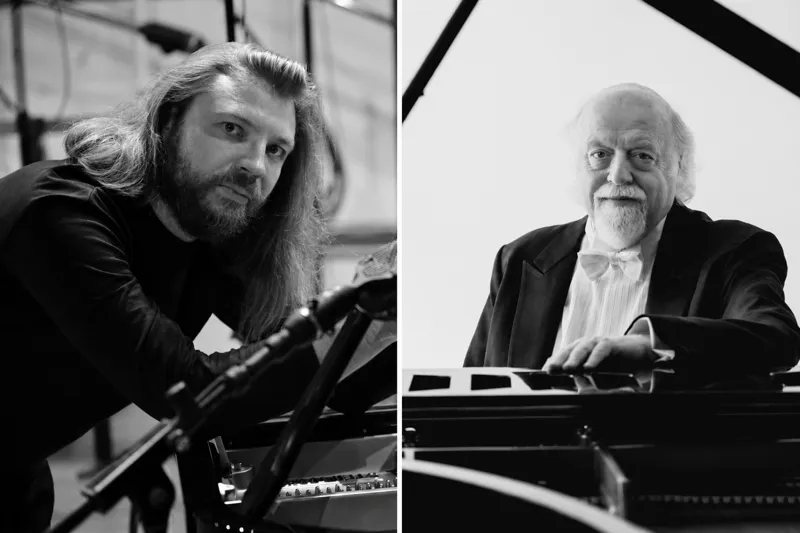
Denis Kozhukhin and Peter Donohoe.
In the two sonatas the albums share, the Sonata in E major, Hob. XVI:31 makes an ideal study in contrasting perspectives. Donohoe’s Moderato establishes a cheerful character at once and builds on that buoyant energy throughout. Kozhukhin opts instead for a game of contrasts, opening with a tender passage that could come from a delicate music box. That intimacy belies a greater dimensionality of sound that he expands as the movement goes on. Donohoe’s Finale stays high-spirited, pointed, and assertive. Kozhukhin again focuses on textural differences. His reading starts charmingly, then leaves room for sudden surprises, most strikingly a furious E minor section around 1’17”.
The Sonata in E minor, Hob. XVI:34, while not desperately somber, certainly borders on the serious. Donohoe takes a fittingly rational approach, and his opening movement has a command and assertion that suits the writing. His stately Adagio has moments of delicacy but feels a touch too restrained. Kozhukhin brings far more fluidity and expressive freedom to the music’s lyrical lines. In the Vivace, he not only adopts a brisker tempo but injects the finale with more spirit, especially in the brightness of the major-key sections, an element somewhat lacking in Donohoe’s account.
While both albums make for enjoyable listening, those after a more authentic, period-inspired sound will gravitate toward Donohoe. For a reading defined by variety, dynamic nuance, and sparkling musicianship, Kozhukhin’s recital is warmly recommended.
Album Details — Donohoe (Signum) |
|
|---|---|
| Album name | Haydn: Keyboard Works, Vol. 2 |
| Label | Signum Classics |
| Catalogue No. | SIGCD989 |
| Artists | Peter Donohoe (piano) |
Album Details — Kozhukhin (Pentatone) |
|
|---|---|
| Album name | Haydn: Sonatas |
| Label | Pentatone |
| Catalogue No. | PTC5187407 |
| Artists | Denis Kozhukhin (piano) |