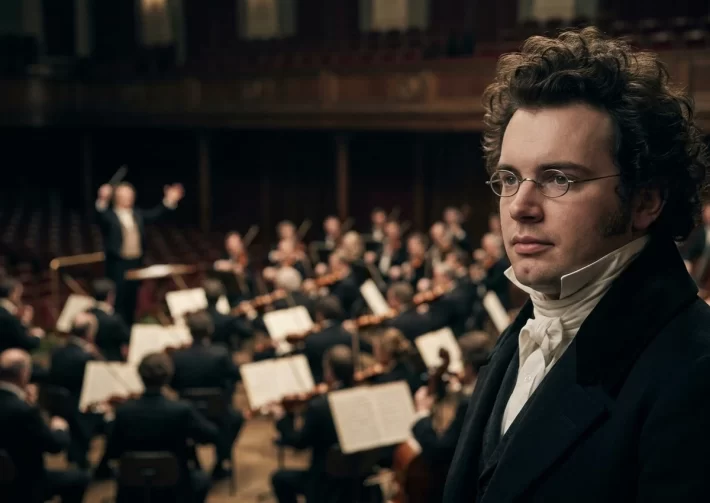
Schubert composed his Symphony No. 9 in C major in the last years of a short life, around 1825 and 1826, when he was still in his late twenties. He never heard a note of it played. The score lay unperformed when he died in 1828 at thirty-one, kept safe by his brother Ferdinand until Robert Schumann was shown it and recognized what it was. The first performance took place in Leipzig in 1839 under Mendelssohn, a decade after Schubert was gone. Schumann famously described its “heavenly length,” and the symphony has been known ever since as “The Great,” not as a verdict on its quality but to separate it from the earlier, smaller C major Symphony No. 6.
The work is scored for a full early-Romantic orchestra, and Schubert uses it for breadth rather than weight. A quiet, unaccompanied horn call opens the first movement before the music gathers its walking momentum. One of the symphony’s signatures is its treatment of the trombones, which carry melody rather than just reinforcing loud passages, a strikingly forward-looking touch. Across its four movements the writing balances long-breathed lyricism, heard at its clearest in the celebrated slow movement, against an almost tireless rhythmic drive. Those two impulses, song and motion, are exactly where recordings differ most.
Here are The Classic Review editorial team’s recommendations for the best recordings of Schubert’s Symphony No. 9.
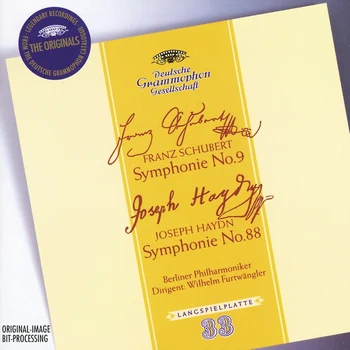
Berlin Philharmonic, Wilhelm Furtwängler
Furtwängler’s 1951 reading with the Berlin Philharmonic stands as the historic monument of this symphony, heard as Romantic drama on the largest possible scale. The first movement tells you everything: the lone horn call enters quietly, almost tentatively, then opens out into a vast span as his slow-burning tempos gather force. Nothing is hurried. The music grows rather than runs, and the broad gravity he sustains across the whole work has anchored the discography ever since.
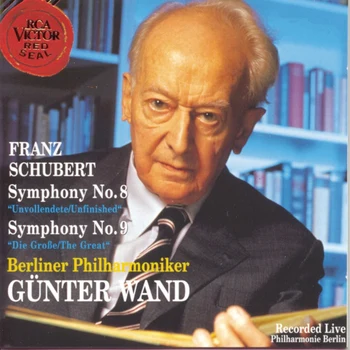
Berlin Philharmonic, Günter Wand
More than four decades later the same orchestra sounds leaner and more controlled under Wand, whose 1995 concert is the modern benchmark for architectural grip. Where Furtwängler builds monuments, Wand builds structures, holding the broad paragraphs in a single continuous line and letting tension accumulate by degree rather than in sudden blows. The opening movement’s repeated rhythmic cells press forward with quiet inevitability. It is weighty without turning granitic, and few accounts sustain the symphony’s enormous span so steadily.
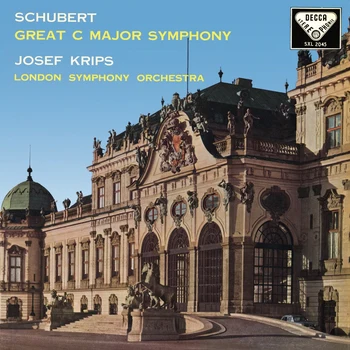
London Symphony Orchestra, Josef Krips
Warmth is the first thing you notice in Krips’s 1958 account with the London Symphony Orchestra, the most tender and lyrical reading on this list. The slow movement is where it lives, its great song unfolding in an unforced, easy flow that never presses or sentimentalizes. Krips lets the melody breathe and the orchestra sing back. Placed beside Szell’s lean precision, this is the gentler pole, songful where others are urgent, and it remains a classic for that openness of heart.
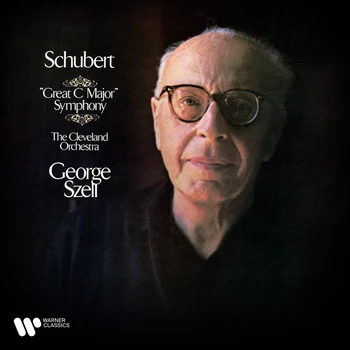
Cleveland Orchestra, George Szell
Szell and the Cleveland Orchestra take the opposite path in 1957, all precision and clean architecture. The reading is fleet, lean and sprung, every rhythm placed with a discipline that makes the finale gleam, its galloping figures driven hard but never scrambled. Ensemble this precise can sound cool, yet here the energy stays human. If Krips offers the symphony’s warm song, Szell offers its rhythmic skeleton, taut and brilliantly drilled, and the closing pages carry an excitement that comes from control rather than abandon.
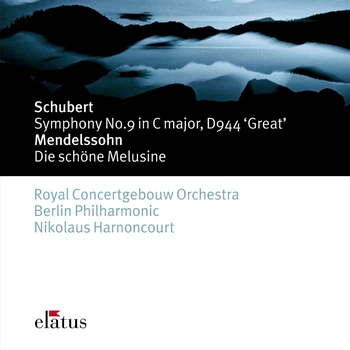
Royal Concertgebouw Orchestra, Nikolaus Harnoncourt
Harnoncourt brings period thinking to the Royal Concertgebouw in 1992, rethinking the work through articulation rather than tempo alone. Accents land harder, phrases are clipped and pointed, and the scherzo bites in a way the older Romantic readings smooth over. It is sharper in profile without losing the orchestra’s body. The performance bridges two worlds, carrying the weight of the big-orchestra tradition while sharpening its rhythmic edges, and it remains one of the most stimulating accounts for anyone curious how the score sounds when it is re-examined.
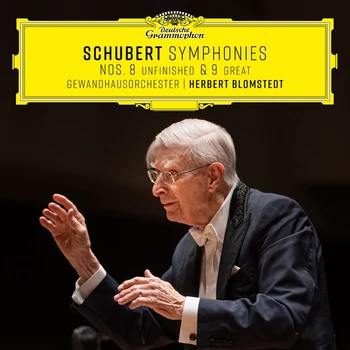
Gewandhausorchester Leipzig, Herbert Blomstedt
Blomstedt’s 2021 recording with the Gewandhausorchester arrives as a late-career summation and a modern-symphonic landmark, warm and wise with every repeat observed. Textures stay remarkably transparent, so the melodic trombones shine through the tutti instead of being buried, and the music keeps its momentum without ever sounding heavy. This is the modern counterpart to Wand, less monolithic and more genial, the long structure carried with an ease that conceals real control. It is a full-orchestra reading that never feels weighed down by its own amplitude.
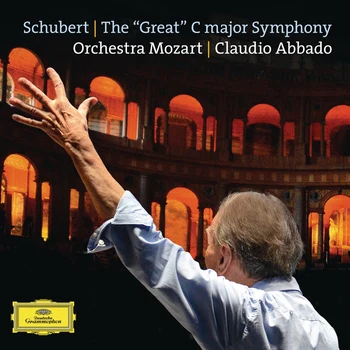
Orchestra Mozart, Claudio Abbado
Light and inner clarity define Abbado’s valedictory 2011 concert with the Orchestra Mozart. Working with a smaller, chamber-scaled body, he opens up inner voices the big-orchestra readings cover, so counter-melodies and accompaniment figures register with unusual freshness. The finale glows rather than thunders, its optimism rekindled so the repeats feel discovered rather than dutiful. This is the most luminous account here, lucid where Furtwängler is grand, and it carries the quiet radiance of a conductor savoring the score one last time.
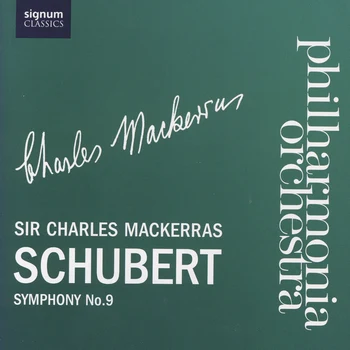
Philharmonia Orchestra, Sir Charles Mackerras
Mackerras and the Philharmonia, recorded live in 2006, offer a modern orchestra shaped by historically informed instinct. The rhythms are buoyant and the lines are swept forward, giving the music drive without losing its lyric warmth. The slow movement builds to its great climax with real cumulative power, and the second subject sweeps in on a single broad breath. Sitting between Harnoncourt’s sharper accenting and the fully period-colored readings, it pairs scholarly insight with the plush sound of a major modern band.
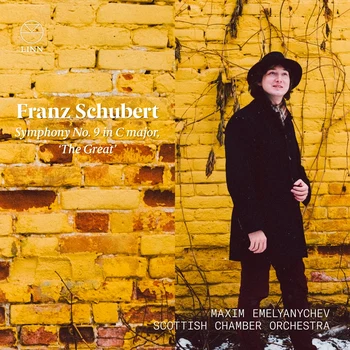
Scottish Chamber Orchestra, Maxim Emelyanychev
Emelyanychev and the Scottish Chamber Orchestra make a bold case for the symphony at small scale in 2019, dry and dance-driven where others spread out. Staccato attacks are crisp, the rhythms bounce, and the reduced string body lets the woodwind detail come forward. The scherzo’s trio leans frankly into a Ländler, rustic and light on its feet. This is the deliberate opposite of Blomstedt’s amplitude, chamber where the others are full, and its dynamic surprises keep a familiar score sounding alert and newly heard.
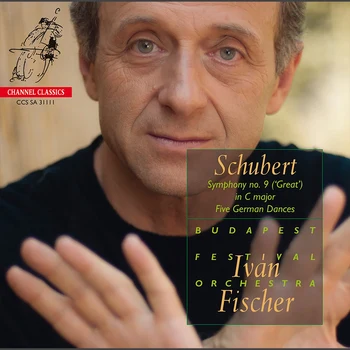
Budapest Festival Orchestra, Iván Fischer
Timbre is the whole story in Fischer’s 2011 account with the Budapest Festival Orchestra, a sound-world unlike any other on this list. Fischer mixes a few period-colored winds and brass into his modern orchestra, so natural horns, small C-clarinets and narrow trombones give the music a tang the smoother readings lack. Listen to the way the clarinets bend a phrase, or how the natural horns rasp rather than glide. The result is fresh without being eccentric, a distinctive sonority that rewards anyone who knows the symphony well enough to relish a new color.
Top image ©️ The Classic Review, AI generated