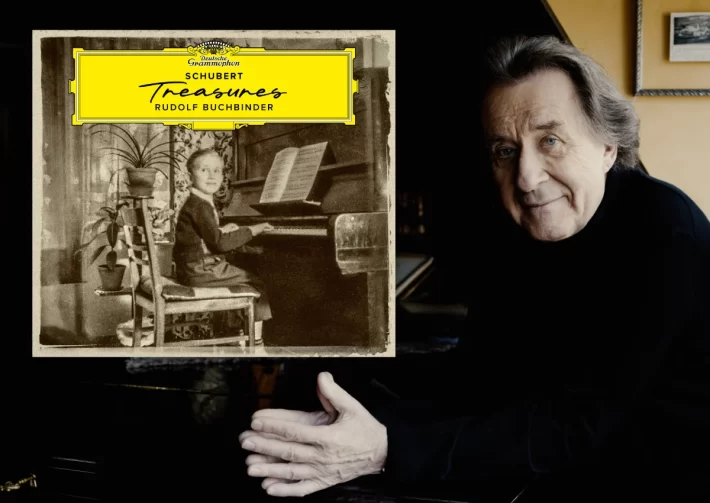
Over the past couple of years, Schubert albums have hardly been in short supply, with notable releases from artists such as Aimi Kobayashi, Martin Helmchen, Bertrand Chamayou alongside Leif Ove Andsnes, and most recently, Arcadi Volodos (review). Rudolf Buchbinder’s latest contribution offers a generous presentation of the composer’s miniature works – encompassing waltzes, ländler, and ecossaises -totaling an impressive 160 pieces spanning two hours.
Opening the program is the Originaltänze D. 365, a collection composed between 1816 and 1821. Unlike the expansive canvases of Schubert’s middle and late-period sonatas, these pieces are not intended to bear profound structural weight. Drawing on refined voice-leading, the pianist infuses the Trauerwalzer with a delightful, coquettish charm. Meanwhile, the dainty D-flat major waltz possesses an infectious pep in its step, serving as a welcome reminder to appreciate the carefree, refreshing character of these youthful vignettes.
Revealing a degree of compositional evolution, the 16 German Dances and 2 Ecossaises D. 783 follow. The opening A major dance, for instance, features thicker chordal textures, which Buchbinder expertly navigates to create an orchestral profile without allowing the sound to become overly heavy. Utilizing the lower register in its accompaniment, the B-flat major dance achieves a more pronounced swing as the pianist lends this secondary line welcome substance. Closing the set, the first of the two Ecossaises introduces some much-needed assertion to balance the prevailing lightness. Given this rather rare opportunity for rhythmic bite, one might only wish the performer had leaned even further into the accented chords to fully emphasize their dramatic potential.
Perhaps the most eclectic and vibrant cycle offered here is D. 145, presenting a considerably wider emotional range than the Originaltänze, aided by a greater prevalence of minor keys. Buchbinder quickly finds his expressive footing in this terrain. Plunging into the A minor waltz with little hesitation, he conjures a stormy atmosphere while maintaining impeccably clean articulation. Taking the intensity up another notch, the subsequent C-sharp minor dance features accented chords that occasionally border on stringent. However, this slightly rough-around-the-edges sonority contributes highly effectively to the music’s high-spirited nature. Combining intensity with lyricism, the E-flat minor is compelling, though it is slightly regrettable that its lovely melodic line is occasionally overshadowed by the inner voices. Offering a striking contrast, the B minor waltz feels less like a traditional dance and more akin to a hymn. By lending a calm, introspective tone to the vertical textures, the performer demonstrates a thoughtful approach that extends beyond individual pieces, carefully balancing the palette of emotional content Schubert provides throughout the entire set. Comprising the second half of the opus, the Ländler return the listener to a realm of happiness. Capturing the signature snap of these folk dances, Buchbinder infuses them with a renewed, infectious energy.
Arguably the most affable dances presented are the Valses Sentimentales D. 779. Here, the pianist turns up the charm factor considerably while steadfastly maintaining the music’s graceful integrity. Radiating a lovely sparkle reminiscent of a music box, the melody of the G major dance delights, while the D major selection scampers about with palpable anticipation. The true highlight, however, arrives with the A major waltz. Elevating the music beyond mere pleasantry, Buchbinder introduces a layer of emotional complexity. Through careful exchanges between the voices and beautifully sustained tones, he uncovers a profound sense of wistfulness and reflection, demonstrating an acute sensitivity to the composer’s harmonic shifts.
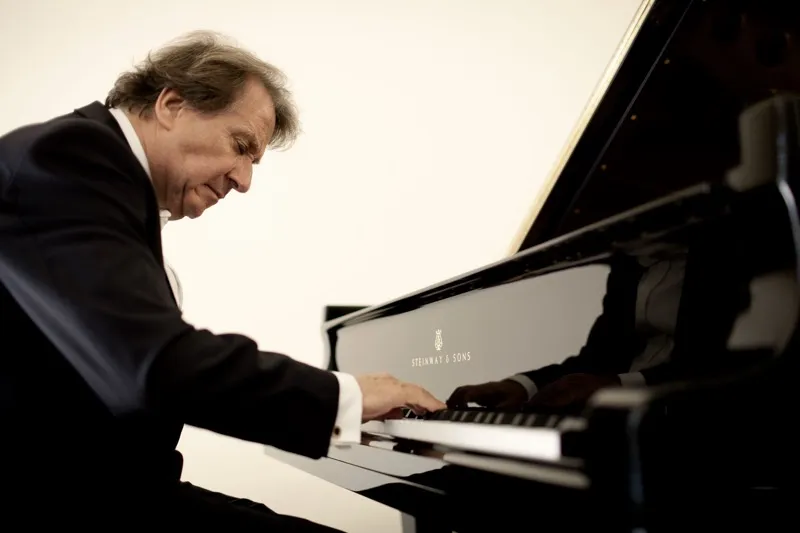
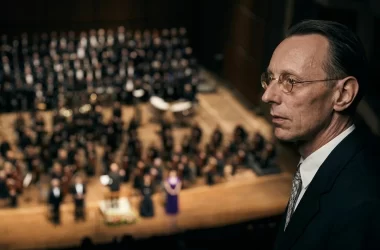
Rudolf Buchbinder. Photo © Marco Borggreve.
Of the remaining collections, the Valses Nobles D. 969 stand out as especially successful, synthesizing many of the distinct characters and elements heard across the previous sets. Listeners will easily appreciate the pomp and circumstance of the C major dance, the pleading nature of the G major, and the gallant yet unfailingly gentle spirit of the F major.
As a point of comparison, it is worth noting that Pierre-Laurent Aimard has also recorded these works, albeit not with the same encyclopedic scope that Buchbinder tackles here. Rather than recommending one version over the other, it is more accurate to view them as distinctly different interpretations. Aimard often adopts a more relaxed tempo, cultivating a ruminative, spacious atmosphere. Conversely, Buchbinder’s readings are generally more springy and sprightly, firmly anchoring the music in its rhythmic, dance-like origins.
Complementing the recording, the liner notes feature a beautifully synthesized essay by the artist himself, offering a wealth of historical, musical, and personal insights. According to Buchbinder, these pieces speak volumes about the composer’s own character and lifestyle. Unquestionably, these performances stand as a meaningful reflection of the pianist’s deep familiarity with, and enduring fondness for, Schubert’s captivating miniature cycles.
Album Details |
|
|---|---|
| Album name | Schubert: Treasures |
| Label | Deutsche Grammophon |
| Catalogue No. | 4868826 |
| Artists | Rudolf Buchbinder (piano) |