Dvořák wrote the Symphony No. 9 in 1893 in New York, during his years as director of the National Conservatory of Music of America. He finished the full score that May. The premiere followed in December at Carnegie Hall, with the New York Philharmonic under Anton Seidl. The audience applauded after every movement, and the composer had to stand and bow from his box. How much “American” music actually went into the work remains an open question. Dvořák said he had written original themes that carried the character of Native American and African American melodies, yet the rhythms keep pointing back to his homeland.
The scoring is a standard late-Romantic orchestra: double woodwinds, four horns, two trumpets, three trombones, a tuba, timpani, a triangle, a single cymbal stroke, and strings. Across four movements the music moves between intimate solos and driving energy. The Largo is built around a famous English horn melody, later fitted with words as “Goin’ Home.” The finale gathers up themes from all three earlier movements before its close. Recordings differ most in two places: whether the first movement’s exposition repeat is taken, and how slowly the Largo is allowed to unfold.
Here are The Classic Review editorial team’s recommendations for the 10 best recordings of Dvořák’s Symphony No. 9 (“From the New World”).
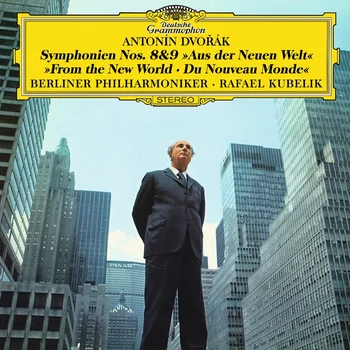
Berlin Philharmonic, Rafael Kubelík
For half a century Rafael Kubelík’s 1972 recording has been the version other conductors are measured against, and it is easy to hear why. He lets the music breathe, bending the pulse wherever a line asks for room, and the Berlin Philharmonic answers with playing of real eloquence. Listen to the Largo, where the woodwinds phrase with a poetry few rivals match and the movement aches with homesickness. The first-movement repeat is omitted, his freedom with tempo can occasionally seem wayward, and the loudest climaxes congest a little. None of that dents the warmth and the full-toned brass that carry the rest, and the reading still comes out ahead.
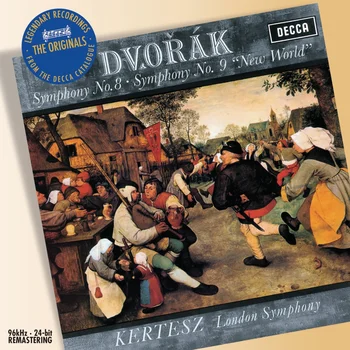
London Symphony Orchestra, István Kertész
Where Kubelík omits the first-movement repeat, István Kertész takes it, and his 1966 recording gains its true proportions from that choice. The opening movement feels complete in a way most rivals do not. The London Symphony Orchestra plays for him with force and a searching lyricism, the strings singing out and the horns adding a rasp that suits the music. Rhythms stay buoyant and dance-like, so all that breadth stays light on its feet. Beside the more characterful versions, some passages run a shade quicker and plainer than they might. Even so, few recordings give the whole symphony this much air and scale.
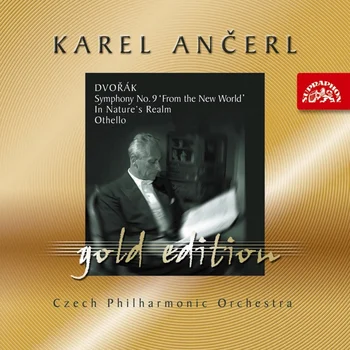
Czech Philharmonic, Karel Ančerl
Nothing is underlined for effect in Karel Ančerl’s 1961 recording with the Czech Philharmonic, the darkest reading here and the steadiest. The rhythm does the persuading, the pulse stays unforced from first bar to last, and the orchestra’s rustic string and wind colors, prominent timpani and outstanding brass do the rest. He takes the Scherzo’s trio slower than usual, so the triangle’s quick figures can actually be heard, and he keeps the Largo moving without a trace of lingering. The early-sixties sound is a little boxy and shallow. Once the performance takes hold, you stop noticing.
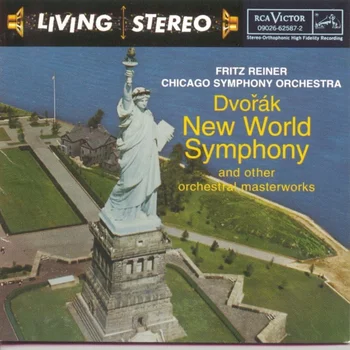
Chicago Symphony Orchestra, Fritz Reiner
Fritz Reiner made only one commercial recording of a Dvořák symphony, this 1957 New World with the Chicago Symphony Orchestra, and it is all urgency and precision. After a measured introduction with sharply pointed timpani, he presses forward with a rhythmic pull that never slackens. The Scherzo has a raw edge, and the finale sweeps on without added pathos. The Largo is another matter: the English horn is beautifully phrased, and the movement has a hymn-like stillness with no sentiment laid on. Reiner does not displace Kertész, and next to the more personal readings his can seem straightforward. A trace of tape hiss is still noticeable even in the newer transfers.
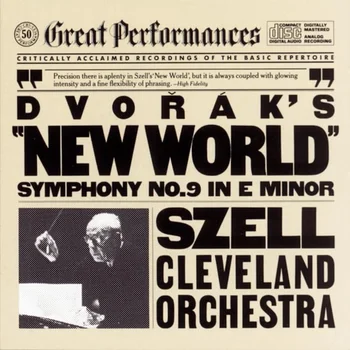
Cleveland Orchestra, George Szell
Two years later and a few hundred miles east, George Szell and the Cleveland Orchestra took a different path. Their 1959 recording is built on transparency rather than weight: the balances are lean and clean, every strand of the score can be followed, and the discipline never smothers the singing line. The horn section is superb from start to finish. Szell lets no phrase linger, and at times the drive pushes too hard. The sound has fine presence, with a layer of background hiss beneath it. Listeners who value clarity of texture above warmth will find this the most rewarding version on the list.
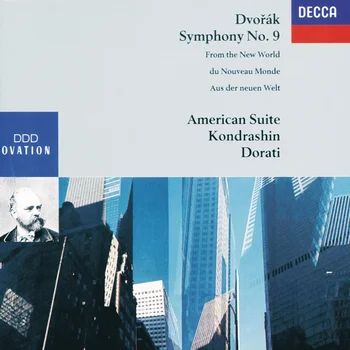
Vienna Philharmonic, Kirill Kondrashin
The Vienna Philharmonic strings glow through Kirill Kondrashin’s shapely phrasing in this 1979 recording, and that glow is the first thing you notice. He lets the music sing rather than storm. Small expressive pauses give the rhythm lift and swing, and he is more lyrical than the fiercest conductors on this list without losing power. Even his Largo may move a shade faster than usual, yet it never sounds rushed. The dynamic range is wide and the playing brims with life, though the early digital sound shows some glare at times. An immensely appealing choice for anyone who prizes grace and buoyancy above raw drive.
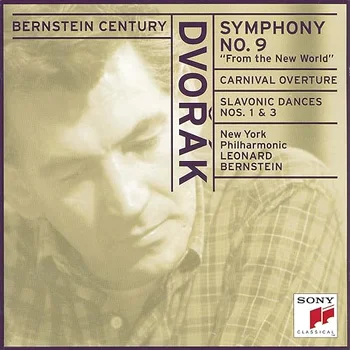
New York Philharmonic, Leonard Bernstein
Leonard Bernstein recorded the symphony three times, and this 1962 studio account with the New York Philharmonic is the one to have. He was among the first conductors to take the first-movement exposition repeat, and the added span suits his forward momentum. That drive lifts the opening movement, the Scherzo and the finale, with pulse and dynamics judged just right. It has often been called as close to a definitive reading as the symphony has received. The Largo is the surprise, scaled down to something intimate, almost chamber-like, without losing its drama. The playing has a rough edge here and there, and Szell’s Cleveland Orchestra is the more polished ensemble. For sheer vitality, though, this is the early-sixties Bernstein at his best.
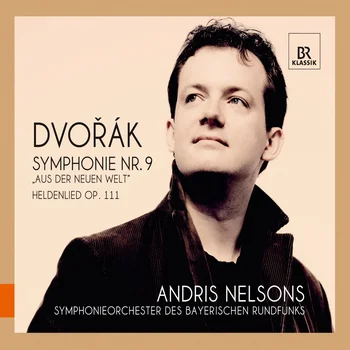
Bavarian Radio Symphony Orchestra, Andris Nelsons
Anyone who wants the symphony on a big canvas in modern sound should start with Andris Nelsons’s 2010 concert recording. He takes the first-movement repeat and gives the work a breadth worthy of the great older versions, and the Bavarian Radio Symphony Orchestra rewards close listening in every section. Vigor runs through the fast movements with a deep undercurrent of nostalgia beneath it. The Largo is spacious and tender without turning sweet, its softest passages shrinking to the intimacy of chamber music. The finale pulls the earlier themes together with revealing detail, and the playing has passion and power to spare. Of the recent recordings here, this is the one that belongs beside the classics.
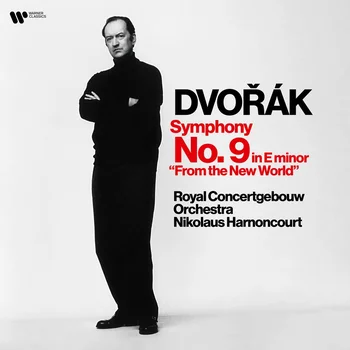
Royal Concertgebouw Orchestra, Nikolaus Harnoncourt
Nikolaus Harnoncourt treats this familiar warhorse as if the ink were still wet. His 1999 concert recording with the Royal Concertgebouw Orchestra is the most detail-driven account on the list, built on close attention to what the score actually asks for, and the woodwinds and brass respond with playing of rare finish. The opening movement is energetic and even picks up speed a little as it goes. The Largo is handled with great tenderness. The dynamic extremes call for care with the volume control, and the approach will not persuade every listener. For those willing to set expectations aside, it offers rich rewards.
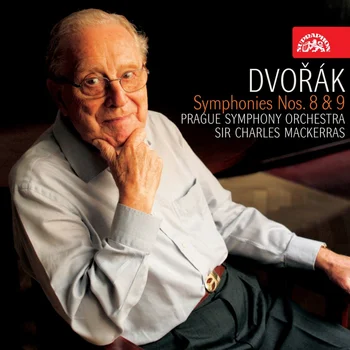
Prague Symphony Orchestra, Charles Mackerras
The concerts marking Charles Mackerras’s eightieth birthday in 2005 produced this live Ninth, and it sounds like the work of someone with nothing left to prove. He knows where the music needs to move and where it needs to breathe, and the Prague Symphony Orchestra plays for him with warmth and gusto. A consistent pulse keeps his Largo plainer and more flowing than the expansive treatments the movement is often given, and it is the more convincing for that restraint. The finale builds steadily and closes with a genuine sense of completion. The sound is rich, and the audience stays silent until the last chord.
Top image ©️ The Classic Review, AI generated