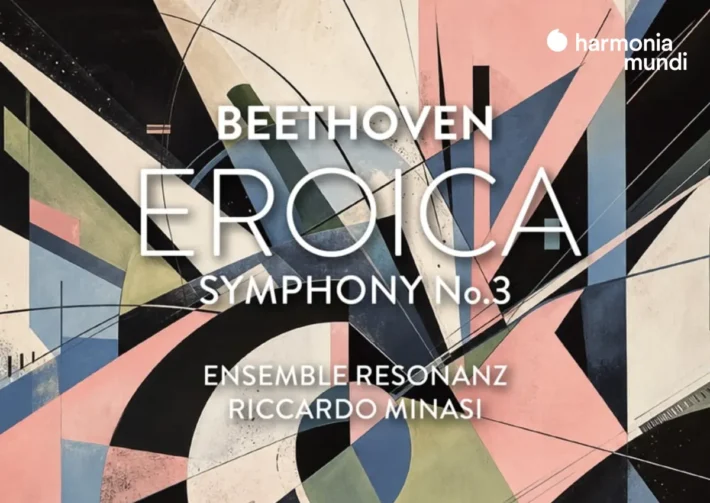
This new release enters an incredibly crowded field: Apple Music lists over 500 available recordings. But Harmonia Mundi’s description of this reading promises much, claiming that it gives “…the Eroica back its original modernity: its cutting edge. [Ensemble Resonanz’s] reading…restores the radical nature of the work…this interpretation breaks with all norms to reveal a symphony of visionary scope.” Quite a lot to live up to.
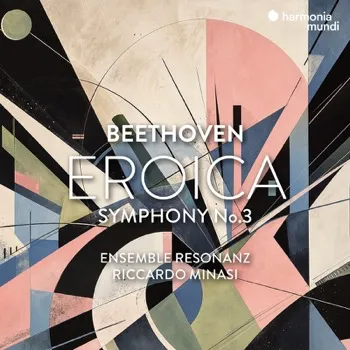
The excitable playing and radical nature of Riccardo Minasi’s vision are undeniable. Although this is a modern-instrument ensemble (one that does use period brass and percussion), Ensemble Resonanz’s playing has a heterogeneous color scheme that might be mistaken for period instruments. Accents are sharp, winds are well to the fore, and vibrato is used sparingly. The 25-member string section seems small, a feeling exacerbated by close microphone placement.
Their virtuosic playing has impressive unanimity, although there are moments in the outer movements where fast tempos and unmarked accelerandos are audibly challenging. Minasi is certainly not the first conductor to take Beethoven’s metronome marks seriously, and the overall timings for each movement are well within the norm (at least compared to other period and historically informed recordings).
But not since Furtwängler or Mengelberg have I heard such elastic phrasing. In the opening movement’s exposition, the second subject is far slower than the first, which then necessitates a significant accelerando for the closing material. While many conductors slightly broaden for the hammer chords (heard twice in the exposition and once in the recapitulation), here they are distended. Surely such interpretive gestures are meant to give us a sense of the shock the first audiences felt hearing this score. But they draw attention to the conductor rather than the music.
Readers might argue that Furtwängler also adopts flexible tempos, but I would counter that he had a unique talent for keeping the music’s overall structure intact; his flexibility has an organic, natural flow that mostly works. One of the distinctive features of this movement is its ceaseless forward momentum — it allows for push and pull, but not as much as Minasi applies here. Readings by John Eliot Gardiner (DG Archiv) and Manfred Honeck (Reference Recordings) sound just as revolutionary and boundary-breaking without sacrificing momentum.
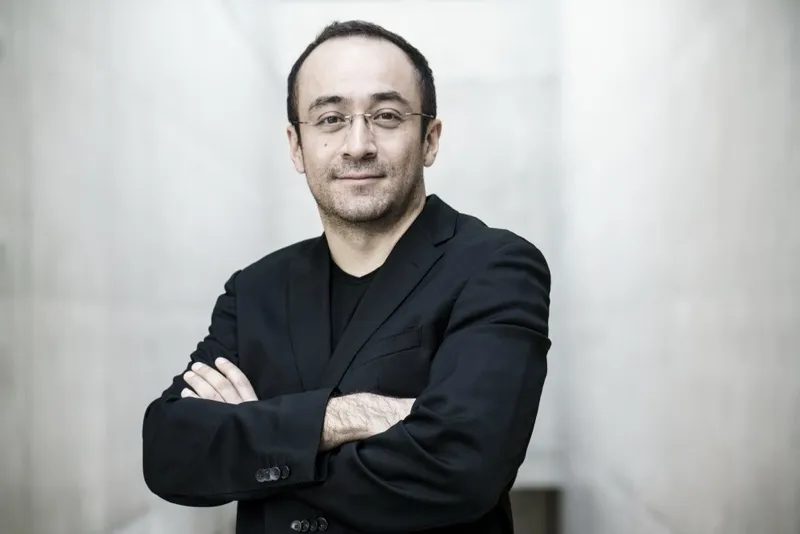
Riccardo Minasi. Photo © Nancy Horowitz.
The Marcia funebre is far more convincing, in part because rubato is employed with greater subtlety. The playing from every department is characterful, but I wanted greater variety of articulation — must every accent have the same quick, sharp attack? The Scherzo of the third movement is brilliantly played, and in the Trio especially, the horns play with gleeful energy. But Minasi adds unmarked slowings at the end of almost every phrase, which adds nothing to the music’s character or expressive power.
The opening of the final movement is overly fast, resulting in a momentary blurring of orchestral articulation. Minasi’s tendency toward significant push and pull appears now and then but feels less disruptive in the variations. The slow, legato playing at 6’15” is beautiful, and it conjures a feeling like the first movement of Mahler’s sixth symphony, where the music shifts from relentless march to a pastoral mountain scene (accompanied by off-stage cowbells). I found it breathtaking. The Coda takes off like a rocket, leaving the horns in the dust (has any horn section ever matched the brilliance of the Cleveland Orchestra under Szell at this moment?).
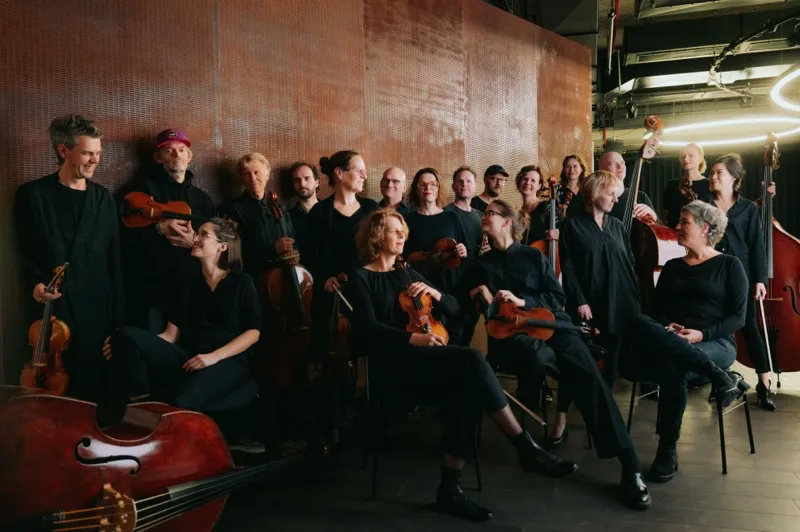
Ensemble Resonanz. Photo © Co Merz.
Harmonia Mundi’s booklet provides an orchestral roster, as well as a note by Gabriele Riccobono, who served as “historical consultant” to this recording. Beethoven and his symphony are touched on, but the real focus of Riccobono’s writing is how performances over the years have tried to “normalize” this music, which of course means this performance is special for focusing on its startling originality.
I found his premise, and this performance, unconvincing. In my view, the performances mentioned above, as well as a host of others (Paavo Järvi, Frans Brüggen and Emmanuel Krivine spring to mind), convey the radical nature of this music far more successfully.
Recommended Comparisons
Beethoven: Symphony No. 3 “Eroica”
John Eliot Gardiner | Manfred Honeck | George Szell | Paavo Järvi | Frans Brüggen | Emmanuel Krivine