Shostakovich was thirty when he wrote his Symphony No. 5 in 1937, the year after the Communist Party newspaper Pravda attacked his opera Lady Macbeth of the Mtsensk District. His Fourth Symphony had been withdrawn during rehearsals, announced as his own decision, though the pressure behind it is well documented. The Fifth’s Leningrad premiere under Yevgeny Mravinsky drew a long ovation and restored his position with the authorities. In the press the symphony was soon called a Soviet artist’s creative reply to just criticism, a line the composer never wrote but never disowned.
The scoring is for a large orchestra with piano, celesta, harps and a full percussion section. Four movements run from a broad Moderato to a fast finale, by way of a short scherzo and a Largo that leaves the brass silent. The strings begin the work alone with a wide-leaping figure, and the finale turns its D minor into a loud D major. Whether that ending is genuine triumph or forced rejoicing has been argued for decades, and the second reading rests largely on Testimony, a memoir of disputed authenticity. Conductors answer the question in performance, above all in how fast they take the coda.
Here are The Classic Review editorial team’s recommendations for the 10 best recordings of Shostakovich’s Symphony No. 5.
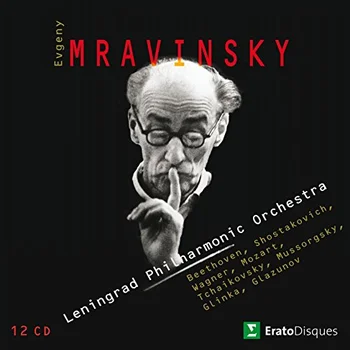
Leningrad Philharmonic Orchestra, Yevgeny Mravinsky
Mravinsky gave the first performance of the Fifth in 1937, and this concert recording, made forty-six years later, is his last word on it. Age had taken nothing from his hold on the score. The playing is fierce, and the shape of each movement stays clear under pressure. The finale sets off at a speed that sounds dangerous, then broadens at the close into something implacable. He pays no attention to the tempo mark printed at that point, and the ending is stronger for it. The orchestra is not always immaculate and a cough or two carries from the hall, but nothing else here has quite this authority.
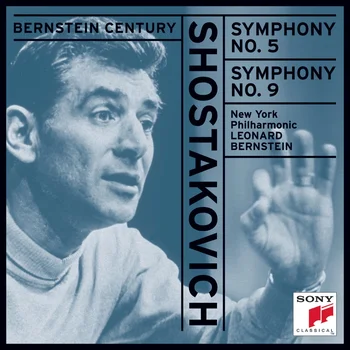
New York Philharmonic, Leonard Bernstein
Played as a virtuoso showpiece, the symphony gains a thrill it loses in graver hands. Bernstein had conducted it in the Soviet Union weeks earlier, with the composer in the hall and delighted by what he heard. This recording followed at home that October. The finale is the fastest here by a distance, and it takes the closing pages as plain triumph, with no hint that the rejoicing is forced. That choice divides listeners, and some find four movements at this pitch exhausting. For anyone who wants the ending to sound like a victory, this is the one.
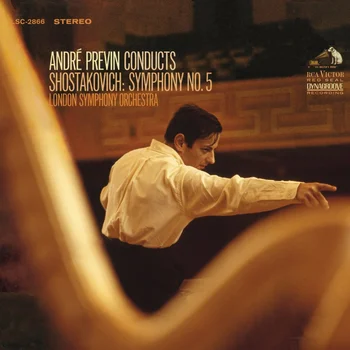
London Symphony Orchestra, André Previn
Refinement and drive rarely sit together in this symphony, but Previn found both in 1965 with the London Symphony Orchestra. The playing is rich and full, and nothing sounds rushed even where the tempos are quick. He puts his weight on the slow movement, which he lets stretch out and takes down to a whisper. The scherzo is the other high point, with the cellos and basses biting into the dance. His finale runs close to the speed printed in the score, nearer Bernstein than the slower modern versions. The transfer has its costs. Climaxes are a little flattened and rumble is audible in parts of the first movement, yet this is still one of the finest accounts of its era.
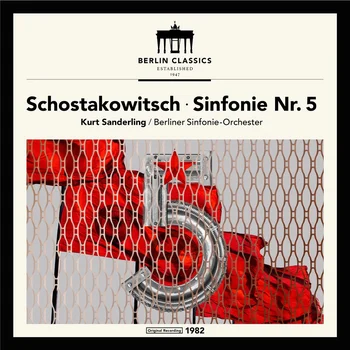
Berlin Symphony Orchestra, Kurt Sanderling
Hearing this 1982 recording after the others is like having the score opened out on the table. Sanderling was in the hall for a Moscow performance weeks after the premiere, and in 1949 he conducted the concert that brought the work back into Soviet programs. What he offers is not weight or theater but clarity. The first movement is measured, the loud passages are scaled so that nothing is buried, and inner parts that usually pass unnoticed come through. High strings can sound a little glassy at the top, a small price for a reading that feels closer than any other here to the man who wrote the symphony.
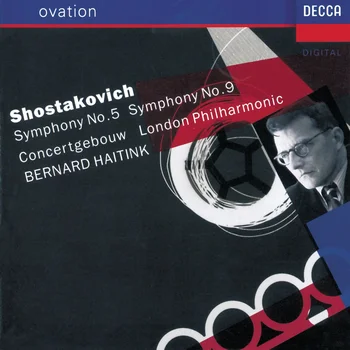
Royal Concertgebouw Orchestra, Bernard Haitink
Steadiness rather than terror is what Haitink offers in this 1981 recording. The orchestra is superb, the recorded sound warm and open, and the opening movement lands with real impact. What Haitink withholds is menace. The manner stays level where others press harder, the woodwind entries in the slow movement could be sharper, and the coda is finely judged where others are defiant. Some listeners want more horror from this symphony than they will find here. As orchestral playing, though, it is hard to beat.
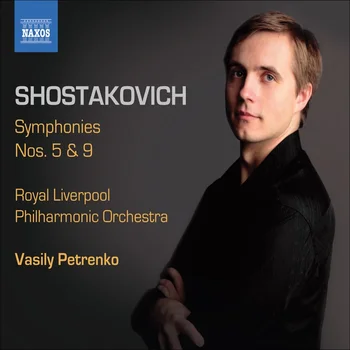
Royal Liverpool Philharmonic Orchestra, Vasily Petrenko
Everything in Petrenko’s 2008 account is shaped by what happens at the end, and what happens at the end is a refusal to celebrate. He travels between extremes of loud and soft that few others attempt, and the detail he uncovers on the way is remarkable. The last movement holds a central stretch full of regret before the coda arrives at a crawl, closer to defiance than to victory. It is a hard listen by design, and not everyone will want the symphony to end this way. A few of his tempo shifts sound deliberate where they should feel inevitable, but nothing here states the case for the hollow ending more powerfully.
Pittsburgh Symphony Orchestra, Manfred Honeck
Take the dynamic and balance markings literally, as Honeck does in this 2013 concert recording, and the symphony changes character. Details that normally sink into the texture come through clearly: the harp in the first movement, the piano at the climax of the Largo. Neither is a discovery, since both are in the score, but they are seldom this audible. The slow movement is the peak here, carried with dignity and a kind of quiet grief, never pressed for effect. He takes his time throughout, and the scherzo loses some of its irony as a result. Few recordings, though, let you hear so much of what is actually on the page.

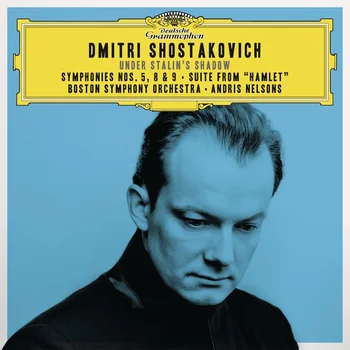
Boston Symphony Orchestra, Andris Nelsons
The Boston Symphony Orchestra plays magnificently here, with trumpets that would be hard to better in any recent recording of this music. Nelsons keeps a current of unease running from the opening bars, and it never quite lets up, even in the passages that offer relief. One of those comes midway through the first movement, where the flute and horn answer each other over the strings and the music opens out for a moment. The sound is spacious, though there is a shade too much reverberation at the start for the string playing to register cleanly. No modern version sounds bigger, a broad canvas where Petrenko is lean.
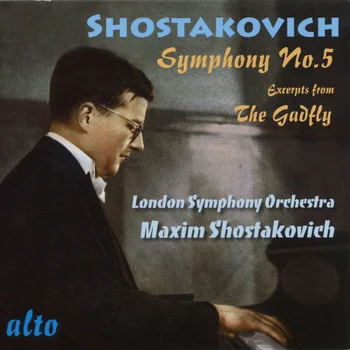
London Symphony Orchestra, Maxim Shostakovich
Maxim Shostakovich takes the symphony more slowly than anyone else here, well over ten minutes longer than Mravinsky across the four movements. The pulse never sags, which is what makes the approach work. The London Symphony Orchestra plays with complete seriousness. His slow movement refuses to plead. Feeling is held back instead of displayed, and the restraint is what makes it land. The finale’s march moves at a pace that cannot be hurried, with a central episode where real warmth breaks through, and its scale becomes the argument.
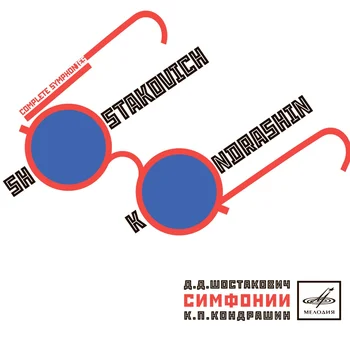
Moscow Philharmonic Orchestra, Kirill Kondrashin
By 1964 the symphony was nearly thirty years old, but this recording catches it as though the ink were still wet. Kondrashin, who gave the premieres of two of the composer’s symphonies and recorded the first complete cycle, drives the outer movements harder and rougher than almost any rival. Polish is not the point. Urgency is, and the coda in particular lands with a force smoother versions never find. The engineering shows its age, and this is not always the first Fifth recommended from his cycle. For anyone who wants the symphony at its most dangerous, it is still the obvious choice.
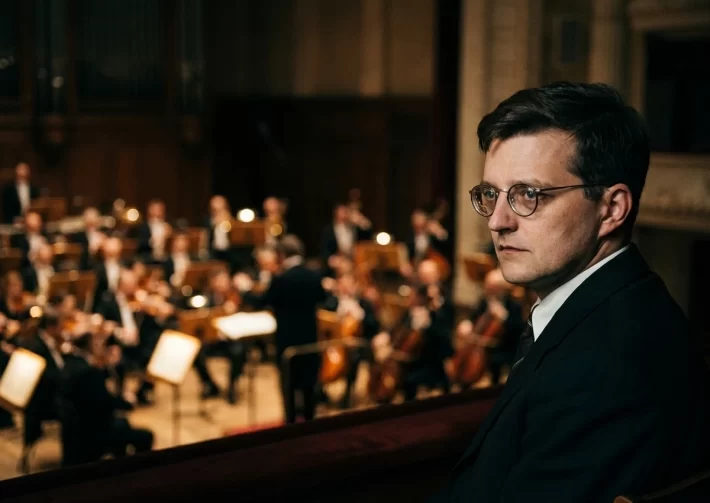
Top image ©️ The Classic Review, AI generated