Mahler began his Fourth Symphony in the summer of 1899 and completed it at Maiernigg a year later, but its seed was older. In 1892 he had written “Das himmlische Leben,” a song about a child’s idea of heaven. For a time he planned it as the final movement of the Third Symphony. He conducted the premiere in Munich in November 1901, to reviews that ranged from bewildered to hostile. He kept revising the score until his last performances of the work, in 1911.
The scoring is the lightest of his symphonies, with no trombones and no tuba. Sleigh bells open the first movement. In the second, the leader takes up a violin tuned a whole tone higher to play the part of Death, the skeleton fiddler Mahler called “Freund Hein.” The slow movement is the longest of the four, and the finale is the 1892 song itself, given to a solo soprano. How she sounds, and how the conductor handles the work’s innocence, separates the recordings below more than anything else.
Here are The Classic Review editorial team’s recommendations for the best recordings of Mahler’s Symphony No. 4.
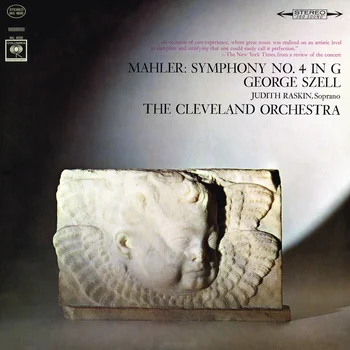
Cleveland Orchestra, George Szell
Nothing in George Szell’s 1965 recording is left to chance. The Cleveland players deliver every line with such exactness that the scherzo’s mistuned violin unsettles more, not less, and the textures have real density. That discipline has a cost. The Poco adagio, for all its poise, can feel measured rather than felt. Judith Raskin sings the finale with a light, pure tone and no artifice. For the architecture of the symphony, this is still the place to start.
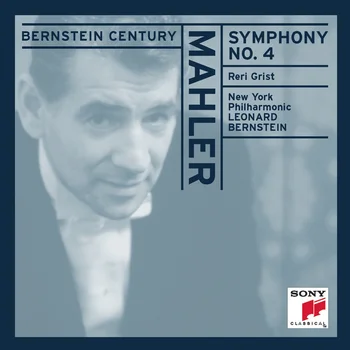
New York Philharmonic, Leonard Bernstein
Leonard Bernstein’s first Fourth, recorded in 1960, treats the symphony as a ride through quickly changing moods. Irony sits next to sentiment, tempos press forward, and the joins between sections can be abrupt. The first movement can seem plain next to what follows. Reri Grist makes the finale the reason to own it: a young, fresh voice that suits the poem’s simplicity completely, even if some roughness shows. It remains the wild card of the discography, and a reference point for how much risk this music can take.
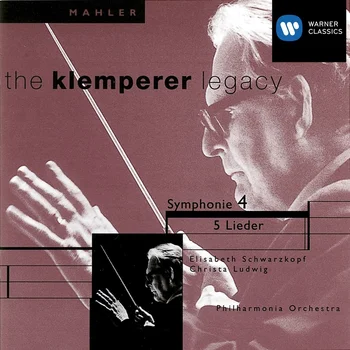
Philharmonia Orchestra, Otto Klemperer
Weight is the word for Otto Klemperer’s 1961 account. The first movement moves at a leisurely pace, the winds stand out from the strings instead of blending into them, and the biggest passages keep their lines uncluttered. The scherzo profits most, with a heavy-footed trio and a solo violin of real bite. The slow movement, oddly, is quick, quicker than any rival here, and loses some of its stillness as a result. Elisabeth Schwarzkopf is the bigger problem: a great artist whose finale sounds worldly where the poem asks for a child. The first three movements are strong enough to make that a price worth paying.
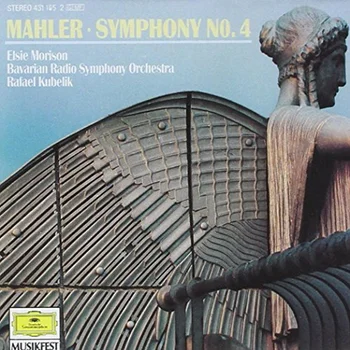
Bavarian Radio Symphony Orchestra, Rafael Kubelík
Fresh air runs through Rafael Kubelík’s 1968 recording. He keeps the orchestra on a small scale and the tempos on the quick side. Strings and woodwinds answer one another, and the first movement’s counterpoint comes across with no effort at all. The slow movement sings without ever dragging, shaped with real expressive care. Elsie Morison’s finale is warm and natural, with no hint of a grown-up playing at being a child. It is a lightweight reading by design, and the third movement could use a little more gravity. Few recordings make this symphony smile so easily.
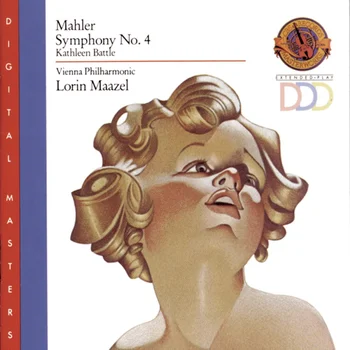
Vienna Philharmonic, Lorin Maazel
Time moves slowly in Lorin Maazel’s 1983 recording, and that is the point. Phrases are drawn out and allowed to fade, even the sleigh bells are muted, and the mood throughout is wistful. The scherzo is darker than in many rivals, Fischer’s included, a reminder that relaxed does not mean careless. Kathleen Battle’s finale is gloriously sung, though a voice this rich risks sounding more woman than child. The reading is somewhat mannered, and it does not dig as deep as the best of the older versions. Anyone who wants to hear the Vienna strings given all the time in the world will find it here.
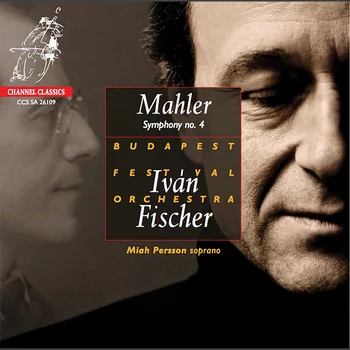
Budapest Festival Orchestra, Iván Fischer
Among modern recordings, Iván Fischer’s 2008 Budapest performance is the first name to come up, and deservedly so. It joins the clarity of a present-day orchestra to a freedom of phrasing that sounds spontaneous rather than planned, and the string playing is lovely throughout. The slow movement is paced naturally, neither rushed nor stretched, and Miah Persson’s finale has the playful lightness the poem needs without a hint of cuteness. If anything is missing it is bite: the scherzo is a shade smoother than Maazel’s, and the percussion could cut through more. Discipline and spontaneity rarely sit together this comfortably.
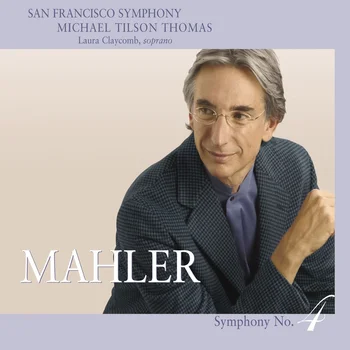
San Francisco Symphony, Michael Tilson Thomas
No recording on this list divides opinion like Michael Tilson Thomas’s 2003 concert performance. The playing is warm and generous, with old-fashioned string slides and phrasing in the grand manner, and the disc is among the best engineered of his cycle. Everything turns on the slow movement, which runs several minutes longer than most. It is very slow, yet it never turns static, and its climax explodes with tremendous force. Laura Claycomb’s boyish, straightforward finale fits the reading, though it is not the most memorable singing here. The recording’s beauty is beyond argument. The doubt is whether so much refinement drifts too far from what Mahler intended.
London Philharmonic Orchestra, Vladimir Jurowski
Sofia Fomina’s finale is reason enough to hear Vladimir Jurowski’s 2016 concert performance. Her voice is sweet and silvery, innocent and never arch, and she clearly relishes the words. Around her, the London Philharmonic plays with a precision that never hardens into coldness. Jurowski understands the score’s swings between deadpan seriousness and childlike simplicity, and the transitions, so easy to fumble, are managed with unusual assurance. The one reservation is the hall: a dry acoustic that takes some of the bloom off the slow movement’s climaxes.
Minnesota Orchestra, Osmo Vänskä
Osmo Vänskä holds back, and in this symphony the restraint pays off. Tempos in the 2018 recording are on the relaxed side, balances are judged with evident care, and the woodwind solos are full of character. The approach suits the outer movements best. The scherzo wants a firmer dance pulse and a rougher edge than it gets here. Carolyn Sampson’s finale is honest and touching, a grown-up’s sincere account of a child’s heaven, and it becomes the emotional high point of the whole performance. The recording is spacious and detailed, with the percussion kept in natural proportion. Listeners who prefer their Mahler unhurried and well recorded will find a great deal to enjoy here.
Czech Philharmonic, Semyon Bychkov
String slides of the old school color Semyon Bychkov’s 2020 recording with the Czech Philharmonic, and the rubato is free. The reading is lyrical and highly polished, preferring poetry to force, and the slow movement is unhurried. Not everything convinces. The scherzo is edgy in outline but studied in effect, and the emotional temperature can stay cool where older readings burn. Chen Reiss crowns the performance with a finale of spring-like freshness, and she sings the long phrases in a single breath.
Top image ©️ The Classic Review, AI generated