
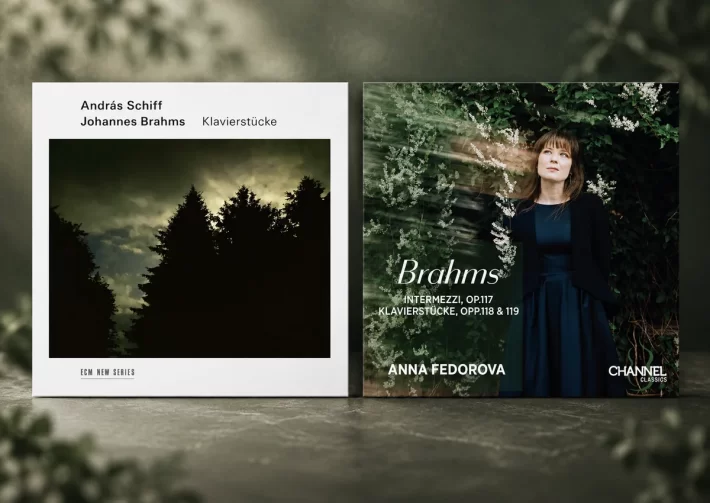
These two releases from Anna Fedorova and András Schiff both feature Brahms’ late Opp. 117–119 sets, but Schiff’s also includes Opp. 76 and 116. The most interesting distinction, though, is the choice of instrument: Schiff plays a Blüthner built around 1859.
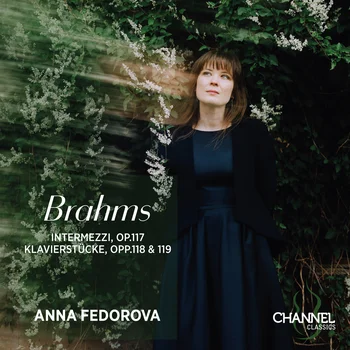
Fedorova’s Op. 117 is best defined by her exquisite voice leading, present in each of the three works. In faithfully maintaining the integrity and continuity of the thematic material, she creates a fluid and expansive quality despite the structural minimalism. The melodiousness also elicits different but equally comforting emotions throughout: empathy in the Andante moderato (track 1), gentle yearning in the Andante non troppo (track 2), and gravity in the Andante con moto (track 3).
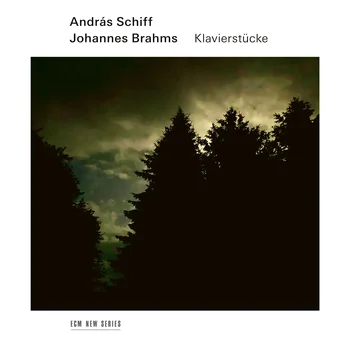
Schiff’s performance is equally effective but in a different manner: the period instrument, while resonant, has a lighter profile than Fedorova’s. This evokes a Classical elegance that we don’t always associate with late Brahms. His Andante moderato from Op. 117 (Disc 2, track 1) expresses a more coy tenderness. The Andante non troppo (Disc 2, track 2) has an even greater degree of fragility and transparency than Fedorova’s. The final piece sounds more subdued and solemn, although the beautiful shimmer of the middle section is not to be overlooked.
Op. 118 introduces more distinct personalities throughout, all of which Fedorova faithfully captures. The opening Intermezzo (track 4) may not be as bold or rhapsodic as the reading from Francesco Piemontesi that I reviewed recently, but it is meaningful and contemplative. The A major Intermezzo (track 5) is exquisite, considerably more intimate than I’ve heard elsewhere, and tells of her impressive palette of softer dynamics.
The G minor Ballade has a satisfying austerity, which she draws from the full bass register of the piano. The final Intermezzo (track 9) stands out as it convincingly juxtaposes two divergent personalities: a quietness characterized by enigmatic undertones and a drama bolstered by the undulating accompanimental material.
Schiff’s Op. 118 opens with a grand, emphatic reading of the first Intermezzo (Disc 2, track 4) that also underscores Brahms’ colorful chromatic complexity. The A major (Disc 2, track 5) is less introverted but instead takes on a brisker tempo that reveals a grazioso profile. I expected his G minor Ballade to move a little faster than Fedorova’s, but it feels even more deliberate and measured; the major middle section, while largely calm, possesses an intriguing undercurrent of suspense thanks to the Blüthner’s lower register, which growls ever so subtly. The F minor Intermezzo (Disc 2, track 7) again carries a Classical undertone that feels almost Schubertian in its refined approach.
With the exception of the heroic finale, Op. 119 contains some of Brahms’ most introspective writing. While Fedorova’s B minor Intermezzo (track 10) brings this out, I found the E minor (track 11) surprisingly vibrant and highly responsive to harmonic twists and turns. The C major is quite placid—perhaps too much so; it might benefit from more perkiness and forward movement, as we hear in Richard Goode’s recording.
Fedorova’s E-flat Rhapsody, though, proves a most satisfying end to an excellent set: it is full of authority and reminds us of the composer’s signature symphonic profile. If only the recorded dynamics didn’t sound as though they were reaching their limits. In the louder passages here and elsewhere, there is a slight distortion that can be picked up even at low volume.
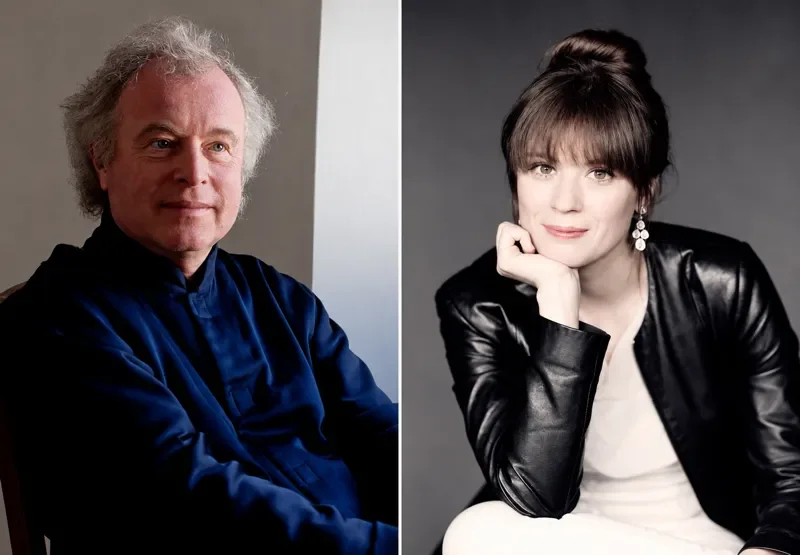
András Schiff (left, photo © Nadia F. Romanini) and Anna Fedorova.
Schiff brings out the intricate details of Brahms’ compositional style in his Op. 119. The E minor Intermezzo (Disc 2, track 11) gets off to a slow start, but a patient listen reveals how the pianist makes pointed distinctions between staccato and legato interchanges. His C major Intermezzo flows a bit better than Fedorova’s and gives off a uniquely ballet-like feel. The finale, too, possesses a distinct personality: Schiff purposefully rests on certain beats, creating a particular “gait” that helps emphasize the work’s substantiality.
Nearly 15 years separate Op. 76 and Op. 116, and Schiff’s performances reveal the differences between the two. Op. 76 essentially marks the start of Brahms’ late period, but the pianist introduces a more restless, youthful energy, especially in the active passages. The pieces are more loosely connected given their eclectic characters, and he spotlights this individuality in the stark differences between the timidly playful B minor Capriccio (Disc 1, track 3) and its C-sharp minor counterpart (Disc 1, track 6), which is much more stubborn and off-kilter.
Op. 116, compositionally more unified, is where we hear Schiff at his most powerful, rousing, and authoritative. The stormy D minor Capriccio (Disc 1, track 16) or the fierce final moments of the last work are perfect examples.
Although Schiff offers a slightly wider scope of offerings, both performances are equally compelling and enjoyable—yet undeniably distinct to each musician. Fedorova’s readings evoke the depth and spirituality of Brahms’ late period, while Schiff’s puts an interesting Classical spin on certain works without losing their introspective essence.
Recommended Comparisons
Brahms: Klavierstücke, Opp. 117-119
Radu Lupu | Wilhelm Kempff | Hélène Grimaud | Paul Lewis
Brahms: Klavierstücke, Opp. 76 & 116
Richard Goode | Julius Katchen | Jonathan Plowright | Garrick Ohlsson
Album Details — Fedorova (Channel Classics) |
|
|---|---|
| Album name | Brahms: Intermezzi, Op. 117 – Klavierstücke, Opp. 118 & 119 |
| Label | Channel Classics |
| Catalogue No. | CCS50126 |
| Artists | Anna Fedorova (piano) |
Album Details — Schiff (ECM New Series) |
|
|---|---|
| Album name | Johannes Brahms: Klavierstücke |
| Label | ECM New Series |
| Catalogue No. | ECM New Series 2730/31 |
| Artists | András Schiff (piano, Blüthner grand c. 1859) |
