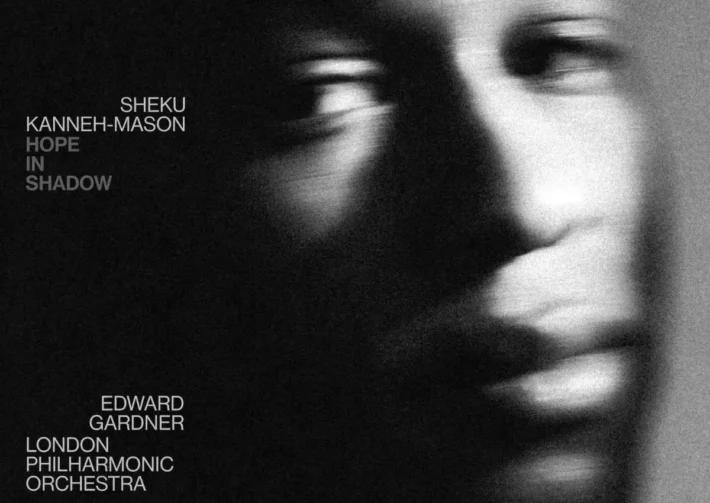
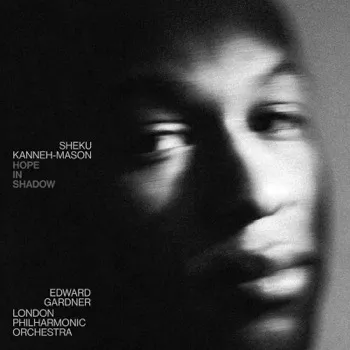
Hope in Shadow marks a special milestone for Sheku Kanneh-Mason: the tenth anniversary of his BBC Young Musician win and his signing with Decca. Recorded with Edward Gardner and the London Philharmonic Orchestra, the program pairs a cello concerto with a series of concertante works.
Camille Saint-Saëns’ Cello Concerto No. 1 in A minor offers a dramatic start. Kanneh-Mason takes on the virtuosic Allegro non troppo (track 1) with a boldness that helps him stand out against the ensemble. His interpretation has a spicy kick with highly driven phrases. I did find his tone too strident at times, but perhaps that is a product of the enthusiasm with which he approaches the music.
The orchestra does its part to evoke a light, graceful, minuet-like personality in the Allegretto con moto (track 2). Kanneh-Mason is quite responsive in turn, playing with charm but also carrying over the fullness and resonance of the first movement.
The Molto allegro (track 3), which borrows motivic material directly from the Allegro non troppo, dives right back into angst. Kanneh-Mason has little difficulty navigating the acrobatic passages, though the perpetual push makes some of the upper-register playing sound hurried and thin.
On the whole, the performance is full of excitement, but I prefer the reading from Steven Isserlis, Michael Tilson Thomas and the London Symphony Orchestra. Isserlis has better-contoured phrases, which take the edge off the already urgent nature of the music, and his rounder tone offers more dimensionality where expression is concerned.
The Swan from Saint-Saëns’ Carnival of the Animals (track 4) brings much-needed calm and is perhaps a nod to an earlier album with his siblings, in which they present the complete work (review). Stylistically, the two readings aren’t all that different, though Kanneh-Mason’s playing feels more relaxed on the older version. The dynamic contrasts here are nicely executed, but he has a tendency to push the lines forward just a hair too much, especially as the music increases in intensity.
Max Bruch’s Kol Nidrei sees the performers at their peak and best encompasses the album’s message. Soloist and orchestra play to two very different sides of solemnity and atonement in the Adagio ma non troppo (track 5): Kanneh-Mason captures the sensitivity and gravitas of the writing, while the orchestra complements him with a more stately and declamatory angle. The second section (track 6) not only shifts to the major but feels like a much-awaited arrival. The delicate dynamic shading and excellent bow control are what create its comforting glow.
Another fine rendition by Astrig Siranossian was recently reviewed on these pages (review), and a side-by-side listen reveals a more haunting sheen in Siranossian’s version, especially in the first section.
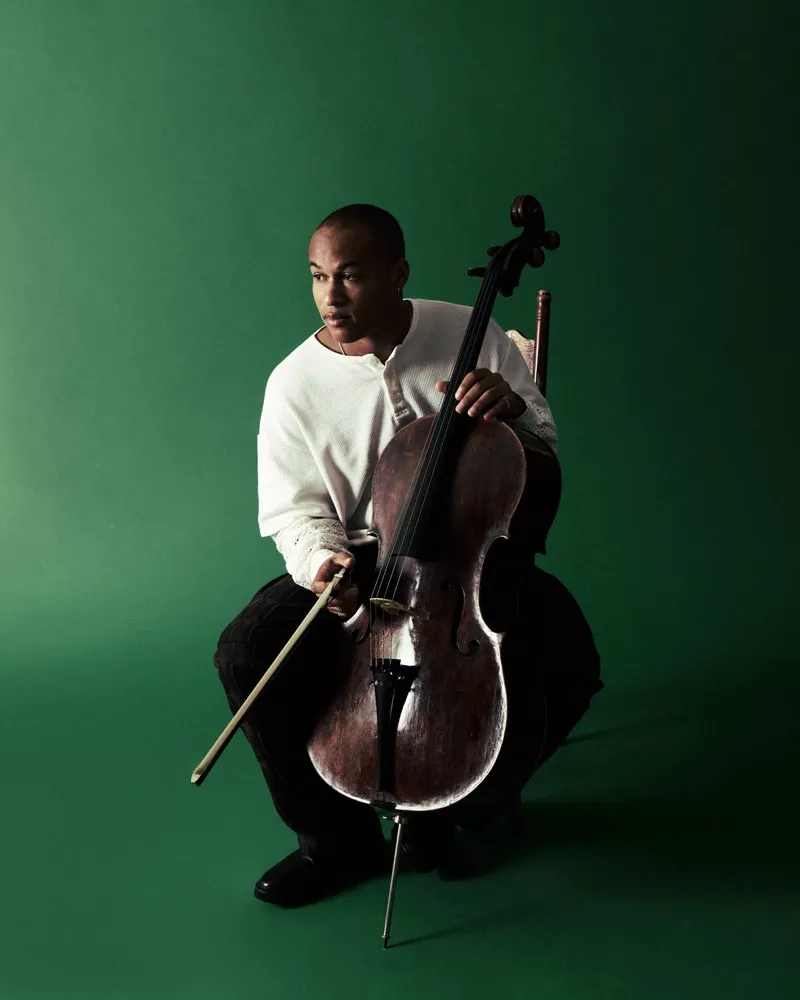
Sheku Kanneh-Mason. Photo © Lorena Dini.
Of the two Ernest Bloch selections, From Jewish Life stands out for its earnest rendering. Prayer (track 11) touches on two equally captivating perspectives: Kanneh-Mason uses artfully crafted phrases and a warm, vocal quality to create a deeply personal invocation. The ensemble, meanwhile, brings an expansive and cinematic feel whose swells of intensity are critical in driving the music forward.
Supplication (track 12) is just as deliberate, with Kanneh-Mason exploring all the different registers—and corresponding personalities—of his instrument. He gives the husky bass a comforting warmth, but the tight vibrato and dense bowing in the upper reaches are what really capture the urgency of the pleas.
While Jewish Song (track 13) doesn’t shift the mood into a brighter part of the emotional spectrum, its suspense comes through clearly: the strings may play a more secondary role here, but their static textures still have a delicately translucent and transient quality. Kanneh-Mason balances the moments of tension with tenderness, but the eeriness he brings to the melodies lingers long after the final note.
The album comes to a fitting close with John Williams’ theme from Schindler’s List (track 14). While the performances are solid across the board, it would have been nice to include a few more bright works to truly embody the overarching concept.
Recommended Comparisons
Saint-Saëns: Cello Concerto No. 1
Steven Isserlis | Mstislav Rostropovich | Jacqueline du Pré | Yo-Yo Ma
Bruch: Kol Nidrei
Astrig Siranossian | Pierre Fournier | Jacqueline du Pré | János Starker