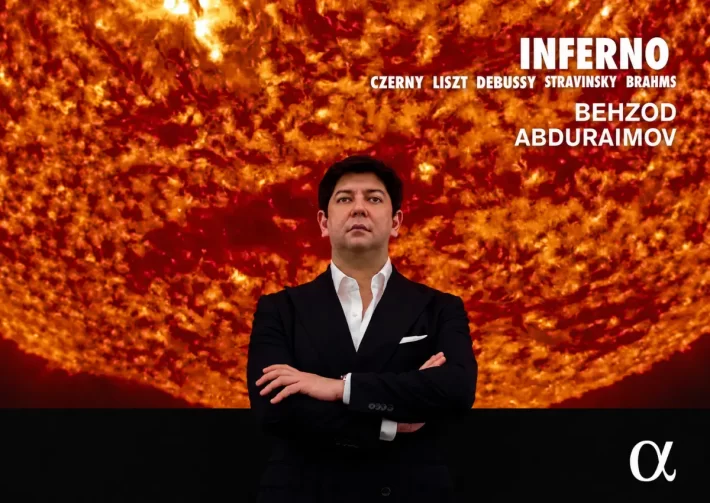
Behzod Abduraimov’s Inferno explores the multifaceted concept of fire, bringing together cornerstones of the piano repertoire by Liszt, Debussy, and Stravinsky alongside a lesser-known offering by Carl Czerny.
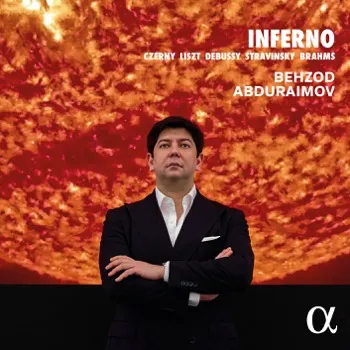
Because Czerny is typically associated with the practice room rather than the concert hall, Abduraimov’s decision to include the Op. 33 Variations on a Theme by Rode is particularly intriguing. Any initial misgivings are quickly dispelled by a charming performance of this rare gem. Here, the inferno manifests as acrobatic fireworks; the pianist revels in each leap, turn, and twist with enviable agility. Capturing the work’s inherently carefree nature, he evidently relishes the technical display.
While the album’s conceptual arc takes a decisive turn toward the dramatic with Liszt‘s Dante Sonata, Abduraimov navigates this transition sensibly. Bravado is naturally infused throughout the writing, yet the prevailing strength of this interpretation lies in its profound balance. Even in the most dazzling passages, or those fraught with tension, the pianist treats notes and phrases with meticulous care. Accents and fortes are never driven to harshness, and the most fleeting lines remain thoughtfully contoured. When the score demands power, he marshals the recurring textural and motivic elements to devastating effect. His interlocking octave glissandos possess a chilling sharpness, the dotted rhythms are articulated with unyielding resolve, and those treacherous tremolos unleash a fury that vividly evokes the underworld.
Debussy’s Suite Bergamasque presents an entirely different interpretation of the inferno. Frankly, it is the one inclusion whose relationship to the overarching theme feels somewhat tenuous. This conceptual disconnect aside, it remains a welcome addition, offering a comforting contrast to the intensity of Liszt and Stravinsky. Effectively demonstrating his versatility, Abduraimov proves he can be as musically affable as he is fierce. Opening the cycle, the Prelude is undeniably charming, though it could perhaps benefit from slightly more emphasis and demarcation in certain structural moments. Nevertheless, this lighthearted approach succeeds wonderfully in the quieter passages, illuminating the delicacy of Debussy’s textural language.
Carrying a similar carefree spirit, the Menuet benefits from Abduraimov’s acute responsiveness to harmonic shifts, which injects a perfect measure of whimsy. At the heart of the suite, Clair de lune certainly does not disappoint. Maintaining the fluidity established in preceding movements, the performer achieves a breathtaking atmosphere of quiet contemplation. Particularly notable is the passage beginning near the one-minute mark, an interpretive highlight that offers exquisite shades of piano and a soothing resonance demanding to be fully savored.
Stravinsky’s Petroushka marks a return to unbridled extroversion, with the first two movements deserving high praise for their superb execution. Although the Danse Russe may not be as relentlessly heady or pointillistic as benchmark readings by Alexis Weissenberg or Maurizio Pollini, Abduraimov’s distinct strength lies in his seamless blending of harmonies and chords, granting the piano a remarkably orchestral profile. Evoking the visual elements of the original ballet, his leaps and flourishes possess an infectious playfulness. Moving forward, Chez Petroushka serves as an exquisite study in detail: every note sounds as clear as a bell, and each phrase contributes to a vivid tableau of impishness, suspense, and disquiet.
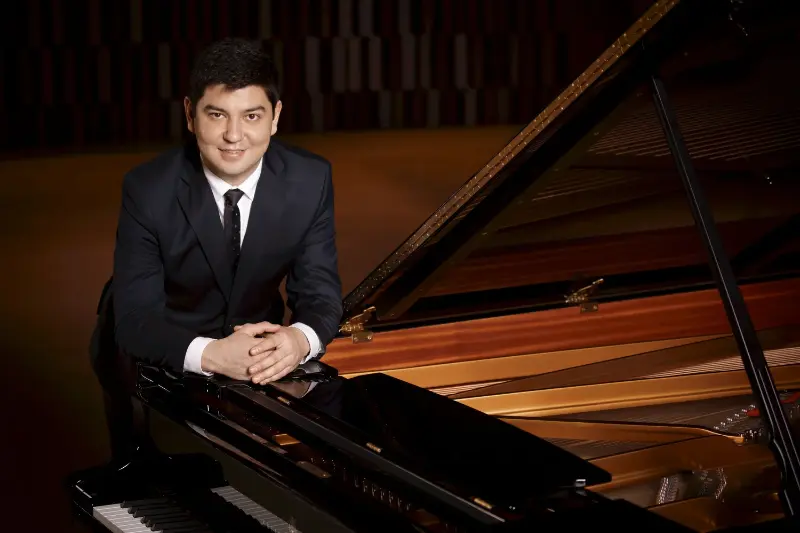
Behzod Abduraimov.
Brahms‘s Op. 119 No. 1 Intermezzo rounds out the program on a deeply nuanced, wistful note. In this closing piece, the inferno’s intensity morphs into a slow, nostalgic burn, its inherent tenderness and longing conveyed with profound sensitivity and beauty.
One minor grievance arises not from the performance or the superb sound engineering, but rather from the liner notes. Curiously, the overarching theme is never actively explored in any of the accompanying descriptions of the selections. Such a discussion is something many listeners would find highly insightful, and it could easily have been addressed through an interview with the performer. Alternatively, perhaps the underlying intent of the album is to encourage listeners to forge their own perspectives on what constitutes an inferno. To that end, Abduraimov’s magnificent performances provide an undeniably compelling catalyst.
Recommended Comparisons
Stravinsky: Three Movements from Petrushka
Maurizio Pollini | Alexis Weissenberg | Yuja Wang | Yefim Bronfman
Album Details |
|
|---|---|
| Album name | Inferno |
| Label | Alpha Classics |
| Catalogue No. | ALPHA 1219 |
| Artists | Behzod Abduraimov, piano |