Verdi wrote his Messa da Requiem in memory of Alessandro Manzoni, the novelist he admired above every living Italian. When Manzoni died in May 1873, Verdi confessed he could not face the funeral. He proposed a memorial of his own instead, completed the score the following spring, and conducted the premiere in a Milan church in May 1874, one year to the day after Manzoni’s death. The music has been argued over from the start. One prominent musician dismissed it unheard as opera dressed up for church, and apologized to the composer almost twenty years later. Brahms, after studying the score, pronounced it the work of a genius.
The Requiem calls for the largest forces Verdi ever assembled outside the opera house. Four solo singers join a big choral ensemble, which divides into eight parts for the Sanctus, and an orchestra that places four extra trumpets at a distance for the Last Judgment. The hammering chords of the Dies irae return across the work like a recurring terror. The ending, though, is no triumph but an open question, the soprano pleading for deliverance as the music fades. Listeners have argued from the premiere onward whether this is sacred drama or true prayer, and that argument is exactly where recordings divide. Some conductors give the work operatic voices and theatrical sweep, others shape it as an act of devotion, and a few have re-examined its sound on period instruments.
Here are The Classic Review editorial team’s recommendations for the best recordings of Verdi’s Messa da Requiem.
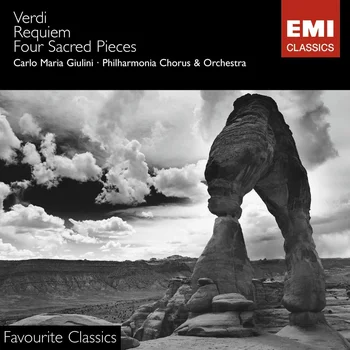
Philharmonia Orchestra & Chorus, Carlo Maria Giulini
Giulini’s recording has probably introduced more listeners to the Requiem than any other, and it is still the version newcomers are handed first. His way with the score is devotional rather than theatrical, patient and quietly authoritative. Schwarzkopf and Gedda do their finest singing in the score’s gentler pages, and Ghiaurov’s immense bass is for many still the measure of the part. Its one weakness is the recording itself. The master tape distorts in the biggest climaxes, a flaw no reissue has been able to solve. The performance’s spiritual concentration survives everything.
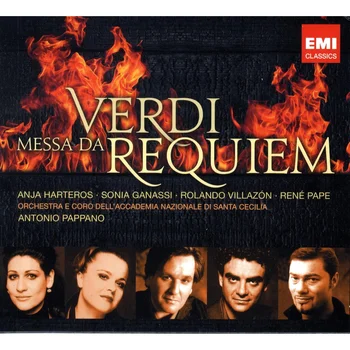
Orchestra dell’Accademia Nazionale di Santa Cecilia, Antonio Pappano
No account of recent decades has been praised as widely as Pappano’s, taken from concerts given in 2009. It holds the work’s two faces in balance, judgment-day fury and rapt stillness, without shortchanging either. Anja Harteros is radiant, fearless in a Libera me that has drawn comparison with Leontyne Price’s on the Reiner set. René Pape gives the bass part depth and command, and Villazón sings with unusual sensitivity, if with less power than tradition expects. The chorus is magnificent, and the recorded sound has terrific range and presence. For the Requiem in modern sound, this is the first choice.
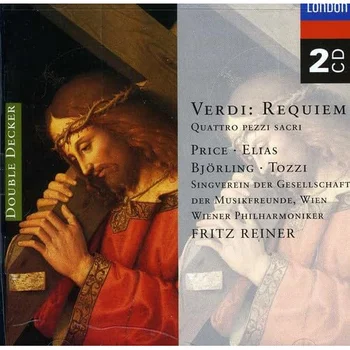
Vienna Philharmonic Orchestra, Fritz Reiner
Reiner takes the broadest view of the work here. The opening moves at a trance-like pace, the devotional numbers held almost suspended, and then the Dies irae erupts at full speed. These extremes are the interpretation. Leontyne Price, at the start of her fame, soars, and Björling, who had only months to live, is in full, ardent voice for the Ingemisco. The tempos have always had doubters. For listeners who want the work at its most monumental, though, it has never been displaced.
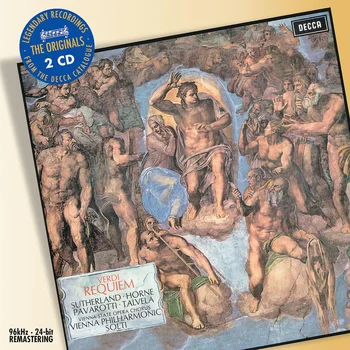
Vienna Philharmonic Orchestra, Georg Solti
Recorded with the same orchestra seven years after Reiner, Solti’s set is its temperamental opposite, all momentum and blazing theatricality. This is the Requiem as high drama in the Toscanini line, cast with star operatic voices. The young Pavarotti is the treasure, in honeyed, effortless voice, every word telling. Sutherland’s soprano is ample and secure, though her diction has always divided opinion. The chorus responds with real fervor. The engineering was famous in its day and still impresses.
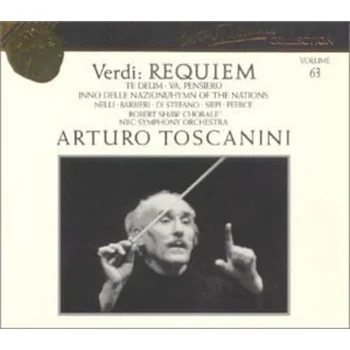
NBC Symphony Orchestra, Arturo Toscanini
Many collectors still insist the fiercest Requiem on record is Toscanini’s, recorded live in 1951. Chorus and orchestra play with relentless drive, and the Dies irae lands with crushing force, the bass drum caught with startling weight for its era. Di Stefano is in fresh, impassioned voice, and Siepi is dark and unshakable. The mono sound is dated, and nobody pretends otherwise. The intensity cuts through it within a minute.
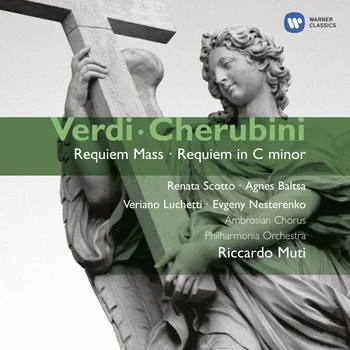
Philharmonia Orchestra, Riccardo Muti
Muti has recorded the Requiem several times, and his first version is where the fire burns hottest. The manner is unapologetically operatic, closer to Solti’s thunder than to Giulini’s calm, with a driven Sanctus and an ending broadened so the soprano’s final plea strikes home. Scotto holds nothing back, though her sustained notes can spread under pressure. Nesterenko anchors the quartet with imposing steadiness. The reading’s extremes divide critics to this day. That is part of the excitement.
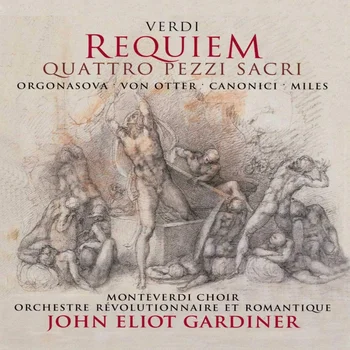
Orchestre Révolutionnaire et Romantique, John Eliot Gardiner
Gardiner was the first to record the Requiem on period instruments, and the gain in clarity is real. Words and inner voices register with uncommon precision, and the Dies irae hits hard, its brass biting rather than blending. The Monteverdi Choir is the glory of the set. The soloists are lighter-voiced than tradition expects, and listeners who prize Italianate warmth have resisted the whole conception from the start. The Four Sacred Pieces make a generous coupling. For anyone curious how much detail this music can yield, start here.
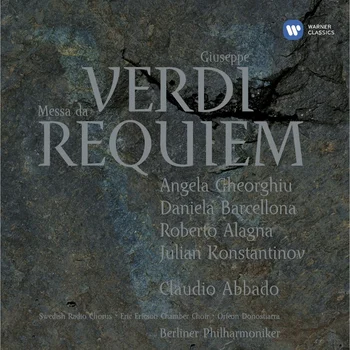
Berlin Philharmonic, Claudio Abbado
Illness shadowed the concerts behind this recording, made in the centenary year of Verdi’s death, and the sense of occasion is audible. Abbado draws playing of extraordinary focus, inward yet vividly alive, never mistaking loudness for power. Three choirs sing as one. Gheorghiu’s Libera me is the moment everyone remembers, sung with an urgency close to fear. Some critics find Abbado’s restraint too careful and want more open drama. Most listeners are simply swept up in it.
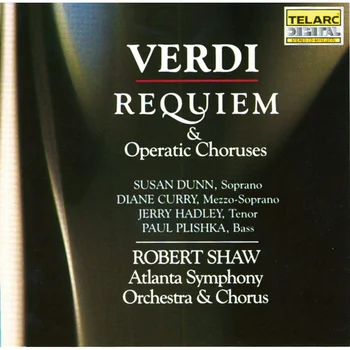
Atlanta Symphony Orchestra & Chorus, Robert Shaw
The chorus is the star of Shaw’s set, as reviewers have agreed from the day it appeared. The choral singing is shaped down to the smallest dynamic marking, and Shaw paces the whole work in the swift, steady Toscanini tradition. The sound has been an audiophile calling card ever since, not least a Dies irae bass drum of legendary impact, too much of it for some ears. The solo quartet is capable rather than starry. Verdi opera choruses fill out a second disc.
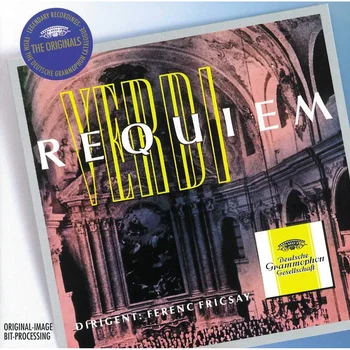
RIAS Symphony Orchestra Berlin, Ferenc Fricsay
Speed and tension are the whole story of Fricsay’s 1953 recording, which fits the complete score onto a single disc. The pace never slackens, and some hear Solti’s urgency held on a tighter rein. The soloists are lighter in caliber than the celebrated quartets elsewhere on this list, and Maria Stader’s bright, firm soprano leads the team. The mono sound is limited, but the performance soon makes you forget it. Among all these recordings it is the most breathless, and one of the most gripping.
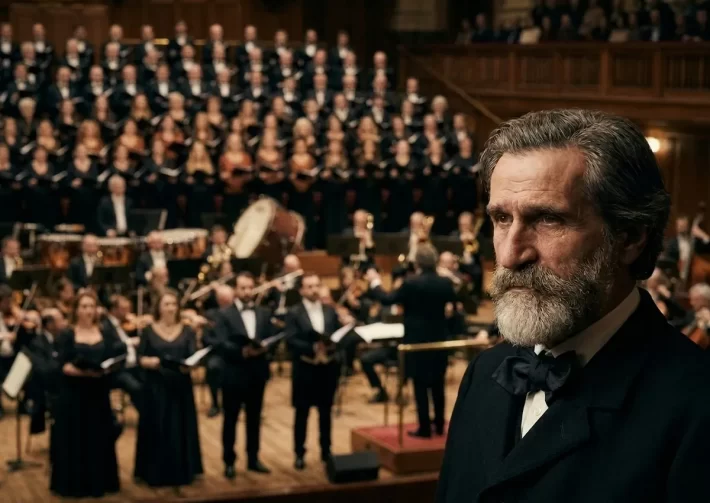
Top image ©️ The Classic Review, AI generated